
Alaska DUI With BAC .16+: Aggravated Tier and Limited License Eligibility
Get My Hardship-License SR-22 QuoteWhat Makes a DUI Aggravated in Alaska and Why It Changes Limited License Timing
Alaska law classifies a DUI charge as aggravated when blood alcohol content reaches .16 or higher under AS 28.35.030. This doubles the threshold that defines standard DUI (.08 BAC) and triggers a separate penalty tier with longer mandatory suspension periods before any limited license petition can be filed.
The practical consequence: drivers charged with aggravated DUI face a hard suspension window during which Alaska courts will not hear limited license petitions, even if employment or medical need is documented. Standard first-offense DUI carries a 90-day hard suspension under AS 28.35.030 before limited license eligibility opens. Aggravated DUI extends this mandatory period significantly, and the exact length depends on whether this is a first aggravated charge or a subsequent offense within the look-back window.
Alaska's limited license program operates entirely through judicial discretion under AS 28.15.201. There is no DMV administrative pathway. Every petition requires a court hearing, and judges deny petitions filed before the mandatory hard suspension period expires. The aggravated classification shifts that timeline backward, delaying the earliest possible hearing date and extending the total period before restricted driving can resume.
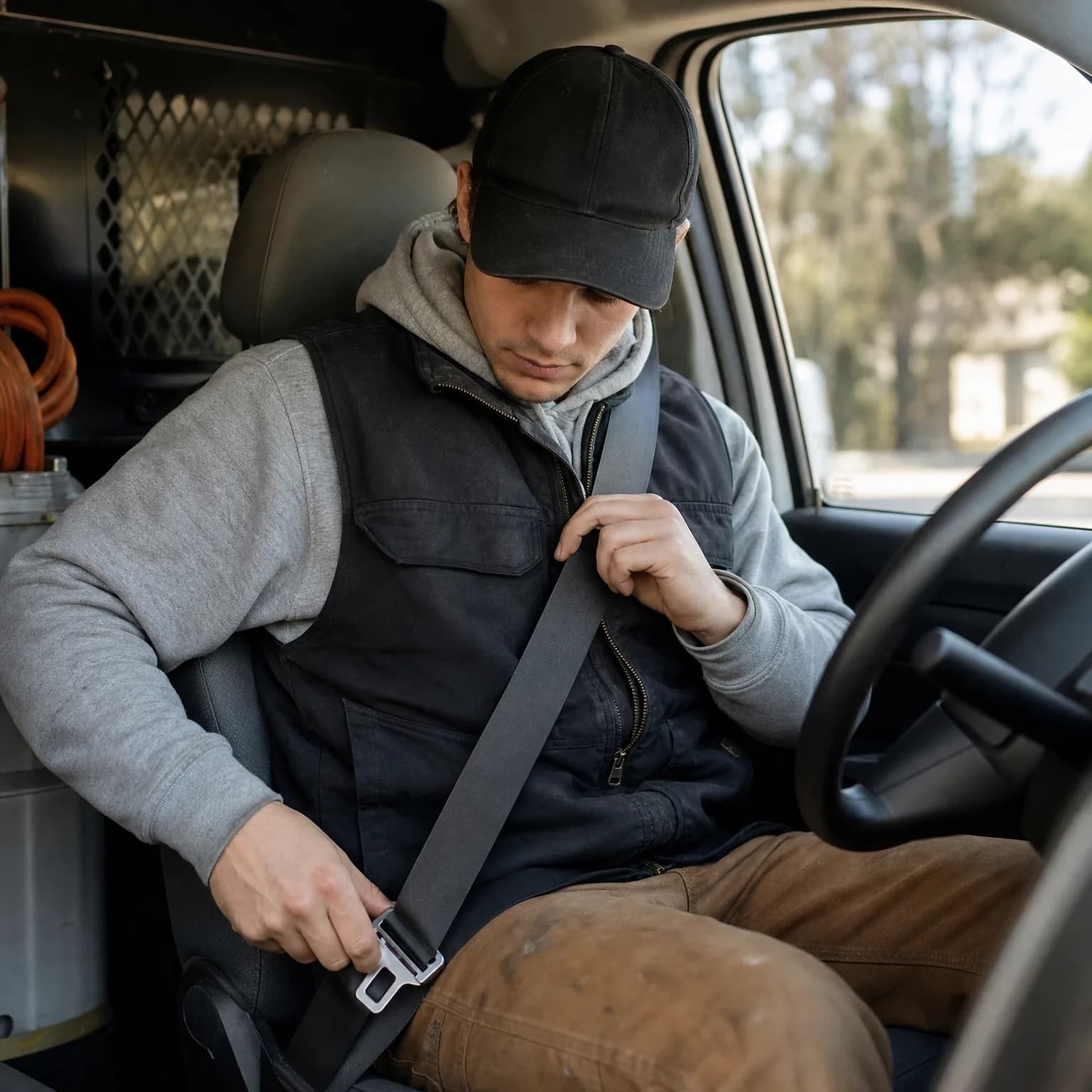
How Alaska's Limited License Program Works for Aggravated DUI Cases
Alaska's limited license is granted by court petition only. Drivers file directly with the court that handled the DUI case, not with the DMV. The petition must include proof of need—typically employer affidavit documenting work schedule and location, medical treatment documentation with appointment schedules, or educational enrollment verification with class hours.
For aggravated DUI cases, the court will require ignition interlock device installation as a condition of any limited license granted. AS 28.35.030 mandates IID for aggravated DUI convictions, and judges extend this requirement to the limited license phase. The IID must be installed before the limited license becomes valid, and the device must remain functional for the entire restricted driving period. Installation typically costs $100 to $150, with monthly monitoring fees of $75 to $100.
SR-22 certificate of financial responsibility must be filed with Alaska DMV before the limited license hearing. Alaska requires SR-22 for all DUI-related suspensions, and the filing must remain active for 5 years from the conviction date. Drivers who do not currently own a vehicle need non-owner SR-22 coverage, which provides the liability filing without requiring vehicle ownership. This matters for drivers whose vehicle was impounded, sold, or totaled after the DUI arrest.
The court sets route restrictions based on documented need. Alaska's limited road network means route restrictions reference specific highway corridors rather than mileage radii. For example, a limited license for employment in Anchorage might restrict travel to the Glenn Highway between home and workplace during documented shift hours. The court order specifies approved purposes—employment, medical treatment, DUI education classes, or court-ordered counseling—and the hours during which travel for those purposes is permitted.


Mandatory Hard Suspension Period Before Limited License Eligibility Opens
Alaska law requires a hard suspension period before limited license petitions are heard. For standard first-offense DUI (.08 to .159 BAC), this period is 90 days from the date of conviction. For aggravated DUI (.16 BAC or higher), the mandatory hard suspension extends beyond 90 days, though the exact period for aggravated cases is set by judicial discretion and varies by court district and offense number.
During the hard suspension window, no limited license petition will be granted. The court will not schedule a hearing before the mandatory period expires. This means aggravated DUI drivers face a longer total suspension before restricted driving resumes compared to standard DUI cases, even when employment or medical need is identical.
Refusal cases—drivers who declined breath or blood testing—face separate administrative suspension timelines under Alaska's implied consent law, AS 28.35.031. A refusal triggers immediate administrative revocation by the DMV, independent of the criminal DUI case. The administrative revocation period is 90 days for a first refusal, longer for subsequent refusals. The administrative and criminal suspensions run concurrently, but the limited license petition process applies only to the criminal court suspension, not the administrative revocation.
Drivers in roadless communities face practical IID compliance problems. Ignition interlock vendors are concentrated in Anchorage, Fairbanks, and Juneau. Residents of bush Alaska communities accessible only by air or boat often cannot access certified IID installation or monthly calibration services, creating a compliance barrier that effectively blocks limited license eligibility even when the court is willing to grant it.
What the Court Requires in a Limited License Petition for Aggravated DUI
Alaska limited license petitions must document specific need that outweighs public safety concerns. The court evaluates the petition based on necessity—whether losing driving privileges creates hardship that cannot be mitigated through public transit, rideshare, or changes to work or medical schedules—and on risk—whether the driver's behavior history suggests they can comply with restricted driving terms.
Employment documentation must include an employer affidavit stating the driver's work schedule, job location, and confirmation that the role cannot be performed without driving. Affidavits from family members or friends offering rides do not satisfy the necessity test. The court needs proof that loss of driving privileges directly threatens employment, not just convenience.
Medical need documentation must show recurring treatment that cannot be accessed through telemedicine, public transit, or assistance from others. Routine checkups typically do not meet the threshold. Chemotherapy, dialysis, physical therapy, or specialized treatment on a fixed schedule documented by the treating provider creates stronger grounds for approval.
DUI education or treatment program enrollment is often required before the petition is filed. Alaska courts expect drivers to complete or actively participate in an alcohol information school or treatment program approved under Alaska statute before limited license eligibility is considered. Documentation of enrollment, attendance records, and provider contact information must accompany the petition.
The petition must include proof of SR-22 filing with Alaska DMV. The SR-22 certificate demonstrates financial responsibility and confirms the driver carries liability coverage meeting Alaska's minimum limits: $50,000 per person, $100,000 per accident for bodily injury, and $25,000 for property damage. Non-owner SR-22 policies satisfy this requirement for drivers without a registered vehicle.

Drive Legally on Your Restricted License
Get My Hardship-License SR-22 Quote
Ignition Interlock Device Requirements and Duration for Aggravated DUI
Aggravated DUI convictions in Alaska require ignition interlock installation for the entire limited license period and for a specified duration post-reinstatement. AS 28.35.030 mandates IID for aggravated cases, and the court order specifies the total required duration, typically 12 to 18 months minimum.
The device must be installed by a certified provider before the limited license becomes valid. Alaska DMV maintains a list of approved IID vendors, concentrated in Anchorage, Fairbanks, and Juneau. Installation appointments typically require 1 to 2 hours, and the device must be calibrated monthly at the vendor's facility. Missing a calibration appointment or tampering with the device triggers automatic violation reporting to the court and DMV, which can result in immediate revocation of the limited license.
IID costs stack on top of SR-22 insurance premium increases. Installation fees range from $100 to $150. Monthly monitoring and calibration fees range from $75 to $100. Over a 12-month IID requirement, total device costs reach $1,000 to $1,350, separate from the insurance premium increase triggered by the DUI conviction and SR-22 filing.
Violation reporting is automatic. The device logs every failed breath test, every tamper attempt, and every missed calibration. Alaska IID vendors report violations to the DMV and the court within 24 hours. A single failed breath test above the device's programmed limit (typically .02 BAC for DUI offenders) can trigger a court hearing and limited license revocation, even if the driver was not operating the vehicle at the time of the failed test.

SR-22 Filing Duration and Cost After Aggravated DUI in Alaska
Alaska requires SR-22 filing for 5 years after a DUI conviction under AS 28.22. The 5-year period begins on the conviction date, not the filing date or the reinstatement date. Drivers who delay SR-22 filing do not shorten the total filing duration—they extend the total time before full reinstatement becomes possible.
SR-22 is a certificate filed by the insurance carrier with Alaska DMV confirming the driver carries liability coverage meeting state minimums. The filing itself costs $15 to $50 as a one-time fee charged by the carrier. The premium increase triggered by the DUI and SR-22 requirement is the larger cost. Alaska drivers with a DUI conviction and SR-22 filing typically see premiums increase by 60% to 120% compared to pre-conviction rates.
Non-owner SR-22 is the correct product for drivers who do not currently own a vehicle. Non-owner policies provide liability coverage for drivers who occasionally operate vehicles they do not own, and they satisfy Alaska's SR-22 filing requirement. Monthly premiums for non-owner SR-22 in Alaska typically range from $85 to $140, compared to $180 to $300 per month for standard SR-22 on an owned vehicle.
Letting SR-22 lapse triggers automatic re-suspension. Alaska carriers are required to notify DMV electronically within 24 hours of policy cancellation or non-renewal. DMV suspends the driver's license immediately upon receiving the lapse notification, and reinstatement requires filing a new SR-22, paying a $100 reinstatement fee, and potentially restarting the 5-year filing period depending on how long the lapse lasted.
What Happens If the Limited License Petition Is Denied
Alaska judges deny limited license petitions when the driver has not completed the mandatory hard suspension period, when documentation does not prove necessity, or when the driver's violation history suggests high risk of non-compliance. Denial does not prevent re-filing, but it extends the total suspension period while the driver assembles stronger documentation or completes additional requirements.
Common denial reasons include missing or incomplete employer affidavits, lack of documented DUI education program enrollment, failure to file SR-22 before the hearing, or multiple prior DUI convictions within the 10-year look-back window. Subsequent DUI offenses within Alaska's look-back period often disqualify drivers from limited license eligibility entirely, particularly for aggravated cases.
After denial, the driver can file a new petition once the deficiencies are corrected. The court does not automatically schedule a new hearing—the driver must file a new petition with updated documentation. Processing time for a new hearing typically adds 30 to 60 days, extending the total time before restricted driving can begin.
Drivers who do not qualify for a limited license must complete the full suspension period before applying for reinstatement. Full reinstatement after aggravated DUI requires proof of SR-22 filing, payment of the $100 reinstatement fee, completion of court-ordered DUI education or treatment, and in some cases retest (written and road). The reinstatement process through Alaska DMV typically takes 14 to 30 days after all documentation is submitted.
Frequently Asked Questions
Can I get a limited license immediately after an aggravated DUI arrest in Alaska?
No. Alaska requires a mandatory hard suspension period before limited license petitions are heard. Standard first-offense DUI carries a 90-day hard suspension; aggravated DUI (.16 BAC or higher) extends this period. The court will not schedule a limited license hearing until the mandatory hard suspension has been served from the conviction date.
Does Alaska require ignition interlock for all aggravated DUI limited licenses?
Yes. AS 28.35.030 mandates ignition interlock device installation for aggravated DUI convictions, and Alaska courts extend this requirement to the limited license phase. The IID must be installed before the limited license becomes valid and must remain functional for the entire restricted driving period and post-reinstatement duration specified by the court.
What happens if I let my SR-22 lapse during the 5-year filing period in Alaska?
Alaska DMV suspends your license immediately upon carrier notification of policy cancellation or lapse. Reinstatement requires filing a new SR-22, paying a $100 reinstatement fee, and potentially restarting the 5-year filing period depending on lapse duration. Carriers notify DMV electronically within 24 hours of lapse.
Can I get a limited license in Alaska if I live in a bush community without IID vendors?
Practical access is limited. Ignition interlock vendors are concentrated in Anchorage, Fairbanks, and Juneau. Residents of roadless communities accessible only by air or boat often cannot access certified IID installation or monthly calibration services, creating a compliance barrier that blocks limited license eligibility even when the court is willing to grant it.
How long does Alaska SR-22 filing last after an aggravated DUI conviction?
Alaska requires SR-22 filing for 5 years from the DUI conviction date under AS 28.22. The period begins on conviction, not filing or reinstatement. Delaying SR-22 filing does not shorten the total duration—it extends the time before full reinstatement becomes possible.
What documentation does the Alaska court require for a limited license petition after aggravated DUI?
The petition must include employer affidavit documenting work schedule and location, proof of SR-22 filing with Alaska DMV, documentation of DUI education or treatment program enrollment, and proof of ignition interlock installation. Medical need cases require provider documentation of recurring treatment schedules that cannot be accessed through other means.
Can I appeal a denied limited license petition in Alaska?
Alaska does not provide a formal appeal process for denied limited license petitions. Drivers can file a new petition with corrected or additional documentation once deficiencies are addressed. The court does not automatically schedule a new hearing—a new petition must be filed, typically adding 30 to 60 days to the process.
Related Articles

Alaska Limited License After 2nd DUI: Who Qualifies
5/17/2026

Alaska Limited License After DUI: Court, IID, SR-22 Costs
5/17/2026

Alaska Limited License Costs After DUI | IID + SR-22
5/17/2026

Alaska Limited License Wait After DUI Refusal
5/16/2026

Why Alaska DUI Requires 5-Year SR-22 Filing
5/16/2026

Montana Aggravated DUI .16+ BAC: Probationary License
5/17/2026