
CDL Holders After a Florida DUI: Can You Still Get a Hardship License?
Get My Hardship-License SR-22 QuoteFederal CDL Disqualification vs Florida BPO License Eligibility: Two Separate Tracks
A Florida DUI triggers two separate license actions for CDL holders: a federal Commercial Driver's License disqualification under 49 CFR 383.51, and a Florida Department of Highway Safety and Motor Vehicles administrative suspension of your underlying Class E license. The federal disqualification bars you from operating any commercial motor vehicle for one year minimum, regardless of what Florida allows. The DHSMV suspension affects your personal driving privilege and is the track where Business Purpose Only License eligibility lives.
The BPO license restores your ability to drive for work, school, church, and medical appointments in a personal vehicle. It does not and cannot restore your commercial driving authority during the federal disqualification period. CDL holders often assume the hardship license solves both problems. It does not. Your commercial driving career is on hold until the federal disqualification period ends and you reapply for the CDL through DHSMV.
Florida allows BPO license applications from DUI offenders after a mandatory hard suspension period: 30 days for a first-offense administrative suspension, 90 days for a refusal suspension. CDL holders serve the same hard periods as non-commercial drivers. Once the hard period is served, you may apply for the BPO through DHSMV's administrative process, not a court hearing, as long as you meet the enrollment and filing requirements.
What a Business Purpose Only License Covers for CDL Holders
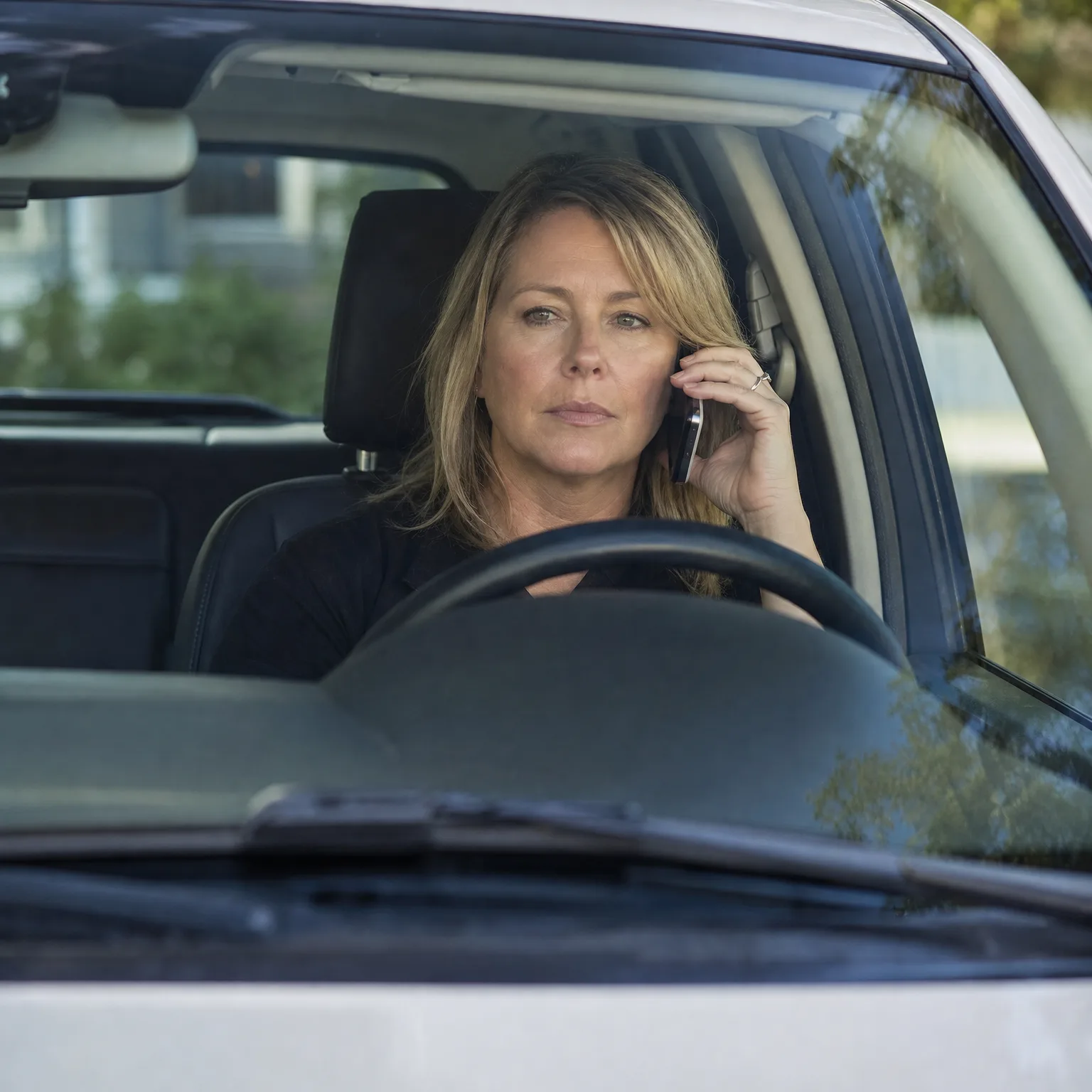
Florida's Business Purpose Only License allows driving to and from work, school, church, medical appointments, and for business purposes required by your employer. The restriction is route-based, not time-based: no specific curfew applies statewide, but your driving must connect directly to one of the approved purposes. Personal errands, recreational trips, and rideshare driving are prohibited.
For CDL holders, the BPO typically serves one of two functions: it allows you to commute to a non-driving job you secured after the DUI, or it allows you to drive for personal business while you wait out the federal disqualification period. It does not permit you to drive a commercial vehicle, haul cargo, transport passengers for hire, or perform any function that requires a valid CDL. Employers in the trucking, transit, and delivery industries will not accept a BPO license as authorization to operate commercial equipment.
You must carry the BPO license, the official DHSMV restriction notice, and proof of enrollment in DUI school whenever driving. Law enforcement can verify the restriction status in real time. Violating the BPO terms triggers automatic revocation without a hearing, and you lose eligibility to reapply for any restricted license for the remainder of the suspension period.
Ignition Interlock and FR-44 Filing Requirements for CDL Holders
Florida requires ignition interlock installation on all vehicles you own or regularly operate during the BPO period following a DUI conviction. The device must be installed before DHSMV issues the BPO license. Installation costs approximately $70 to $150, with monthly monitoring fees of $60 to $90. Devices must be calibrated monthly at an approved service center. Any failed breath test, missed calibration appointment, or tampering violation is reported to DHSMV and triggers BPO revocation.
Florida is one of only two states requiring FR-44 certificates rather than SR-22 for DUI-related financial responsibility filings. The FR-44 mandates liability limits of $100,000 per person, $300,000 per accident for bodily injury, and $50,000 for property damage. These minimums are significantly higher than Florida's standard PIP and property damage requirements. The FR-44 must remain active for three years from the reinstatement date, not the conviction date. If your insurer cancels the FR-44 policy or you allow it to lapse, DHSMV suspends your license again immediately.
CDL holders often assume their commercial insurance satisfies the FR-44 requirement. It does not. The FR-44 must be filed on a personal auto policy in your name, covering a vehicle you own or a non-owner FR-44 policy if you no longer own a vehicle. Non-owner FR-44 policies typically cost $40 to $90 per month and satisfy the filing requirement without requiring vehicle ownership.
How the Federal CDL Disqualification Period Works
Federal Motor Carrier Safety Administration rules impose a one-year CDL disqualification for a first-offense DUI conviction, measured from the conviction date. The disqualification applies regardless of whether the DUI occurred in a commercial vehicle or your personal car. If you refused the breath test, the disqualification still applies. If the DUI involved hazardous materials placarding, the disqualification extends to three years.
During the disqualification period, your CDL credential remains on your DHSMV record but is marked as disqualified. You cannot downgrade to a Class E license and drive commercially under a lower classification. You cannot drive any commercial motor vehicle, including vehicles under 26,001 pounds if operated for commercial purposes. The only path forward is to serve the full disqualification period, complete all DUI program requirements, reinstate your underlying Class E license, and reapply for the CDL through DHSMV's testing and endorsement process.
Some CDL holders assume the BPO license shortens the federal disqualification period. It does not. The BPO and the federal disqualification run on separate timelines, governed by separate authorities. The BPO allows personal driving during the Class E suspension. The federal disqualification bars commercial driving regardless of your Florida license status. Both must be resolved independently before you can return to commercial driving.

Drive Legally on Your Restricted License
Get My Hardship-License SR-22 Quote
Application Process and Documentation Requirements
CDL holders apply for the Business Purpose Only License through DHSMV's administrative process after serving the mandatory hard suspension period. The application requires proof of enrollment in a DHSMV-approved DUI program, an FR-44 certificate from your insurer, proof of ignition interlock installation on all vehicles you own or regularly operate, employment verification or school enrollment documentation showing the need for restricted driving, and payment of the $12 application fee.
Employment verification must include your employer's name, address, work location, shift schedule, and a signature from a supervisor or HR representative. If you work multiple jobs, document each separately. If your work hours or location change after the BPO is issued, you must notify DHSMV within 10 days and provide updated verification. Failing to update your employment information is treated as a restriction violation.
Processing typically takes 7 to 14 business days after DHSMV receives all required documentation. During this period, you cannot drive legally, even with proof of application submission. Once issued, the BPO remains active until the original suspension period ends, unless you violate the restriction terms, allow the FR-44 to lapse, or fail to maintain ignition interlock compliance. DHSMV does not send renewal notices. You must track the suspension end date independently and begin the full reinstatement process at that time.
Cost Stack: What CDL Holders Pay for BPO Eligibility
The total cost to obtain and maintain a Business Purpose Only License after a Florida DUI includes the BPO application fee of $12, DUI program enrollment and completion fees ranging from $300 to $500, ignition interlock installation of $70 to $150, monthly interlock monitoring of $60 to $90 for the duration of the BPO period, FR-44 insurance premium increases of $100 to $300 per month over standard rates, and the eventual reinstatement fee of $45 when the suspension period ends.
For a first-offense DUI with a 180-day suspension, assuming a six-month BPO period after the 30-day hard suspension, the cost stack totals approximately $2,500 to $4,200. This does not include court fines, attorney fees, or the cost of CDL reapplication and retesting once the federal disqualification period ends. CDL holders often underestimate the interlock and FR-44 costs because they assume their commercial coverage or employer's fleet policy satisfies the requirement. It does not.
Non-owner FR-44 policies reduce monthly premiums for CDL holders who no longer own a personal vehicle but still need to satisfy the filing requirement. These policies typically cost $40 to $90 per month and remain valid as long as you do not acquire a vehicle. If you purchase or lease a vehicle later, you must convert the non-owner policy to a standard FR-44 policy within 30 days and notify DHSMV of the change.
What Happens When the Federal Disqualification Period Ends
When the one-year federal disqualification period ends, your CDL is not automatically reinstated. You must first complete full reinstatement of your underlying Class E license, which requires finishing the DUI program, maintaining the FR-44 for the full three-year period, completing the ignition interlock requirement, paying the $45 reinstatement fee, and clearing any outstanding traffic citations or child support holds on your record.
Once your Class E license is fully reinstated, you may reapply for the CDL through DHSMV. Reapplication requires passing the written knowledge tests for your desired class and endorsements, passing the skills test in a representative vehicle, and paying the CDL issuance fee. Some endorsements, such as hazardous materials, require additional background checks and TSA clearance. DHSMV does not waive testing requirements for drivers whose CDL was disqualified due to DUI.
Employers in the trucking and transit industries often impose hiring restrictions on drivers with DUI convictions, even after reinstatement. Federal regulations allow carriers to consider DUI history when making hiring decisions, and many large carriers maintain internal policies barring drivers with DUI convictions within the past three to seven years. Smaller carriers and owner-operator opportunities may be more accessible, but insurance costs for drivers with DUI records are significantly higher.
Frequently Asked Questions
Can I use a BPO license to drive a commercial vehicle in Florida after a DUI?
No. The Business Purpose Only License allows personal driving for work commutes, school, church, and medical appointments, but it does not restore your commercial driving authority. Federal CDL disqualification under 49 CFR 383.51 bars you from operating any commercial motor vehicle for one year minimum, regardless of Florida's BPO license. The two restrictions run on separate tracks and must be resolved independently.
Does my commercial insurance policy satisfy the FR-44 requirement?
No. Florida requires the FR-44 to be filed on a personal auto policy in your name, not a commercial fleet policy. If you no longer own a vehicle, you must obtain a non-owner FR-44 policy to satisfy the filing requirement. The FR-44 mandates $100,000/$300,000 bodily injury and $50,000 property damage liability limits and must remain active for three years from your reinstatement date.
How long is the hard suspension period before I can apply for a BPO license?
Florida imposes a 30-day hard suspension for a first-offense DUI administrative suspension and a 90-day hard suspension for a breath test refusal. During the hard suspension period, you cannot drive legally under any circumstances, even with proof of BPO application. Once the hard period is served, you may apply for the BPO through DHSMV's administrative process.
What happens if I violate the BPO license restrictions?
Violating the Business Purpose Only License terms triggers automatic revocation without a hearing. You lose eligibility to reapply for any restricted license for the remainder of the original suspension period. Violations include driving outside approved purposes, allowing the FR-44 to lapse, missing ignition interlock calibration appointments, or failing a breath test on the interlock device.
Can I reapply for my CDL immediately after the one-year disqualification ends?
You can reapply once your underlying Class E license is fully reinstated, which requires completing the DUI program, maintaining the FR-44 for three years, finishing the ignition interlock requirement, and paying the reinstatement fee. CDL reapplication requires passing written knowledge tests, a skills test, and paying the CDL issuance fee. DHSMV does not waive testing for DUI-related disqualifications.
Do I need ignition interlock on a vehicle I don't own?
If you own or regularly operate any vehicle, ignition interlock installation is mandatory before DHSMV issues the BPO license. If you do not own a vehicle and do not regularly operate one, you must obtain a non-owner FR-44 policy instead. The interlock requirement applies to all vehicles titled in your name or vehicles you drive with the owner's knowledge during the BPO period.
Will trucking companies hire me after a DUI conviction?
Federal regulations allow carriers to consider DUI history when making hiring decisions. Many large carriers maintain internal policies barring drivers with DUI convictions within the past three to seven years. Smaller carriers and owner-operator opportunities may be more accessible, but insurance costs for drivers with DUI records are significantly higher and some insurers decline coverage entirely.
Related Articles
Apply for Florida BPO License After DUI: FR-44 Guide
5/16/2026
Florida Business Purpose License After DUI: How to Apply
5/16/2026
Florida Business Purpose Only License After DUI
5/16/2026
First 30 Days After Florida DUI: Protect BPO Eligibility
5/16/2026
Out-of-State DUI and FL License: BPO Application Path
5/17/2026

FL DUI Property Damage: BPO & Ignition Interlock Rules
5/17/2026