
CDL Holders After a New York DWI: Disqualification and RUL Access
Get My Hardship-License SR-22 QuoteThe One-Year CDL Disqualification Runs Separately from Your Personal License Status
A DWI arrest in New York triggers two simultaneous administrative actions for CDL holders: a one-year commercial driving disqualification under federal FMCSA rules (49 CFR 383.51) and a personal driver's license revocation under New York Vehicle and Traffic Law §1193. The commercial disqualification is absolute—no exceptions, no hardship CDL, no restricted commercial driving for work. That disqualification period runs for 365 days from your conviction date, not your arrest date, and it applies even if the DWI arrest occurred in your personal vehicle on your own time.
Your personal driving privileges follow a different timeline. New York DMV typically revokes your Class D personal license for a minimum of six months on a first DWI conviction. During that six-month window and beyond, you can apply for a Restricted Use License (RUL) to drive for personal purposes—getting to a non-commercial job, attending school, medical appointments, or other DMV-approved essential activities. The RUL does not restore your CDL privileges. You cannot operate a commercial motor vehicle under an RUL, and any attempt to do so results in a federal CDL disqualification violation and possible criminal charges.
The practical outcome: you face one year without commercial driving income, but you can secure limited personal driving access within 30 to 90 days of your conviction if you complete the required steps. Most CDL holders assume both licenses are treated identically. They are not. Understanding the split between commercial disqualification and personal restricted access is the first step toward minimizing total downtime.
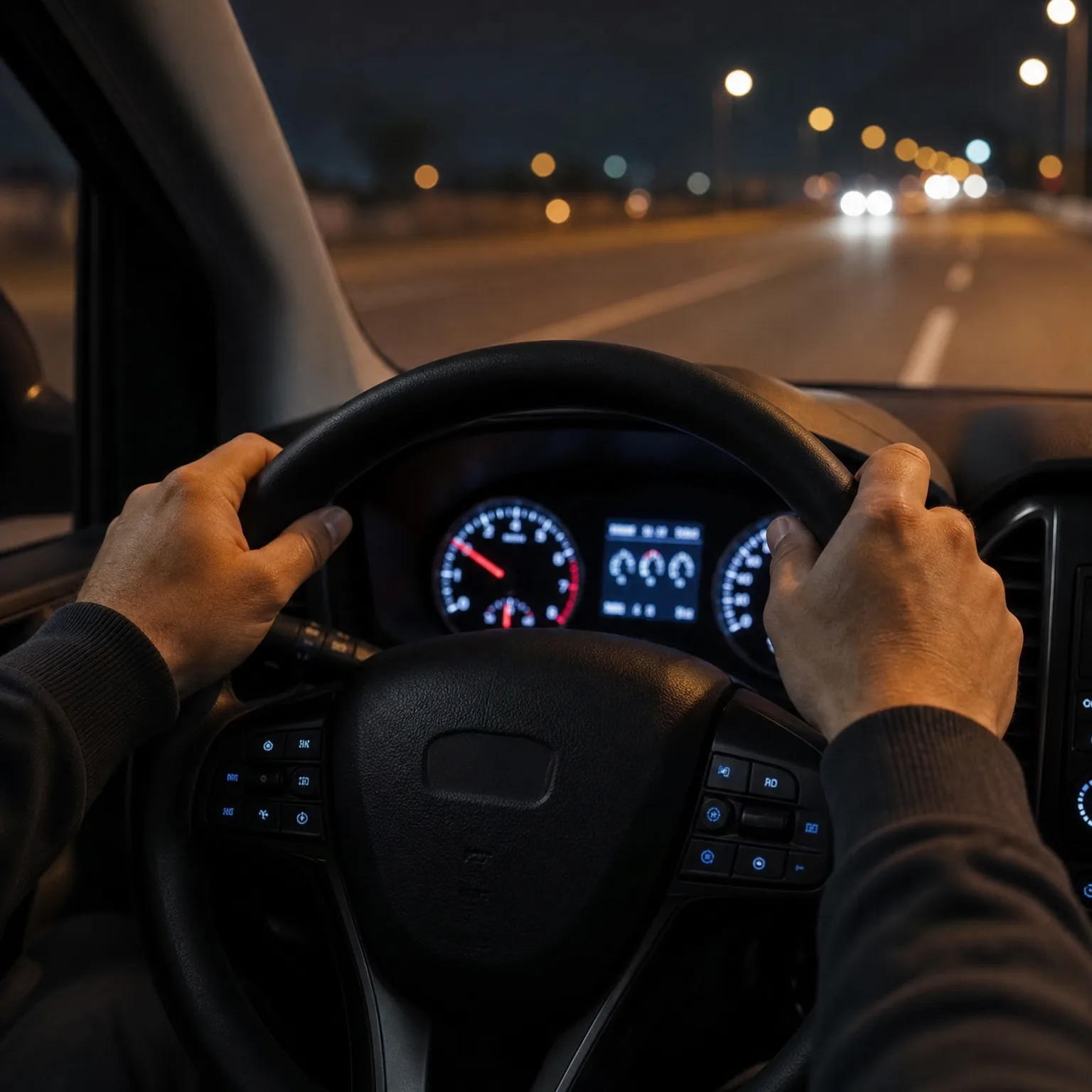
Restricted Use License Eligibility Opens After Conviction but Requires IID Installation
New York allows DWI offenders to apply for a Restricted Use License after conviction, but Leandra's Law mandates ignition interlock installation for all DWI convictions as a condition of any restricted driving privilege. You cannot receive an RUL approval without proof of IID installation in the vehicle you intend to drive. The IID requirement applies even if your BAC was below .15, even if no accident occurred, and even if this is your first offense. Installation costs run $70 to $150, with monthly monitoring fees of $60 to $80. Total IID expense over the minimum six-month period typically reaches $600 to $700 before removal.
The application process begins at your local DMV office. You will need: MV-500 series application form (specific form varies by county and sentencing conditions), proof of enrollment in the New York Impaired Driver Program (IDP, formerly DDP), proof of IID installation from a DMV-approved vendor, and proof of insurance meeting New York's minimum liability requirements. New York does not use SR-22 certificates—your insurance carrier reports coverage electronically to the DMV through the Insurance Information and Enforcement System. The DMV verifies your coverage status directly; you do not file a form.
Processing time is not published by NY DMV and varies significantly by regional office. Most applicants receive approval or denial within two to four weeks, but complex cases involving prior violations or incomplete documentation can stretch to six weeks. During this waiting period, you remain under absolute revocation. Driving on a suspended or revoked license before your RUL is approved results in criminal charges under VTL §511, which carries up to 30 days in jail and an additional suspension period that restarts your eligibility clock.
The $25 Application Fee Is Low-Confidence Data—Verify Before Filing
New York DMV's published RUL application fee is $25, but this figure is flagged as low-confidence in current DMV fee schedules and has not been independently verified against the most recent MV fee updates at dmv.ny.gov. Fee structures for restricted licenses, suspension termination, and reinstatement have been revised multiple times in the past five years. Before submitting your application, confirm the current application fee directly with your regional DMV office or by checking the official fee schedule at dmv.ny.gov/forms.
Beyond the application fee, expect additional costs: the $100 DWI-specific reinstatement fee when your full license is eventually restored, the $75 to $100 IDP enrollment fee, and ongoing IID costs. Total first-year expense for a DWI conviction in New York—including fines, surcharges, IID, IDP, and DMV fees—typically ranges from $3,000 to $5,000 before accounting for insurance premium increases. CDL holders face additional financial pressure because loss of commercial driving income compounds over the one-year disqualification period. Many applicants underestimate the cash-flow impact of stacking all these costs within the first 60 days post-conviction.
Approved Driving Purposes Are Narrow and Violation Consequences Are Immediate
The Restricted Use License permits driving only for DMV-approved essential activities: travel to and from non-commercial employment, school or vocational training, medical appointments for yourself or immediate family, court-ordered obligations, and other purposes explicitly approved in writing by DMV or the sentencing court. The RUL is not a general-purpose license. You cannot drive for errands, social visits, or convenience. Every trip must fall within the approved categories, and deviations are prosecutable.
New York DMV and law enforcement verify RUL compliance through IID data logs and patrol stops. The ignition interlock device records every attempted start, every failed breath test, and every missed rolling retest. If you attempt to start the vehicle without providing a clean breath sample, the device logs the attempt and reports it to your monitoring agency. Three failed attempts or one missed rolling retest typically triggers a violation report to DMV, which can result in immediate RUL revocation without a hearing.
Driving outside your approved purposes or approved hours is treated as aggravated unlicensed operation under VTL §511. A second AUO conviction—common among RUL holders who treat the restricted license as a regular license—elevates the charge to a misdemeanor with mandatory jail time in many counties. CDL holders convicted of AUO during their one-year commercial disqualification face extended federal disqualification periods and possible permanent CDL ineligibility if the AUO involved a CMV or fraudulent documentation.

Drive Legally on Your Restricted License
Get My Hardship-License SR-22 Quote
Non-Owner Insurance Is Not an Option for IID-Equipped Vehicles
CDL holders who sold their personal vehicle after the DWI arrest or who never owned a vehicle face a logistical barrier: ignition interlock devices must be installed in a specific vehicle, and non-owner insurance policies do not cover IID-equipped vehicles. Non-owner SR-22 policies—common in other states for post-DUI drivers without cars—are irrelevant in New York because the state does not use SR-22 filings. New York verifies insurance electronically, and the verification system requires a VIN-specific policy with collision and comprehensive coverage if you financed the vehicle.
If you do not own a vehicle, you have three options: purchase or lease a vehicle and title it in your name, arrange to use a family member's vehicle with their written consent and install the IID in that vehicle, or delay your RUL application until you secure access to a vehicle you can legally modify. The third option is common but extends your period without any driving privileges. Installing an IID in a vehicle you do not own requires the registered owner's notarized consent, proof that you are listed as a permitted driver on the vehicle's insurance policy, and coordination with the IID vendor to ensure the device does not void the vehicle's warranty.
Insurance carriers treat IID installations as high-risk modifications. Expect premium increases of 30% to 80% on the underlying auto policy, separate from any DWI-related surcharge. Some carriers refuse to insure IID-equipped vehicles entirely. Geico, Progressive, and Bristol West have historically accepted IID cases in New York, but coverage availability varies by county and underwriting tier.
The One-Year CDL Disqualification Cannot Be Shortened by Hardship Petition
Federal law governs CDL disqualifications, and no state-level hardship provision can override the one-year minimum imposed by 49 CFR 383.51. New York DMV has no discretion to reduce the disqualification period, grant a restricted commercial license, or allow any CMV operation during the one-year bar. Employment loss, financial hardship, or family necessity are not recognized grounds for early termination of a federal CDL disqualification. This is the single most common misunderstanding among CDL holders post-DWI: the assumption that a judge or DMV hearing officer can make an exception for work purposes.
The disqualification begins on your conviction date and runs for exactly 365 days. If your conviction is vacated on appeal or reduced to a non-alcohol offense, the disqualification may be lifted retroactively, but this is rare and requires court action—not a DMV petition. Most CDL holders serve the full year. During that period, your CDL remains on your record but is coded as disqualified. You cannot downgrade to a Class D license and then upgrade back to CDL after one year—you must wait out the disqualification, then apply to reinstate the CDL through the full DMV reinstatement process, which includes paying the reinstatement fee, completing IDP, and in many cases retaking the CDL knowledge and skills tests.
A second DWI conviction—whether in a personal vehicle or CMV—results in lifetime federal CDL disqualification. There is no restoration pathway for a second alcohol-related CDL disqualification under current FMCSA rules. The stakes are absolute.
Insurance Costs Stack During and After the Disqualification Period
Your auto insurance premium will increase immediately after a DWI conviction, even if you are not currently driving. New York carriers price DWI convictions as five-year surcharge events, meaning the conviction remains a rating factor for 60 months from the conviction date. Expect personal auto insurance premiums to double or triple during the first three years post-conviction. A driver who paid $1,200 per year pre-DWI typically faces $2,800 to $4,200 per year post-conviction, depending on age, county, and claims history.
CDL holders face additional complexity when seeking employment after the one-year disqualification ends. Most commercial carriers require a Motor Vehicle Record (MVR) review before hiring, and a DWI conviction disqualifies you from employment with many fleets for three to five years regardless of legal eligibility to drive. Even when your CDL is legally reinstated, employment access lags significantly. Some fleets impose permanent hiring bans for any DUI or DWI conviction; others require a five-year clean record post-conviction. The gap between legal CDL reinstatement and actual employability often stretches two to three years.
During the one-year disqualification, maintaining continuous insurance coverage on any personal vehicle you own is critical. A lapse in coverage triggers automatic suspension under New York's Insurance Information and Enforcement System, and that suspension runs concurrently with your DWI-related revocation. When you eventually apply to reinstate your personal license and CDL, any insurance lapse during the disqualification period will be discovered during the DMV records review and will require payment of separate civil penalties—$8 per day for each day of lapse, up to a $900 maximum, plus a $50 suspension termination fee. These penalties stack on top of the $100 DWI reinstatement fee.
Frequently Asked Questions
Can I drive a commercial vehicle with a Restricted Use License in New York after a DWI?
No. The Restricted Use License permits only personal, non-commercial driving for approved purposes such as work, school, and medical appointments. Federal law imposes a one-year CDL disqualification for any DWI conviction, and no state hardship provision can override that federal bar. Operating a CMV during the disqualification period results in criminal charges and extended disqualification.
Does the one-year CDL disqualification apply if my DWI happened in my personal car?
Yes. Federal FMCSA rules disqualify CDL holders from commercial driving for one year after any alcohol-related conviction, regardless of whether the arrest occurred in a personal vehicle or a commercial motor vehicle. The disqualification is tied to your CDL status, not the vehicle type involved in the offense.
How soon can I apply for a Restricted Use License in New York after a DWI conviction?
You can apply immediately after conviction, but approval requires proof of ignition interlock installation, enrollment in the New York Impaired Driver Program, and proof of insurance. Processing takes two to four weeks on average, though timelines vary by DMV region. You cannot drive legally until the RUL is approved and the IID is installed.
What happens if I get caught driving outside my approved RUL purposes in New York?
Driving outside approved purposes is prosecuted as aggravated unlicensed operation under VTL §511, a criminal offense carrying up to 30 days in jail and mandatory license suspension. Your RUL will be revoked immediately, and you will face extended disqualification from both personal and commercial driving. A second AUO conviction is a misdemeanor with mandatory jail time in most counties.
Can I get non-owner insurance to meet New York's RUL requirement if I don't own a car?
No. The Restricted Use License requires ignition interlock installation in a specific vehicle, and non-owner policies do not cover IID-equipped vehicles. You must either purchase or lease a vehicle, or arrange to use a family member's vehicle with their notarized consent and have the IID installed in that vehicle. New York does not use SR-22 filings; insurance is verified electronically by VIN.
Will my CDL be automatically reinstated after the one-year disqualification ends?
No. After the one-year disqualification, you must apply to reinstate your CDL through the DMV reinstatement process. This requires paying the $100 reinstatement fee, completing the Impaired Driver Program, and in many cases retaking the CDL knowledge and skills tests. Your CDL is not restored automatically—you must initiate reinstatement and meet all requirements.
How much does ignition interlock installation and monitoring cost in New York?
Installation costs range from $70 to $150, with monthly monitoring fees of $60 to $80. Over the minimum six-month IID period, total expense typically reaches $600 to $700 before device removal. These costs are paid to the IID vendor and are separate from DMV fees, insurance premiums, and DWI fines.
Related Articles
DUI in Personal Car: CDL Disqualification Rules
5/16/2026

NJ DUI CDL Disqualification: 1-Year Loss Explained
5/16/2026
Apply for NY Restricted Use License After DWI
5/16/2026

NC CDL After DWI: Disqualification & Hardship Limits
5/17/2026
CDL After Michigan OWI: Disqualification & Restricted License
5/16/2026
CDL Disqualification After DUI: Hardship License Rules
5/16/2026