CDL Holders After a Washington DUI: 1-Year Disqualification and Personal IIL
Get My Hardship-License SR-22 QuoteWashington Revokes Your CDL for One Year After a Personal-Vehicle DUI
Washington law disqualifies you from operating a commercial motor vehicle for one year after a DUI conviction in your personal vehicle, even if you were off-duty and the vehicle weighed less than 26,001 pounds. This is a federal mandate under 49 CFR 383.51, enforced by the Washington Department of Licensing. The one-year disqualification applies to your commercial driving privilege only—your Class A or Class B CDL endorsement is suspended for one year from the conviction date, not the arrest date.
The Washington Ignition Interlock License (IIL) available to most DUI offenders does not restore commercial driving privileges during the one-year disqualification period. The IIL permits you to drive a personal vehicle equipped with an ignition interlock device anywhere at any time, but it does not authorize operation of a commercial motor vehicle. You cannot drive a semi, bus, or any vehicle requiring a CDL endorsement during the one-year period, even if your employer installs an IID in the commercial vehicle.
After the one-year disqualification period ends, you must apply for CDL reinstatement separately from your personal-license reinstatement. Washington DOL requires completion of an alcohol/drug information school or treatment program, payment of a $75 base reinstatement fee plus any CDL-specific fees, and filing of SR-22 insurance for three years. The SR-22 requirement applies to both your personal driving privilege and your CDL. If you do not own a vehicle, non-owner SR-22 policies satisfy the filing requirement.
The Personal IIL Covers Non-Commercial Driving Only
The Ignition Interlock License application opens immediately after DOL imposes the administrative suspension for a first-offense DUI in Washington. You pay a $100 application fee, provide proof of ignition interlock device installation by a DOL-approved provider, and file SR-22 insurance. The IIL allows unrestricted personal driving—no route limits, no time-of-day restrictions—provided the vehicle is equipped with an approved IID.
Most CDL holders assume the IIL restores all driving privileges. It does not. The IIL is a personal-driving privilege only. RCW 46.20.385 explicitly prohibits commercial operation under an IIL. Even if your personal-vehicle IIL is active and your IID is functioning correctly, you cannot drive a commercial vehicle until the one-year disqualification period expires and you complete CDL-specific reinstatement.
The practical consequence: you will be out of work for one year if your livelihood depends on holding a valid CDL. Washington does not offer a restricted or occupational CDL during the disqualification period. There is no hardship pathway for commercial drivers. The federal disqualification is absolute.
CDL Reinstatement After the One-Year Disqualification
After one year from your DUI conviction date, you become eligible to apply for CDL reinstatement. Washington DOL requires documentation that you completed an approved alcohol/drug information school or substance abuse treatment program—this is the same requirement that applies to personal-license reinstatement, not an additional CDL-specific course. You pay the $75 base reinstatement fee. If your CDL was downgraded to a Class D (non-commercial) license during the disqualification, you must pay an additional fee to restore the commercial endorsement and retest if your CDL has been expired for more than 60 days.
SR-22 insurance filing is required for three years from the reinstatement date. The SR-22 must remain active and continuous—any lapse triggers automatic re-suspension of both your personal driving privilege and your CDL. Most carriers writing SR-22 policies in Washington will file for CDL holders, but premiums are higher than standard commercial driver rates. Expect monthly premiums between $180 and $320 during the SR-22 filing period, depending on your age, county, and endorsement type.
Washington does not require a knowledge retest or skills retest for CDL reinstatement after a one-year DUI disqualification unless your CDL has been expired for more than 60 days. If you maintained your CDL in expired status and apply for reinstatement within 60 days of the disqualification period ending, you avoid retesting. If you allowed the CDL to expire beyond 60 days, you must pass the general knowledge test, endorsement tests, and skills test again before DOL will issue a new CDL.

Drive Legally on Your Restricted License
Get My Hardship-License SR-22 QuoteSecond DUI: Lifetime CDL Disqualification
A second DUI conviction in any vehicle—personal or commercial—triggers lifetime CDL disqualification under federal law. Washington DOL enforces this mandate without exception. The lifetime disqualification applies even if the second DUI occurred decades after the first, even if you were driving a personal vehicle both times, and even if you completed all treatment and reinstatement requirements after the first offense.
Federal regulations permit reinstatement after 10 years for drivers who meet specific criteria: completion of a DOL-approved substance abuse treatment program, employer sponsorship, and a clean driving record for the 10-year period. Washington DOL has the authority to approve reinstatement applications after 10 years, but approval is discretionary. Most lifetime disqualifications remain in effect permanently.
If you are a CDL holder facing a second DUI charge, the stakes include permanent loss of your commercial driving privilege. The personal-vehicle IIL will still be available to you for non-commercial driving, but your career as a commercial driver ends unless you can secure discretionary reinstatement after a decade.

SR-22 Filing Requirements for CDL Holders in Washington
Washington requires SR-22 insurance filing for three years after any DUI-related reinstatement, whether personal or commercial. The SR-22 is a continuous liability insurance certification filed electronically by your carrier with the DOL. If the policy lapses or cancels for any reason, the carrier notifies DOL immediately and your driving privilege is suspended again—both personal and commercial.
CDL holders often ask whether SR-22 applies only to commercial vehicles or to all vehicles they drive. The answer: SR-22 applies to your driving privilege, not to a specific vehicle. If you own a personal vehicle and a commercial vehicle, you need SR-22 coverage on the personal vehicle. If you do not own any vehicle, you need a non-owner SR-22 policy that covers you when driving borrowed or rented vehicles. The non-owner SR-22 satisfies Washington's filing requirement even if you later begin driving a commercial vehicle for an employer—provided the employer's commercial policy is primary and your non-owner policy is secondary.
Most carriers writing SR-22 policies in Washington include Geico, Progressive, The General, Dairyland, Bristol West, and State Farm. National General and USAA also write SR-22 for eligible drivers. Monthly premiums for CDL holders typically range from $180 to $320 during the three-year filing period. Premiums drop after the SR-22 filing period ends, but the DUI conviction remains on your driving record for insurers to rate against.
Cost Stack: What Washington CDL Holders Pay After a DUI
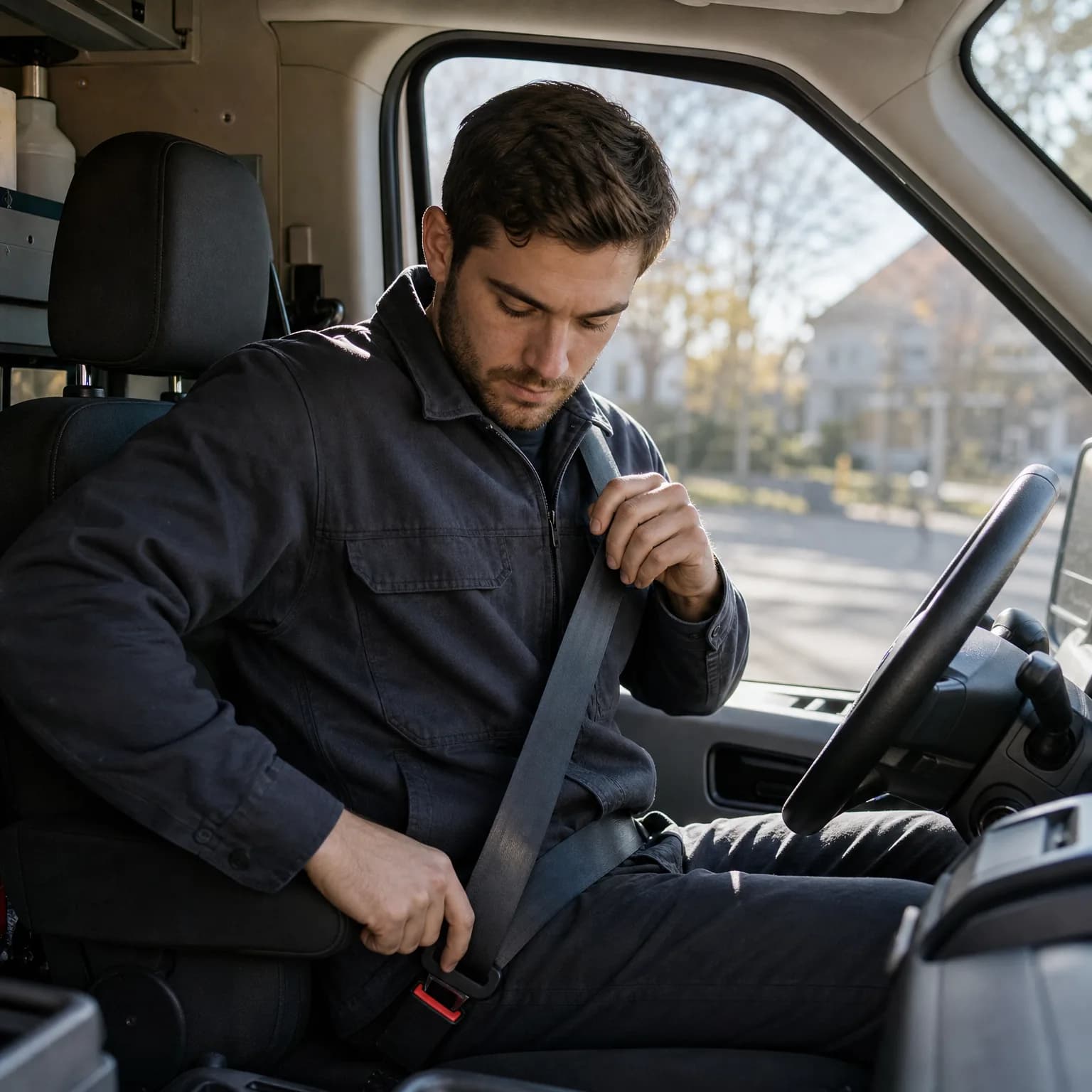
Application fee for the personal Ignition Interlock License: $100. Ignition interlock device installation by a DOL-approved provider: $75 to $150. Monthly IID lease and calibration: $70 to $90 for 12 months, totaling $840 to $1,080. SR-22 insurance filing fee: $15 to $50 (one-time). SR-22 premium increase during the three-year filing period: approximately $4,000 to $8,000 above standard rates, depending on age and county. CDL reinstatement fee after the one-year disqualification: $75 base fee plus CDL-specific endorsement fees if applicable.
Total out-of-pocket cost over the first year: approximately $5,000 to $9,000. This does not include lost income during the one-year period when you cannot work as a commercial driver. For owner-operators and independent contractors, the economic impact of a one-year disqualification is career-ending in many cases.
Washington does not offer payment plans for IIL application fees or reinstatement fees. The IID provider may offer monthly billing for device lease and calibration costs. SR-22 insurance premiums are billed monthly by the carrier. Financial hardship does not waive the IID requirement, the SR-22 requirement, or the one-year CDL disqualification period.
Frequently Asked Questions
Can I drive a commercial vehicle with a Washington IIL after a DUI?
No. The Washington Ignition Interlock License authorizes personal-vehicle operation only. Federal law disqualifies you from operating any commercial motor vehicle for one year after a DUI conviction, and the IIL does not override that disqualification.
Does the one-year CDL disqualification start from arrest or conviction?
The one-year disqualification starts from your DUI conviction date, not the arrest date. If conviction occurs six months after arrest, the disqualification clock begins at conviction and runs for one year from that date.
Can I get my CDL back after a second DUI in Washington?
A second DUI triggers lifetime federal CDL disqualification. Washington DOL may approve reinstatement after 10 years if you complete treatment, have employer sponsorship, and maintain a clean record, but approval is discretionary and rare.
Do I need SR-22 on a commercial vehicle or a personal vehicle in Washington?
SR-22 filing applies to your driving privilege, not a specific vehicle. If you own a personal vehicle, SR-22 covers that vehicle. If you do not own any vehicle, a non-owner SR-22 satisfies the requirement even when driving commercial vehicles for an employer.
How much does SR-22 insurance cost for CDL holders in Washington after a DUI?
Monthly premiums during the three-year SR-22 filing period typically range from $180 to $320 for CDL holders, depending on age, county, and endorsement type. Total premium cost over three years is approximately $4,000 to $8,000 above standard rates.
Can I work as a commercial driver during the one-year disqualification if my employer installs an IID?
No. Federal law prohibits commercial operation during the one-year disqualification period regardless of ignition interlock device installation. The IIL permits personal driving only; commercial driving is not authorized until reinstatement.
What happens if my SR-22 policy lapses after CDL reinstatement in Washington?
Any SR-22 lapse triggers automatic suspension of both your personal driving privilege and your CDL. The carrier notifies DOL immediately upon cancellation, and your license is suspended the same day. You must refile SR-22 and pay reinstatement fees to restore driving privileges.
Related Articles
WA Ignition Interlock License: Second DUI in 7 Years
5/17/2026
WA DUI .15+ BAC: IIL Rules & Enhanced IID Duration
5/16/2026
WA DUI Refusal: 2-Year Revocation & IIL Wait Period
5/16/2026
DUI in Personal Car: CDL Disqualification Rules
5/16/2026
Washington Ignition Interlock License After DUI
5/16/2026
WA Ignition Interlock License After DUI: Costs & Path
5/17/2026