Cheapest Hardship License Insurance After DUI — California
Get My Hardship-License SR-22 QuoteThe Immediate Post-DUI Cost Stack Most California Drivers Miss
You were arrested for DUI in California, your license was suspended by the DMV's administrative per se process, and now you need to drive to work while the suspension runs. The restricted license pathway under Vehicle Code 13353.3 looks straightforward: enroll in a DUI program, install an ignition interlock device, file SR-22 with the DMV, pay the $125 reissue fee, and receive restricted driving privileges. What most drivers discover at the IID vendor appointment is that the monthly cost stack — IID lease plus SR-22 premium plus program enrollment fees — reaches $280 to $350 per month before the restricted license is even issued.
California's statewide IID program, expanded under AB 91 in 2019, allows first-offense DUI drivers to bypass the traditional 30-day hard suspension entirely by installing an ignition interlock device immediately and obtaining restricted driving privileges on day one. The trade: you are locked into IID lease payments for 12 months minimum, and SR-22 filing for 36 months. If you do not currently own a vehicle — common after impound, sale, or never owning — you face a structural decision most comparison content skips: non-owner SR-22 insurance to satisfy the filing requirement, or standard SR-22 on a vehicle you do not drive yet but might buy later to avoid switching policies mid-suspension.
“Non-owner SR-22 appears cheaper monthly but forces a mid-suspension refile if you buy a vehicle, often raising total cost above starting with standard coverage.”

Drive Legally on Your Restricted License
Get My Hardship-License SR-22 Quote$125
California Restricted License Reissue Fee
California Vehicle Code 4904 sets the $125 reissue fee as the baseline administrative charge to obtain a restricted license after DUI suspension. This is paid to the DMV at the time of restricted license issuance and is separate from SR-22 filing fees and IID installation costs.
California Vehicle Code §4904
SR-22 Filing Requirement and Non-Owner Policy Economics
California requires an SR-22 certificate of financial responsibility for 3 years after a DUI-related restricted license is issued. The SR-22 itself is not insurance — it is a filing that certifies to the DMV that you carry liability coverage meeting California's minimum limits: $30,000 per person, $60,000 per accident for bodily injury, and $15,000 for property damage. The filing fee ranges from $15 to $50 depending on carrier, but the premium increase for post-DUI SR-22 coverage is where cost concentrates.
Non-owner SR-22 policies exist specifically for drivers who do not own a vehicle but need to satisfy the SR-22 filing requirement. Monthly premiums for non-owner SR-22 in California after a first-offense DUI typically range from $85 to $140 per month. Carriers writing non-owner SR-22 in California include Dairyland, Geico, Progressive, State Farm, and The General. Standard SR-22 policies on an owned vehicle cost more — $150 to $280 per month post-DUI — because the policy covers collision and comprehensive exposure the non-owner policy does not.
The structural trap: if you buy a vehicle mid-suspension after starting with non-owner SR-22, you must switch to a standard policy and refile SR-22, which resets underwriting and often increases premium again. Many drivers who assume they will buy a car within 6 months pay twice: once for non-owner SR-22 at restricted license issuance, again for standard SR-22 when the vehicle is purchased. If vehicle purchase is likely within the first year of suspension, starting with standard SR-22 on a vehicle you intend to buy avoids the mid-suspension policy switch.

Non-owner SR-22 appears cheaper monthly but forces a mid-suspension policy switch and SR-22 refile if you buy a vehicle, often raising total cost above starting with standard coverage.
Related Articles
CA Restricted License Cost After DUI: Full Fee Stack
5/17/2026
CA DUI Restricted License Cost: Full Itemized Breakdown
5/17/2026

No-Money-Down DUI Coverage California
5/29/2026

First vs Second DUI Restricted License Cost in CA
5/17/2026

CA DUI Restricted License and IID Insurance
5/29/2026
Documents for CA Restricted License After DUI
5/16/2026
California Restricted License Approved Purposes and Route Limits
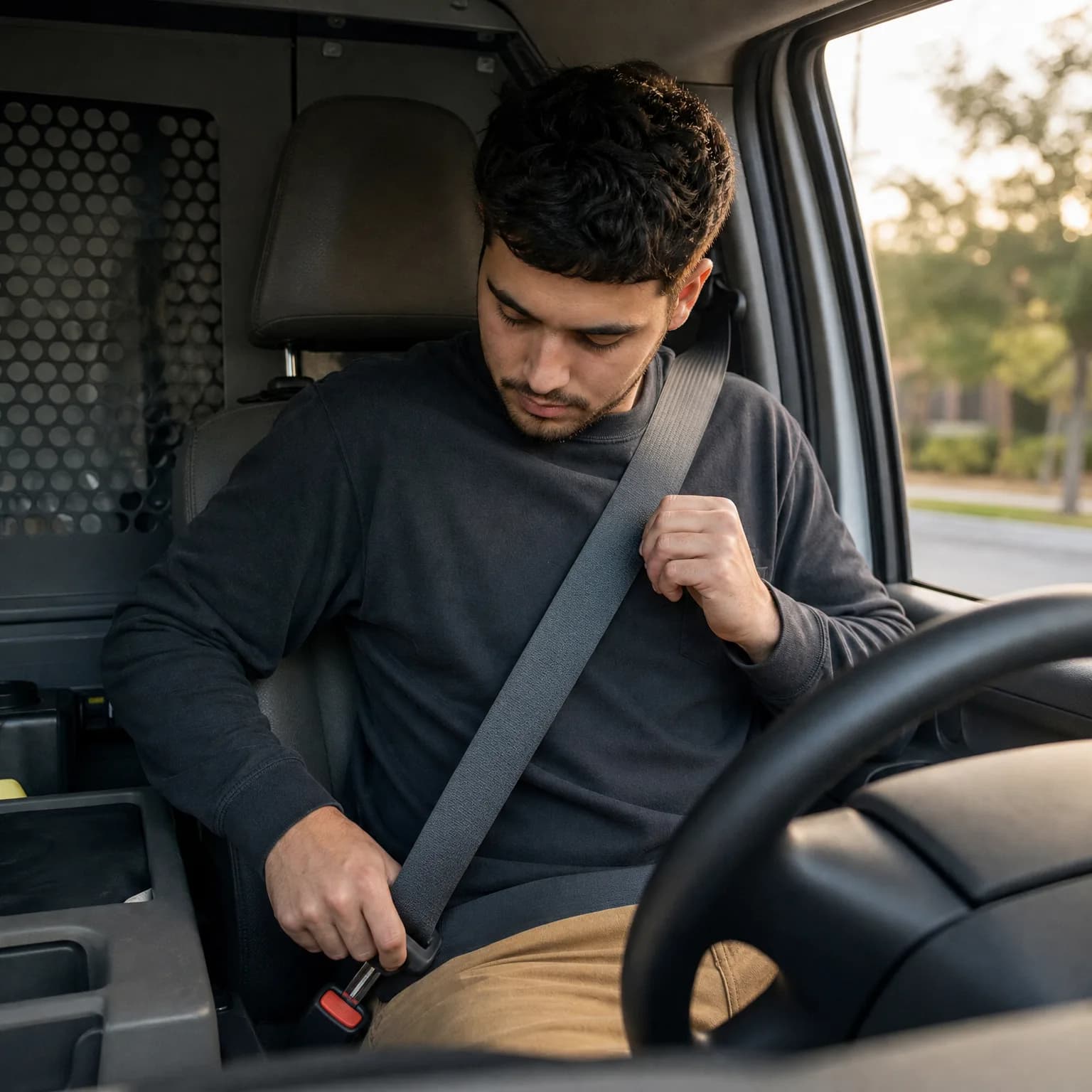
California's restricted license after DUI allows driving to and from work, within the scope of employment if the job requires driving, and to and from the court-ordered DUI program. These are the only approved purposes. Driving for childcare, medical appointments, school, or personal errands is not permitted under the standard restricted license. Routes are not formally defined by the court or DMV, but purpose restrictions are strict: if stopped outside the approved purpose window, the restricted license can be revoked immediately.
The restricted license does not impose blanket time-of-day restrictions, but functional limits apply. If your work shift ends at 5 PM and you are stopped at 8 PM, the officer will ask where you are driving. If the answer does not fit work commute or DUI program attendance, the restricted license violation triggers administrative action. Most counties do not require pre-approval of work addresses or DUI program locations, but carrying employer documentation and DUI program enrollment proof is standard practice to avoid roadside confusion.
Violation consequences are immediate. A single restricted license violation — driving outside approved purposes, failing an IID test, or accumulating points from a new traffic offense — results in restricted license revocation. The DMV does not issue warnings. After revocation, you must serve the remainder of the original suspension period without restricted driving privileges. For first-offense DUI in California, that typically means 4 to 6 months of additional hard suspension depending on how far into the restricted license period the violation occurred.
36 months
California DUI SR-22 Filing Period
California requires SR-22 filing for 3 years from the date of restricted license issuance for DUI suspensions. Lapse in SR-22 coverage during this period results in immediate license re-suspension and requires starting the 3-year filing clock over from the date SR-22 is refiled.
California Vehicle Code §13353.3
DUI Program Enrollment and Completion Timelines
California DUI programs are tiered by offense severity and BAC at arrest. First-offense DUI with BAC under 0.15 typically requires a 3-month program. First-offense DUI with BAC 0.15 or higher, or refusal cases, require an 9-month program. Second-offense DUI requires an 18-month program. Third and subsequent offenses require a 30-month program. Program enrollment is mandatory before the restricted license is issued — the DMV will not process the restricted license application without proof of enrollment.
Program costs are separate from SR-22 and IID expenses. Three-month programs cost $500 to $700 total. Nine-month programs cost $1,800 to $2,500. Eighteen-month programs cost $2,800 to $3,600. Costs include registration, class attendance, and individual counseling sessions. Most programs allow payment plans, but enrollment requires an upfront deposit. Missing two consecutive classes triggers automatic program dismissal, which invalidates the restricted license and requires re-enrollment and restarting the program from day one.
Carrier Underwriting and Premium Variation After DUI
Not all carriers writing SR-22 in California accept DUI drivers on non-owner policies. Dairyland, Bristol West, Progressive, Geico, and The General explicitly write non-owner SR-22 for post-DUI applicants. State Farm writes non-owner SR-22 but underwrites DUI cases selectively and often declines applicants with BAC above 0.15 or refusal charges. Acceptance Insurance and Infinity write non-owner SR-22 for DUI but require broker placement rather than direct online quoting.
Premium variation by carrier after DUI is wide. For the same driver profile — 35-year-old male, first-offense DUI with 0.12 BAC, Los Angeles County — non-owner SR-22 monthly premiums range from $92 at Dairyland to $165 at Geico. Standard SR-22 on an owned 2018 Honda Accord with liability-only coverage ranges from $178 at Bristol West to $312 at Progressive. Underwriting factors that widen this range include BAC level at arrest, whether the DUI involved an accident, refusal versus test-submission, and prior moving violations in the 3 years before the DUI.
Most carriers tier DUI premium surcharges by time since conviction. The first 12 months post-conviction carry the highest surcharge — typically 200% to 300% over clean-record base rates. After 12 months, some carriers reduce the surcharge to 150% to 200%. After 36 months — when the SR-22 filing period ends — the DUI surcharge drops to 50% to 100% and phases out entirely after 5 to 7 years depending on carrier. Shopping rates at the 12-month and 36-month marks often produces significant savings as underwriting tiers shift.
Next Step: Compare Non-Owner and Standard SR-22 Costs Before Filing
Request quotes for both non-owner SR-22 and standard SR-22 on a vehicle you intend to buy within 12 months. If the standard SR-22 premium is less than $80 per month higher than non-owner, starting with standard coverage avoids the mid-suspension policy switch and refile that typically raises total cost. If you will not own a vehicle during the restricted license period, non-owner SR-22 is the correct path — but confirm the carrier writes non-owner policies in California and accepts post-DUI applicants before enrolling in the DUI program, as some applicants discover after program enrollment that their chosen carrier does not write the coverage they need.
Ignition Interlock Device Cost and Lease Structure
IID installation costs $70 to $150 upfront depending on vendor and vehicle type. Monthly lease fees range from $80 to $120 per month, paid directly to the IID vendor. California certifies multiple IID vendors; the DMV does not mandate a specific provider. Most vendors require calibration appointments every 60 days at $10 to $20 per visit. Total IID cost over the 12-month restricted license period runs $1,100 to $1,600 including installation, monthly lease, and calibration.
The IID clock starts when the restricted license is issued, not when the device is installed. If you install the IID but delay applying for the restricted license, the 12-month compliance period does not begin. For first-offense DUI drivers opting into the AB 91 immediate IID pathway, the 12-month IID period runs concurrently with the first 12 months of the 36-month SR-22 filing requirement. After 12 months, the IID can be removed if no violations occurred, but SR-22 filing continues for the remaining 24 months.
Get Your Free Quote
Get My Hardship-License SR-22 QuoteFrequently Asked Questions
How much does SR-22 insurance cost per month in California after a DUI?
Non-owner SR-22 policies in California after a first-offense DUI typically cost $85 to $140 per month. Standard SR-22 on an owned vehicle ranges from $150 to $280 per month depending on vehicle type, coverage limits, and county. Premiums are highest in the first 12 months post-conviction and decrease after the first year if no additional violations occur.
Do I need non-owner SR-22 or regular SR-22 after a California DUI?
Non-owner SR-22 is required if you do not own a vehicle but need to satisfy California's SR-22 filing requirement for a restricted license. If you own a vehicle or plan to buy one within 12 months, standard SR-22 on that vehicle avoids the cost and underwriting reset of switching policies mid-suspension. Both policy types satisfy the DMV's SR-22 requirement equally.
Can I get a restricted license immediately after a DUI in California?
Yes, under California's AB 91 statewide IID program. First-offense DUI drivers can bypass the 30-day hard suspension by installing an ignition interlock device immediately, filing SR-22, enrolling in a DUI program, and paying the $125 reissue fee. The restricted license is issued after all four requirements are met and allows driving to work and DUI program only.
How long does California require SR-22 filing after a DUI?
California requires SR-22 filing for 3 years from the date the restricted license is issued. If SR-22 coverage lapses at any point during the 3-year period, the DMV suspends the license immediately and the 3-year clock restarts from the date SR-22 is refiled. Continuous coverage for the full 36 months is mandatory.
What happens if I violate my California restricted license terms?
Restricted license violations — driving outside approved purposes, failing an IID breath test, or accumulating points from a new traffic offense — result in immediate revocation. The DMV does not issue warnings. After revocation, you must serve the remainder of the original suspension period without restricted driving privileges, which typically adds 4 to 6 months of hard suspension for first-offense DUI cases.
How much does ignition interlock cost in California?
IID installation costs $70 to $150 upfront. Monthly lease fees range from $80 to $120. Calibration appointments every 60 days cost $10 to $20 per visit. Total cost over the required 12-month restricted license period runs $1,100 to $1,600. The device is leased from a state-certified vendor, not purchased.