
Hardship License After DUI: Judicial vs DMV Routes Compared
Get My Hardship-License SR-22 QuoteTwo Separate Hardship Pathways Exist in Most States
After a DUI conviction triggers license suspension, most states provide two distinct procedural routes to obtain a hardship license: a judicial petition filed during or immediately after sentencing, and a later DMV administrative application filed weeks or months into the suspension period. These are not interchangeable options with identical outcomes. The judicial route is time-limited, typically closing 30 to 90 days after conviction. The DMV route remains open throughout the suspension period but often imposes stricter ignition interlock requirements, narrower approved driving purposes, and longer processing delays.
The court petition is filed as part of the criminal case itself. Your attorney requests hardship driving privileges from the sentencing judge, who evaluates the petition based on employment need, family obligations, and compliance with DUI program enrollment. Approval grants immediate restricted driving privileges, often with a court order issued the same day or within 10 business days. The DMV administrative path opens after a statutory waiting period, typically 30 to 180 days from conviction depending on offense number and state law. You file an application directly with the state licensing agency, submit proof of SR-22 insurance filing, pay the administrative fee, and wait for a hearing or written decision. Processing times run 3 to 8 weeks in most states.
Neither route is universally superior. The court petition requires legal representation in most states and adds $500 to $2,000 in attorney fees, but it delivers faster approval and sometimes avoids mandatory ignition interlock for first-offense cases. The DMV path costs less upfront but almost always mandates IID installation for DUI-triggered suspensions, adding $1,200 to $2,500 annually. If you miss the court petition window because your attorney did not file at sentencing, you are locked into the DMV route for the remainder of your suspension period.
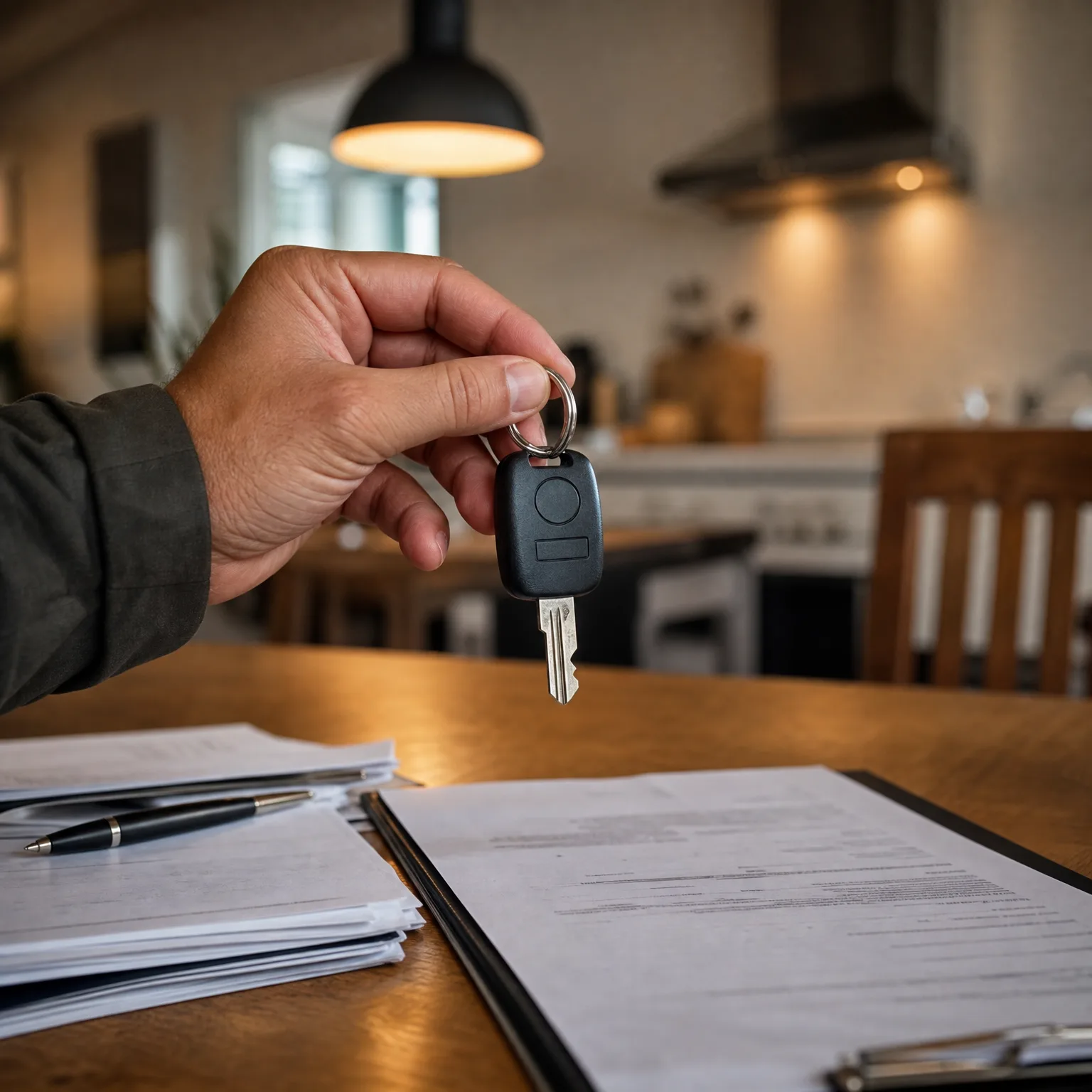
Court Petition Routes Close Fast and Require Attorney Coordination
The judicial hardship petition is filed as a motion in your criminal DUI case, either at sentencing or within a narrow post-conviction window. In Texas, the petition for an occupational license must be filed within 30 days of the conviction date. In Illinois, occupational license petitions are typically filed at sentencing or within 45 days of the court order. In Georgia, petitions for a limited driving permit are filed during the initial license suspension hearing or within 30 days of conviction for first-offense DUI. These deadlines are jurisdictional: miss the window and the court loses statutory authority to grant hardship privileges. You are then routed to the DMV administrative process with no judicial bypass available.
The court petition hearing is short, typically 15 to 30 minutes. Your attorney presents an employer affidavit, proof of DUI program enrollment, proof of SR-22 filing, and a proposed driving schedule detailing work commute routes, employment hours, and necessary stops for medical care or childcare. The judge reviews the schedule for necessity and reasonableness. Courts routinely approve commute-to-work privileges but deny broader requests like recreational driving, social visits, or errands unrelated to employment or medical care. The order specifies approved hours, approved routes, and whether ignition interlock is required. In some states, first-offense DUI petitions can avoid IID if the petitioner demonstrates hardship and completes alcohol assessment before the hearing. Refusal cases and second-offense DUIs typically face mandatory IID regardless of the judicial route.
Court-ordered hardship licenses carry one critical advantage: they take effect immediately upon approval, often the same day. DMV administrative approvals require a processing period that can stretch 4 to 8 weeks from application to issuance. If you face job loss without immediate driving privileges, the judicial route is often the only viable path. The tradeoff is cost: expect to pay $750 to $2,000 in attorney fees for the petition, plus court filing fees of $50 to $150 depending on county.


DMV Administrative Routes Mandate Longer Waits and Stricter IID Rules
The DMV administrative hardship application opens after a statutory waiting period. For first-offense DUI, most states impose a 30-day hard suspension before hardship eligibility begins. Second-offense DUI typically requires 90 to 180 days of hard suspension. During the hard suspension period, no driving privileges of any kind are available. The waiting period is measured from the conviction date in most states, not the arrest date or the license surrender date. If your conviction is delayed due to plea negotiations or continuances, the hardship eligibility clock does not start until the court enters judgment.
Once the waiting period expires, you file a hardship license application with the state DMV or equivalent licensing agency. The application requires proof of SR-22 insurance filing, proof of enrollment in a state-approved DUI education program, payment of the application fee, and submission of an employer affidavit or medical documentation supporting the need for driving privileges. Some states require a formal administrative hearing; others issue decisions based on written submissions alone. Processing times vary widely. In states with hearing backlogs, expect 4 to 8 weeks from application to decision. In states with streamlined administrative review, approval can arrive within 10 to 15 business days.
The DMV route almost always mandates ignition interlock installation for DUI-triggered hardship licenses, even for first offenses. Courts have discretion to waive IID in some states; DMV administrative rules typically do not. Expect to pay $75 to $150 for IID installation, $70 to $100 per month for device rental and calibration, and a removal fee of $50 to $75 at the end of the restriction period. Over a 12-month hardship period, total IID costs run $1,000 to $1,400. If your state requires IID for the full suspension period rather than just the hardship period, multiply accordingly.
DMV-issued hardship licenses also impose narrower approved driving purposes than court-ordered licenses in most states. Typical approved purposes include direct commute to work, direct travel to DUI program classes, direct travel to ignition interlock calibration appointments, and direct travel to court-ordered community service or probation meetings. Detours for errands, childcare drop-offs, or grocery shopping are not approved unless you file additional documentation proving necessity. Violating the approved-purpose restrictions triggers automatic revocation in most states, with no grace period or warning.
Cost Comparison: Attorney Fees vs Extended IID Duration
The judicial route front-loads costs through attorney fees but may reduce total IID duration. A typical court petition for hardship driving privileges costs $750 to $2,000 in attorney fees, $50 to $150 in court filing fees, and $25 to $50 for the SR-22 filing fee. If the court waives IID or limits IID to 6 months instead of the full suspension period, you save $600 to $1,200 in device costs over the life of the restriction. Total cost for the judicial route: approximately $1,500 to $3,000 depending on state and attorney.
The DMV route eliminates attorney fees but mandates IID for the full hardship period and often the full suspension period. Application fees run $50 to $150. SR-22 filing costs $25 to $50. IID installation, rental, and calibration over 12 months adds $1,000 to $1,400. If your suspension period is 18 months and the state requires IID for the entire period, total IID costs reach $1,500 to $2,100. Add the DMV application fee and SR-22 filing, and total cost for the DMV route runs $1,600 to $2,300 for a 12-month period, rising to $2,100 to $3,200 for an 18-month period.
Neither route eliminates the SR-22 insurance filing requirement or the resulting premium increase. Expect your auto insurance premium to increase $800 to $1,500 annually after a DUI conviction, regardless of which hardship route you pursue. The SR-22 filing itself costs $25 to $50 as a one-time fee, but the premium increase persists for 3 to 5 years depending on state law. Drivers without a vehicle should expect to pay $300 to $600 annually for non-owner SR-22 policies, which provide liability coverage without insuring a specific car.

Drive Legally on Your Restricted License
Get My Hardship-License SR-22 Quote
Approval Odds Vary by Route and Offense Number
Judicial petitions filed at sentencing carry higher approval rates than DMV administrative applications filed months later. Judges evaluate petitions based on demonstrated need, compliance with court orders, and absence of prior violations during the case. First-offense DUI petitions filed at sentencing with complete documentation are approved in approximately 70 to 85 percent of cases in most jurisdictions. Petitions filed weeks after sentencing as post-conviction motions face higher scrutiny and lower approval rates, typically 50 to 65 percent.
DMV administrative applications face approval rates between 60 and 75 percent for first-offense DUI cases, depending on state and documentation quality. Common denial reasons include incomplete employer affidavits, failure to enroll in a DUI program before filing, lapsed SR-22 coverage at the time of application, and outstanding court fines or fees. The DMV does not exercise the same discretion as a judge: if your application is missing required documentation, it is denied without a hearing in most states. Reapplication requires paying the application fee again and waiting another processing cycle.
Second-offense and felony DUI cases face sharply reduced approval odds on both routes. Judicial petitions for second-offense DUI are approved in approximately 40 to 55 percent of cases, and only when the petitioner demonstrates extraordinary hardship such as sole-earner status or medical necessity. DMV administrative approvals for second-offense cases are granted in 30 to 45 percent of applications. Refusal cases, where the driver refused chemical testing at the time of arrest, face the lowest approval rates on both routes: 25 to 40 percent for judicial petitions, 20 to 35 percent for DMV applications. Many states bar hardship eligibility entirely for refusal cases during the first 6 to 12 months of suspension.

Choosing the Right Route Based on Your Timeline and Budget
If you are within 30 days of your DUI conviction and face immediate job loss without driving privileges, the judicial petition route is the faster path. Approval can be granted within 10 business days in most states, and court-ordered privileges take effect immediately. Hire an attorney experienced in DUI hardship petitions in your county. Provide complete documentation: employer affidavit, proof of DUI program enrollment, proof of SR-22 filing, and a detailed driving schedule. Budget $1,500 to $3,000 for attorney fees, filing fees, and IID installation if required.
If you are beyond the court petition window or cannot afford attorney fees upfront, the DMV administrative route remains available throughout your suspension period. File your application as soon as the statutory waiting period expires. Gather required documentation before filing: SR-22 certificate of insurance, DUI program enrollment confirmation, employer affidavit on company letterhead, and payment for the application fee. Expect 4 to 8 weeks for processing. Expect mandatory IID installation for the full hardship period. Budget $1,600 to $2,300 for a 12-month hardship period, or $2,100 to $3,200 for an 18-month period.
If you do not own a vehicle, pursue a non-owner SR-22 policy before filing either application. Non-owner policies provide liability coverage without insuring a specific car, satisfying the SR-22 filing requirement for drivers who rely on borrowed vehicles, employer vehicles, or rideshare. Expect to pay $300 to $600 annually for non-owner SR-22 coverage. File the SR-22 certificate with your state DMV before submitting your hardship application: most states reject applications that lack proof of continuous SR-22 coverage from the conviction date forward.
What Happens If You Violate Hardship Restrictions
Driving outside approved hours, outside approved routes, or for unapproved purposes triggers automatic hardship license revocation in most states. Law enforcement officers verify hardship compliance during traffic stops by checking the restriction code on your license and comparing your location and time to your approved driving schedule. If you are stopped outside approved hours or routes, the officer can confiscate your license on the spot and issue a citation for driving while restricted. The citation triggers an automatic DMV revocation hearing, and most states impose an additional 90 to 180 days of hard suspension for violation of hardship terms.
Ignition interlock violations also trigger revocation. Common violations include failed breath tests (BAC above .02 or .04 depending on state threshold), missed calibration appointments, and attempts to tamper with or bypass the device. IID providers report violations to the DMV electronically, often within 24 to 48 hours. A single failed test may result in a warning and extension of the IID requirement period. Multiple failed tests or tampering attempts result in immediate hardship license revocation and possible criminal charges for violation of court orders.
Hardship revocation is not the same as hardship denial. If your hardship license is revoked for a violation, you cannot reapply for hardship privileges in most states until the original suspension period expires and you complete full reinstatement. Reinstatement after revocation requires payment of reinstatement fees, proof of SR-22 filing for the required period, completion of all DUI program requirements, and payment of all outstanding fines and fees. Expect reinstatement fees between $100 and $250 depending on state.
Frequently Asked Questions
Can I switch from DMV hardship to court hardship if I change my mind?
No. Once the court petition window closes, typically 30 to 90 days after conviction depending on state law, you cannot reopen judicial hardship eligibility. If you file a DMV administrative application after missing the court deadline, you are locked into the DMV route for the remainder of your suspension period.
Does a hardship license let me drive to the grocery store or run errands?
Usually not. Most hardship licenses restrict driving to direct commute to work, DUI program classes, ignition interlock calibration appointments, and court-ordered obligations. Detours for errands or personal business violate restriction terms and trigger automatic revocation in most states unless you file additional documentation proving medical or family necessity.
Will I need a lawyer to file a DMV hardship application?
No. The DMV administrative application is a standardized form process that does not require legal representation. You submit the application, required documentation, and fee directly to the state licensing agency. Judicial petitions filed in court almost always require an attorney to navigate procedural rules and represent you at the hearing.
How long does ignition interlock stay on my car after I get my full license back?
IID requirements end when your full unrestricted license is reinstated, not when the hardship period expires. If your state requires 3 years of SR-22 filing and 18 months of IID post-DUI, the IID is removed after 18 months even if your suspension lasts 24 months. Confirm your state's specific IID duration requirement before installation.
Can I apply for hardship if I refused the breathalyzer test?
In most states, refusal cases face a mandatory hard suspension period of 6 to 12 months before hardship eligibility begins, and approval odds are significantly lower than for standard DUI cases. Some states bar hardship privileges entirely for refusal suspensions during the first year. Check your state's specific refusal-suspension hardship rules before filing.
What happens if my SR-22 lapses while I have a hardship license?
Your hardship license is automatically revoked the day your SR-22 coverage lapses. Your insurance carrier notifies the DMV electronically within 24 to 48 hours of cancellation. Most states impose an additional 90 to 180 days of suspension for SR-22 lapse during a hardship period, and you cannot reapply for hardship privileges until you file a new SR-22 and serve the additional suspension time.
Do I need to retake the driving test to get a hardship license?
No. Hardship licenses are restrictions on your existing driving privilege, not new licenses. You do not retake written or road tests to obtain hardship privileges. When you reinstate your full unrestricted license after the suspension period ends, most states require a written knowledge test but waive the road test for DUI suspensions unless your license was suspended for 2 years or longer.
Related Articles
DUI Court vs DMV Process: Hardship License Timing
5/17/2026

Appealing a Denied DUI Hardship License: What Works
5/17/2026

DUI Hardship License Without Attorney: When It Works
5/17/2026

DUI Hardship License Denial: Why Courts Refuse
5/17/2026

Hardship vs Full Reinstatement After DUI
5/29/2026
Court Costs vs DMV Fees After DUI: Payment Timeline
5/16/2026