
Felony Aggravated DUI in Illinois: RDP Route Restrictions Explained
Get My Hardship-License SR-22 QuoteWhy Felony Aggravated DUI Changes Your RDP Path in Illinois
Illinois treats felony aggravated DUI as a license revocation, not a statutory summary suspension. Your driving privilege is cancelled, not temporarily removed. The Secretary of State requires a formal hearing before a hearing officer to evaluate your RDP petition—there is no administrative fast-track.
Felony aggravated DUI includes third DUI offenses within a lifetime, DUI causing great bodily harm or death, DUI while license revoked, and DUI in a school zone with children present. Each triggers revocation under 625 ILCS 5/6-205. Unlike first-offense DUI drivers who face a six-month or twelve-month statutory summary suspension with MDDP access after 30 days, felony aggravated DUI drivers cannot access an MDDP. The only hardship option is a Restricted Driving Permit issued after a formal Secretary of State hearing.
The Secretary of State Safety and Financial Responsibility Division schedules these hearings. You petition for a hearing by submitting a completed application, paying the $50 evaluation fee and $8 permit application fee, and providing proof of SR-22 insurance and any required alcohol/drug evaluations. Hearings are scheduled weeks to months out depending on regional office capacity. The hearing officer reviews your case file, evaluates your hardship need, and decides whether to grant an RDP and what restrictions to impose.
Route restrictions for felony aggravated DUI RDP cases are stricter than first-offense cases. The hearing officer has full discretion to define approved destinations, approved days, and approved times. You do not get automatic work-commute approval. You must present documented proof of employment or other hardship need—school enrollment records, medical treatment appointment schedules, court-ordered program participation letters—and the officer will tailor your RDP to those documented purposes only.

What Route Restrictions Actually Mean on an Illinois Felony RDP
An Illinois Restricted Driving Permit lists specific destinations by address. Your RDP might authorize travel from your home address to your workplace address, to your BAIID service center address, to your court-ordered treatment program address, and back home. Side trips, errands, and non-listed destinations are prohibited even if they fall within your approved driving hours.
The permit also lists approved days and hours. A typical felony aggravated DUI RDP might authorize Monday through Friday, 6:00 AM to 6:00 PM only, with no weekend driving. If your employment requires weekend shifts or overnight hours, you must document that need at your hearing with employer letters specifying your exact work schedule. The hearing officer will not assume your need—you must prove it.
Route restrictions are literal. Illinois State Police and local law enforcement officers can verify your RDP compliance during any traffic stop by checking your current location, the time, and the day against the destinations and hours printed on your RDP. If you are pulled over at a grocery store at 7:00 PM on a Saturday and your RDP authorizes only Monday through Friday 6:00 AM to 6:00 PM travel to work and back, you are driving outside your restrictions. That violation triggers RDP revocation, criminal charges for driving while revoked, and resets your eligibility clock.
Most first-offense DUI drivers on an MDDP face broader approved-purpose categories—work, medical, alcohol/drug treatment, education, and other essential activities—with more flexible timing. Felony aggravated DUI RDP holders face case-by-case, address-specific, hour-specific restrictions because the Secretary of State treats felony cases as higher-risk candidates for permit abuse.

BAIID Requirements for Felony Aggravated DUI RDP Holders
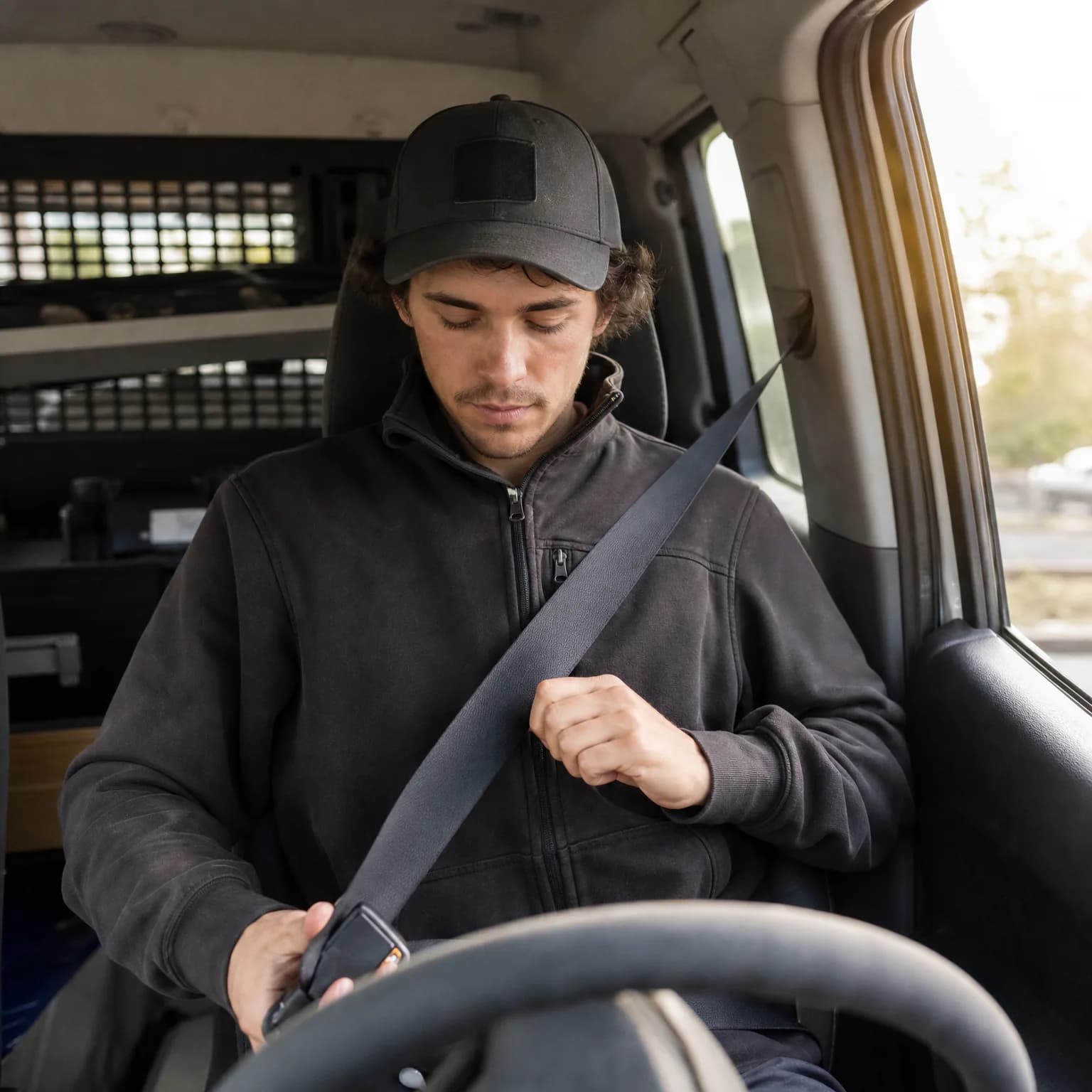
Every felony aggravated DUI Restricted Driving Permit in Illinois requires installation of a Breath Alcohol Ignition Interlock Device. Illinois uses the term BAIID, not the generic ignition interlock device term. The BAIID monitors every engine start attempt and logs rolling retests during driving.
You must install the BAIID before your RDP becomes valid. The Secretary of State issues your RDP contingent on BAIID installation within 14 days of the permit effective date. If you do not install within that window, your RDP is void and you must reapply. Installation costs typically run $75 to $150 depending on the service provider. Monthly monitoring and calibration fees run $80 to $100 per month for the duration of your RDP period and any post-reinstatement BAIID period your hearing officer or court orders.
BAIID service providers in Illinois must be certified by the Secretary of State. The approved provider list is published on the Illinois Secretary of State website under the BAIID program page. You cannot use an out-of-state provider or a non-certified installer. The device logs all breath test results, all failed start attempts, all missed rolling retests, and all tampering events. Those logs are transmitted to the Secretary of State monthly.
Failed breath tests, missed rolling retests, or tampering violations trigger BAIID violation reports. The Secretary of State reviews those reports. A single tampering event or repeated failed start attempts can result in immediate RDP revocation. Most hearing officers impose zero-tolerance policies for felony aggravated DUI BAIID permit holders. If you fail a rolling retest because you consumed alcohol during your approved driving window, your RDP will be revoked and your reinstatement eligibility reset.
SR-22 Filing Requirements After Felony Aggravated DUI
Illinois requires SR-22 insurance filing for all felony aggravated DUI cases. The SR-22 filing period is 3 years post-reinstatement, not post-conviction. Your insurer files the SR-22 certificate electronically with the Secretary of State proving you carry at least Illinois minimum liability coverage: $25,000 bodily injury per person, $50,000 bodily injury per accident, and $20,000 property damage.
You cannot obtain an RDP without active SR-22 coverage. The Secretary of State verifies SR-22 filing status before issuing your RDP. If your SR-22 lapses during your RDP period—because you miss a premium payment, your insurer cancels your policy, or you switch insurers without maintaining continuous SR-22 filing—the Secretary of State is notified within 10 days and your RDP is revoked immediately.
SR-22 filing typically increases your premium by 50% to 150% compared to standard coverage. Felony aggravated DUI convictions place you in the non-standard insurance tier. Many standard-tier carriers will not write coverage for drivers with felony DUI history. Non-standard carriers who specialize in high-risk drivers—Dairyland, Bristol West, The General, Progressive, Geico—write SR-22 policies in Illinois for felony aggravated DUI cases. Monthly premiums typically range from $180 to $350 per month depending on your age, vehicle, county, and whether you own the vehicle or need non-owner SR-22 coverage.
If you do not own a vehicle, you need non-owner SR-22 coverage. Non-owner SR-22 provides liability coverage when you drive a vehicle you do not own—a family member's car, a rental car, or an employer's vehicle. Non-owner SR-22 premiums are lower than standard SR-22 premiums because the policy does not cover a specific vehicle. Expect $120 to $200 per month for non-owner SR-22 after felony aggravated DUI in Illinois.

Drive Legally on Your Restricted License
Get My Hardship-License SR-22 Quote
What Happens If You Violate Your RDP Restrictions
Violating your Illinois Restricted Driving Permit restrictions triggers immediate revocation. The Secretary of State does not issue warnings. If law enforcement documents that you drove outside your approved routes, outside your approved hours, or on a day your RDP does not authorize, your RDP is revoked and you are charged with driving while revoked.
Driving while revoked is a Class A misdemeanor in Illinois under 625 ILCS 5/6-303. Conviction carries up to 364 days in jail and fines up to $2,500. A second driving while revoked offense within 10 years of the first is a Class 4 felony carrying 1 to 3 years in prison. Felony aggravated DUI drivers who violate their RDP restrictions often face felony driving while revoked charges because they already have a felony DUI on their record.
RDP revocation resets your eligibility clock. You must wait an additional period—often 12 months or longer depending on your total offense count and violation history—before you can petition for a new RDP hearing. The Secretary of State treats RDP violations as evidence that you are not a suitable candidate for restricted driving privileges. Most hearing officers deny RDP petitions from drivers who violated a prior RDP.
BAIID violations carry similar consequences. If your BAIID logs a failed start attempt, a missed rolling retest, or a tampering event, the Secretary of State revokes your RDP and flags your file. You lose your ability to drive legally and you lose credibility for future hearings. The Secretary of State publishes BAIID violation data in your driver abstract. Future hearing officers and judges see that history when you petition again.

How to Prepare for Your Felony Aggravated DUI RDP Hearing
The Secretary of State formal hearing is your only path to an RDP after felony aggravated DUI. You appear before a hearing officer at a regional Secretary of State office. The hearing is recorded. You present evidence, answer questions, and make your case for why you need restricted driving privileges and why you are a safe candidate despite your felony aggravated DUI conviction.
Bring documented proof of your hardship need. If you need to drive for employment, bring an employer letter on company letterhead stating your job title, your work address, your work schedule (specific days and hours), and that your job requires driving or that you cannot reach your workplace via public transportation. If you need to drive for court-ordered treatment, bring documentation from the treatment program confirming your enrollment, your session schedule, and the program address.
Bring proof of SR-22 insurance. Your insurer can provide an SR-22 certificate or a declarations page showing active SR-22 filing. Bring proof of BAIID installation or a signed agreement with a certified BAIID provider showing you will install within 14 days of permit issuance. Bring copies of any completed alcohol/drug evaluations the Secretary of State ordered as part of your reinstatement requirements.
The hearing officer will ask about your DUI offense facts, your prior driving record, your alcohol or substance use history, and your plans to avoid future violations. Answer directly and honestly. Do not minimize your offense. Do not argue about the fairness of your conviction. The hearing officer is not a judge and cannot revisit your criminal case. The officer evaluates whether granting you restricted driving privileges poses an acceptable risk to public safety.
Most hearing officers deny RDP petitions from felony aggravated DUI drivers who have not completed significant portions of their court-ordered DUI programs, who have not maintained sobriety for a documented period, or who cannot demonstrate stable employment or housing. If your hearing is denied, you can petition again after 12 months. Each denial adds time and cost to your path back to full driving privileges.
Cost of Getting and Maintaining an RDP After Felony Aggravated DUI
The total cost of obtaining and maintaining a Restricted Driving Permit after felony aggravated DUI in Illinois typically runs $4,000 to $8,000 over the permit period and filing duration. This includes permit application fees, BAIID installation and monitoring, SR-22 insurance premiums, hearing preparation costs, and potential attorney fees.
Permit application fees: $8 RDP application fee plus $50 evaluation fee. BAIID installation: $75 to $150. BAIID monthly monitoring: $80 to $100 per month for the duration of your RDP and any post-reinstatement BAIID period the hearing officer orders. Most felony aggravated DUI cases require 3 to 5 years of BAIID use total. SR-22 insurance premiums: $180 to $350 per month for standard policies, $120 to $200 per month for non-owner policies, maintained for 3 years post-reinstatement.
Reinstatement fees after your revocation period ends: $500 for first DUI revocation, $1,000 for second or subsequent DUI revocations under Illinois law. These are separate from the $70 base suspension reinstatement fee. Alcohol/drug evaluation costs: $150 to $300 depending on the evaluator. Court-ordered DUI program costs: $300 to $1,500 depending on program length and provider.
Attorney fees for RDP hearing representation are optional but common. Many drivers hire attorneys who specialize in Secretary of State hearings to prepare their case, gather documentation, and represent them at the formal hearing. Attorney fees for RDP hearing representation typically range from $1,500 to $3,500 depending on case complexity and the attorney's experience. Attorneys cannot guarantee hearing approval, but they can structure your evidence presentation and cross-examine any adverse witnesses the Secretary of State presents.
Frequently Asked Questions
Can I get an RDP in Illinois if I have a felony aggravated DUI?
Yes, but only through a formal Secretary of State hearing. Felony aggravated DUI triggers license revocation, not suspension, so you cannot access the MDDP fast-track available to first-offense DUI drivers. You must petition for a formal hearing, provide documented proof of hardship need, install a BAIID, and maintain SR-22 insurance. The hearing officer has full discretion to approve or deny your RDP petition and to set route, time, and day restrictions.
How long does the BAIID requirement last after felony aggravated DUI in Illinois?
The BAIID requirement typically lasts 3 to 5 years total for felony aggravated DUI cases. You must use BAIID during your entire RDP period and often for an additional period post-reinstatement as ordered by the hearing officer or court. The device logs all breath tests, failed starts, and tampering events. Any violation can trigger immediate RDP revocation.
What routes am I allowed to drive on an Illinois felony RDP?
Your Illinois Restricted Driving Permit lists specific addresses you are authorized to travel to and from—typically your home, workplace, BAIID service center, and court-ordered treatment program locations. Side trips, errands, and unlisted destinations are prohibited even during approved hours. The hearing officer tailors your route list based on documented hardship need you present at your formal hearing.
What happens if I drive outside my RDP hours or routes in Illinois?
Your RDP is immediately revoked and you are charged with driving while revoked, a Class A misdemeanor carrying up to 364 days in jail. A second driving while revoked offense within 10 years is a Class 4 felony. RDP revocation resets your eligibility clock, and the Secretary of State treats your violation as evidence you are not a safe candidate for future restricted permits.
How much does SR-22 insurance cost after felony aggravated DUI in Illinois?
Monthly premiums for SR-22 insurance after felony aggravated DUI typically range from $180 to $350 per month for standard policies covering a vehicle you own. Non-owner SR-22 policies cost $120 to $200 per month. You must maintain SR-22 filing for 3 years post-reinstatement. If your SR-22 lapses during your RDP period, your RDP is revoked immediately.
Can I get a felony RDP in Illinois if I don't own a car?
Yes. You need non-owner SR-22 insurance and you must install a BAIID in any vehicle you drive—typically a family member's vehicle or an employer's vehicle. The BAIID must remain installed in that vehicle for the duration of your RDP period. Non-owner SR-22 premiums are lower than standard SR-22 premiums because the policy does not cover a specific vehicle.
How long after felony aggravated DUI can I apply for an RDP in Illinois?
You can petition for a formal Secretary of State RDP hearing after serving any mandatory hard revocation period imposed by your court sentence. Felony aggravated DUI cases often face 1-year or longer hard revocation periods before RDP eligibility. You must also complete any court-ordered evaluations and enroll in required treatment programs before the hearing officer will consider your petition.
Related Articles

IL Aggravated DUI: Felony Threshold & RDP Eligibility
5/17/2026
Illinois Restricted Driving Permit After DUI: Step Guide
5/17/2026

Illinois RDP Application After DUI: Hearing Guide
5/16/2026
IL Aggravated DUI Child Passenger: RDP & Revocation
5/17/2026

IL Aggravated DUI .16+ RDP: Timeline, BAIID, and Costs
5/17/2026
Illinois RDP Eligibility After DUI: Who Qualifies
5/16/2026