
Virginia Third DUI: Why No Restricted License and What Happens Next
Get My Hardship-License SR-22 QuoteDoes Virginia Allow Restricted Licenses After a Third DUI?
No. Virginia Code § 18.2-271.1 revokes your license for an indefinite period after a third DUI conviction within 10 years, and the statute explicitly bars any restricted license during that revocation. The court cannot grant you restricted driving privileges for work, school, or medical needs. You cannot petition the DMV for hardship relief. The only path forward is full reinstatement after completing a three-year waiting period, VASAP enrollment, and FR-44 filing.
This is a hard stop. First-offense DUI drivers in Virginia can petition the court for a restricted license immediately after conviction. Second-offense drivers face a mandatory one-year hard suspension before restricted privileges become available. Third-offense drivers within 10 years get no restricted option at all. The legislature drew this line to remove habitual offenders from Virginia roads during the revocation period.
If you searched for hardship-license options after a third DUI, the answer is reinstatement, not restriction. You will need to wait three years from the conviction date, complete VASAP, install an ignition interlock device, and file FR-44 before the DMV will consider full license restoration.

What Virginia Code § 18.2-271.1 Actually Says About Third-Offense Revocation
Virginia Code § 18.2-271.1 governs third and subsequent DUI offenses within a 10-year window. The statute mandates indefinite license revocation with no restricted-license eligibility. The revocation is administrative, meaning the DMV executes it automatically after the court conviction. You do not get a hearing to argue for restricted privileges.
The three-year minimum waiting period before reinstatement eligibility is not a suspension period you serve and then automatically get your license back. It is the earliest point at which you can apply for reinstatement if you have completed VASAP, installed ignition interlock, and filed FR-44. The DMV reviews your application and decides whether to restore your license. Many third-offense applicants are denied on first application because they missed a requirement or have unpaid court costs still showing on their driving record.
Virginia separates this from second-offense treatment intentionally. A second DUI within 10 years results in a four-year revocation, but restricted privileges become available after the first year if you petition the court and meet ignition interlock and VASAP requirements. The third offense removes that option entirely.


The Full Reinstatement Cost Stack for Third-DUI Drivers
Reinstatement after a third DUI in Virginia is not a single fee. You face a layered cost structure spanning VASAP enrollment, ignition interlock installation and monitoring, FR-44 filing, and DMV reinstatement fees. Budget for $4,500 to $7,000 over the three-year minimum waiting period.
VASAP enrollment fees vary by local ASAP office but typically run $250 to $400 for intake and case management. The program assigns you to treatment, education, or monitoring based on your assessed risk level. Treatment track cases can add $1,500 to $3,000 in additional costs over the program duration. VASAP completion is a statutory prerequisite for reinstatement — the DMV will not process your application without a VASAP certificate of compliance.
Ignition interlock installation costs $75 to $150, with monthly monitoring fees of $60 to $90. Virginia requires interlock for the entire reinstatement period and often extends the requirement for one to three years post-reinstatement. Over three years, total interlock cost typically reaches $2,300 to $3,500.
FR-44 filing replaces SR-22 for Virginia DUI offenders. The filing itself costs $15 to $50 depending on the carrier, but the FR-44 mandates liability limits of 50/100/40 — double the standard SR-22 minimums. The resulting premium increase is the real cost. Third-DUI drivers with FR-44 typically see monthly premiums of $180 to $350, compared to $85 to $140 for clean-record Virginia drivers. Over the three-year FR-44 filing period, the premium delta alone can add $3,500 to $7,500 to your total cost.
DMV reinstatement fees for third-DUI revocations are $220. This is the administrative fee to process your reinstatement application after you submit proof of VASAP completion, ignition interlock installation, and FR-44 filing. The fee is not refundable if your application is denied.
Why VASAP Completion Is the Bottleneck Most Third-Offense Drivers Hit
VASAP is Virginia's Alcohol Safety Action Program, and completion is mandatory for reinstatement after any DUI conviction. For third-offense drivers, VASAP becomes the longest and most failure-prone step in the reinstatement process. The program does not operate on a fixed schedule — your assigned case manager determines your track, your required sessions, and your compliance milestones based on your assessed risk.
Third-offense drivers are almost always assigned to the treatment track, which requires completion of a state-certified alcohol or substance abuse treatment program in addition to VASAP education sessions. Treatment programs run 12 to 26 weeks depending on the provider and your assessed level of dependency. Missing two consecutive sessions triggers automatic program termination, and you must re-enroll and start over. The DMV will not accept a partial VASAP completion or a letter stating you are "in progress" — you need the final certificate of compliance before submitting your reinstatement application.
VASAP offices are local, not statewide. The Virginia Department of Motor Vehicles contracts with 24 regional ASAP offices, and each sets its own fee structure, session schedule, and compliance rules. If you move to a different Virginia county mid-program, your case transfers but your session count does not always carry over cleanly. Verify transfer terms with both the sending and receiving ASAP offices before relocating.
The three-year waiting period for reinstatement eligibility begins at conviction, not at VASAP enrollment. Most third-offense drivers enroll in VASAP within 60 days of conviction because the court orders it as a condition of sentencing. If you delay enrollment, you are eating into your eligibility window without making progress on the actual requirement.

Drive Legally on Your Restricted License
Get My Hardship-License SR-22 Quote
FR-44 Filing: What Makes It Different from SR-22 and Why It Matters
Virginia is one of two states that require FR-44 certificates instead of SR-22 for DUI offenders. Florida is the other. Most drivers search for SR-22 because that is the term they hear from out-of-state friends or online forums, but Virginia statute specifies FR-44 for DUI-related suspensions and revocations. The FR-44 mandates liability limits of 50/100/40 — $50,000 bodily injury per person, $100,000 bodily injury per accident, $40,000 property damage. Standard SR-22 filings in other states require only 25/50/20.
The higher limits mean higher premiums. Carriers price FR-44 policies based on the increased exposure they are承担ing by covering a third-DUI driver at double the minimum liability. Expect monthly premiums of $180 to $350 depending on your age, county, vehicle, and violation history beyond the third DUI. If you had prior at-fault accidents or other moving violations in addition to the three DUIs, some carriers will decline to quote you at all.
Virginia requires FR-44 filing for three years from the date of reinstatement, not from the date of conviction. The clock starts when the DMV restores your license, which is at minimum three years after conviction if you meet all VASAP and ignition interlock requirements. This means your total FR-44 obligation runs from reinstatement year zero through year three, not from conviction year zero through year three.
Carriers that write FR-44 in Virginia include GEICO, Progressive, Allstate, Nationwide, The General, Bristol West, Dairyland, and National General. Not all write third-offense cases. USAA writes FR-44 but restricts eligibility to members with clean records over the prior five years, which disqualifies most third-DUI applicants. State Farm writes FR-44 but applies strict underwriting to third-offense cases and often requires a waiting period beyond the statutory minimum.
Ignition Interlock Device Requirements After Third DUI in Virginia
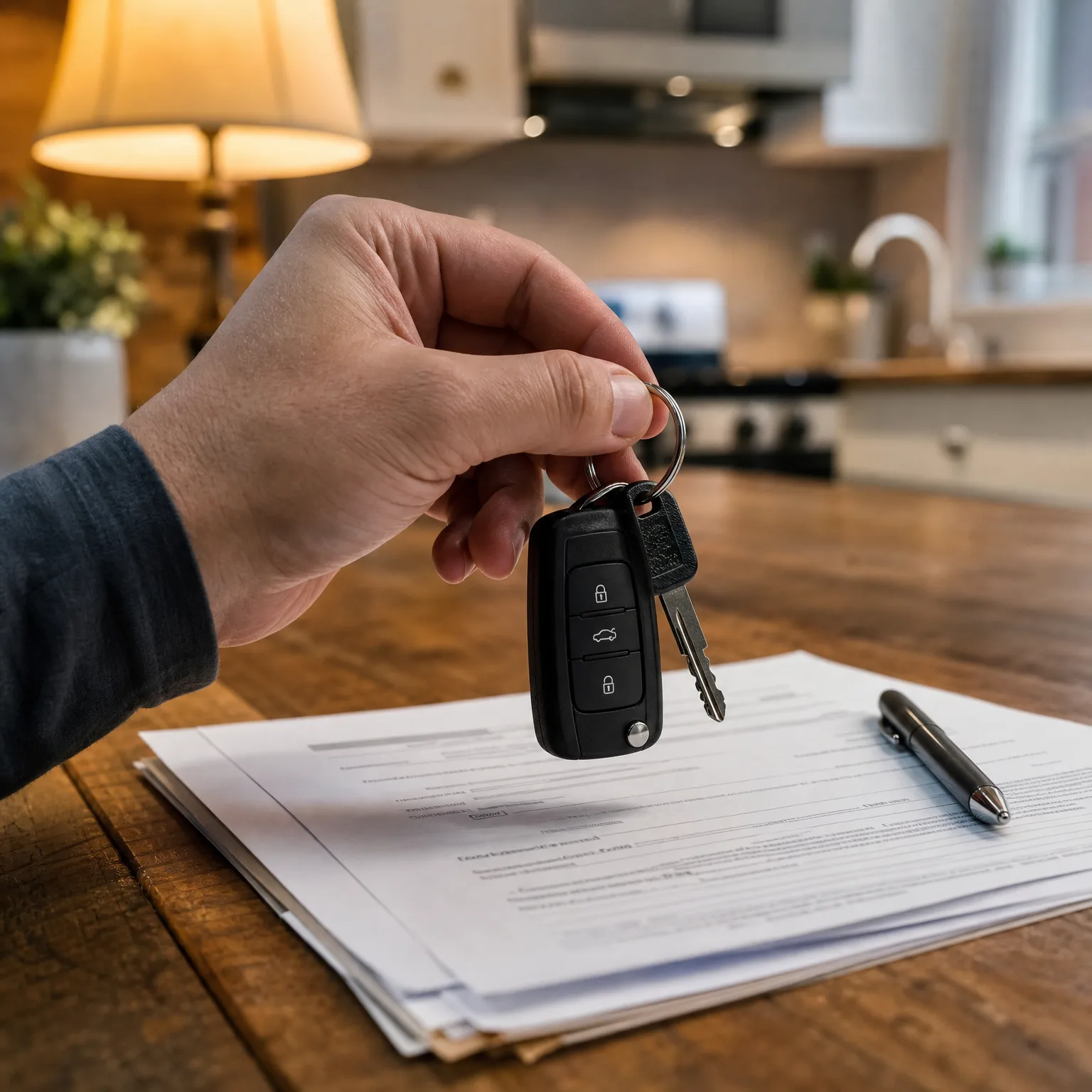
Virginia requires ignition interlock installation as a condition of reinstatement after a third DUI. The device stays on your vehicle for the duration of the reinstatement period and typically extends one to three years beyond initial reinstatement. The court may order a longer interlock period as part of sentencing, and the DMV enforces that order through your license conditions.
Installation must occur at a state-certified provider. The Virginia Commission on VASAP maintains a list of approved interlock vendors. You cannot install the device yourself or use an out-of-state provider. The vendor reports your monthly data logs to VASAP, and VASAP reports compliance to the DMV. A failed startup test, a missed calibration appointment, or a tampering event triggers a violation report. Three violations in a 12-month period result in interlock-requirement extension or license re-suspension.
The device measures your breath alcohol concentration before allowing the engine to start. Virginia interlock rules require rolling retests while driving. If you fail a rolling retest, the device logs a violation but does not shut off your engine — it activates your horn and flashers until you turn off the ignition. The violation is reported to VASAP regardless of whether law enforcement stopped you.
Monthly calibration appointments are mandatory. Miss one appointment and the device enters lockout mode, preventing your vehicle from starting until you complete calibration. The vendor charges a lockout reset fee of $50 to $100 in addition to the standard calibration fee. VASAP counts missed calibrations as violations even if you reset the device the same day.
What Happens If You Drive During the Revocation Period
Driving on a revoked license in Virginia is a Class 1 misdemeanor under Virginia Code § 46.2-301. Conviction carries up to 12 months in jail, a fine of up to $2,500, and extension of your revocation period. For third-DUI revocations specifically, judges impose jail time more frequently because the revocation is indefinite and the statute explicitly bars restricted privileges.
Law enforcement can arrest you on the spot for driving on a revoked license. The charge is jailable, meaning the officer has discretion to take you into custody rather than issue a summons. If you are stopped and cannot post bond, you stay in jail until your court date. The court does not treat this as a paperwork error or a misunderstanding — you were revoked under § 18.2-271.1, and you drove anyway.
A conviction for driving on a revoked license after a third DUI adds another offense to your driving record that the DMV reviews when you eventually apply for reinstatement. The DMV can deny your reinstatement application based on the additional conviction, effectively resetting your eligibility timeline. Some third-offense drivers accumulate two or three driving-on-revoked convictions during the three-year waiting period, and the DMV denies reinstatement until they complete an additional waiting period from the most recent conviction date.
Insurance implications are immediate. If you are stopped and cited for driving on a revoked license, your current FR-44 carrier will receive notice of the conviction when it posts to your record. Most carriers cancel FR-44 policies after a driving-on-revoked conviction because it demonstrates non-compliance with reinstatement conditions. You lose your FR-44 filing, which means you lose reinstatement eligibility even if you had otherwise completed VASAP and ignition interlock requirements.
Frequently Asked Questions
Can I get a restricted license in Virginia after a third DUI conviction?
No. Virginia Code § 18.2-271.1 revokes your license indefinitely after a third DUI within 10 years and explicitly prohibits restricted licenses during that revocation. The only path forward is full reinstatement after a three-year waiting period, VASAP completion, FR-44 filing, and ignition interlock installation.
How long is the license revocation for a third DUI in Virginia?
Virginia revokes your license indefinitely after a third DUI within 10 years. You become eligible to apply for reinstatement three years after conviction, but reinstatement is not automatic. You must complete VASAP, install ignition interlock, file FR-44, and pay reinstatement fees before the DMV will consider restoring your license.
What is the difference between FR-44 and SR-22 in Virginia?
FR-44 is Virginia's DUI-specific financial responsibility certificate requiring liability limits of 50/100/40 — double the standard SR-22 minimums of 25/50/20. Virginia and Florida are the only states that require FR-44 instead of SR-22 for DUI offenders. The higher limits result in significantly higher premiums.
How much does reinstatement cost after a third DUI in Virginia?
Total reinstatement costs typically range from $4,500 to $7,000 over three years. This includes VASAP enrollment ($250–$400), treatment programs ($1,500–$3,000), ignition interlock installation and monitoring ($2,300–$3,500), FR-44 premium increases ($3,500–$7,500 over three years), and DMV reinstatement fees ($220).
What happens if I drive on a revoked license after a third DUI in Virginia?
Driving on a revoked license is a Class 1 misdemeanor under Virginia Code § 46.2-301, punishable by up to 12 months in jail and a $2,500 fine. A conviction extends your revocation period and can result in denial of your eventual reinstatement application. Carriers also cancel FR-44 policies after driving-on-revoked convictions.
Do I need ignition interlock after a third DUI in Virginia?
Yes. Virginia requires ignition interlock installation as a condition of reinstatement after a third DUI. The device must remain on your vehicle for the duration of the reinstatement period and typically extends one to three years beyond initial reinstatement. Monthly calibration and data reporting to VASAP are mandatory.
Can I apply for reinstatement before completing VASAP?
No. VASAP completion is a statutory prerequisite for reinstatement after any DUI conviction in Virginia. The DMV will not process your reinstatement application without a VASAP certificate of compliance. Most third-offense drivers are assigned to the treatment track, requiring 12 to 26 weeks of state-certified substance abuse treatment in addition to VASAP sessions.
Related Articles
Virginia Restricted License After DUI: Court Process
5/17/2026

VA Restricted License After 2nd DUI: FR-44 & ASAP Guide
5/16/2026

Apply for VA Restricted License After DUI | Court Process
5/17/2026

Restricted License After DUI in Virginia
5/29/2026

VA DUI to Restricted License Timeline & Cost Breakdown
5/16/2026
VA DUI BAC .15-.20: Jail Time & Restricted License
5/16/2026