
How Long After a Nevada DUI Can You Get a Restricted License?
Get My Hardship-License SR-22 QuoteWhen Does the 45-Day Clock Actually Start in Nevada?
The 45-day hard suspension begins the moment the Nevada DMV revokes your license—not when you're convicted in criminal court. This happens at your administrative per se hearing or when you fail to request one within seven days of your DUI arrest. Most drivers assume the timer starts at sentencing, which can be months later, and arrive at the DMV ready to apply only to learn they're still weeks away from eligibility.
Nevada operates a dual-track system: the DMV administrative license revocation runs separately from your criminal DUI case. Your criminal case might still be pending when the administrative suspension kicks in. If you lose or skip the DMV hearing after a DUI arrest with a BAC of 0.08 or higher, the revocation is immediate under NRS 484C.220.
The 45-day period is a complete driving ban. No restricted license, no hardship exceptions, no work permits during that window. After 45 days, first-time offenders become eligible to apply for a restricted license—but only if they meet every other requirement Nevada imposes.

What You Must Complete Before Nevada Issues the Restricted License
Eligibility at day 46 does not mean automatic approval. You must install an ignition interlock device before the Nevada DMV will issue your restricted license. Nevada expanded IID requirements around 2017; first-time DUI offenders who complete the hard suspension may drive with an IID for the remainder of the suspension period, which typically runs 185 days total from revocation.
You'll need an SR-22 certificate of insurance on file with the DMV. Nevada-authorized insurers file SR-22 electronically; you cannot use an out-of-state insurer even if you hold an out-of-state license. The filing must remain active for three years from the date the DMV receives it. A lapse triggers immediate re-suspension.
Proof of enrollment in a court-ordered DUI education program is required before the restricted license application is processed. Most Nevada courts mandate an 8-hour or 24-hour DUI education course depending on your BAC and prior record. You don't need to finish the program before applying, but you must show active enrollment with documentation from the provider.
The restricted license application itself must be filed in person or by mail at a Nevada DMV office. No online pathway exists for DUI restricted licenses as of current DMV procedures. Application processing typically takes several business days once all documentation is verified.

What Driving the Restricted License Actually Allows
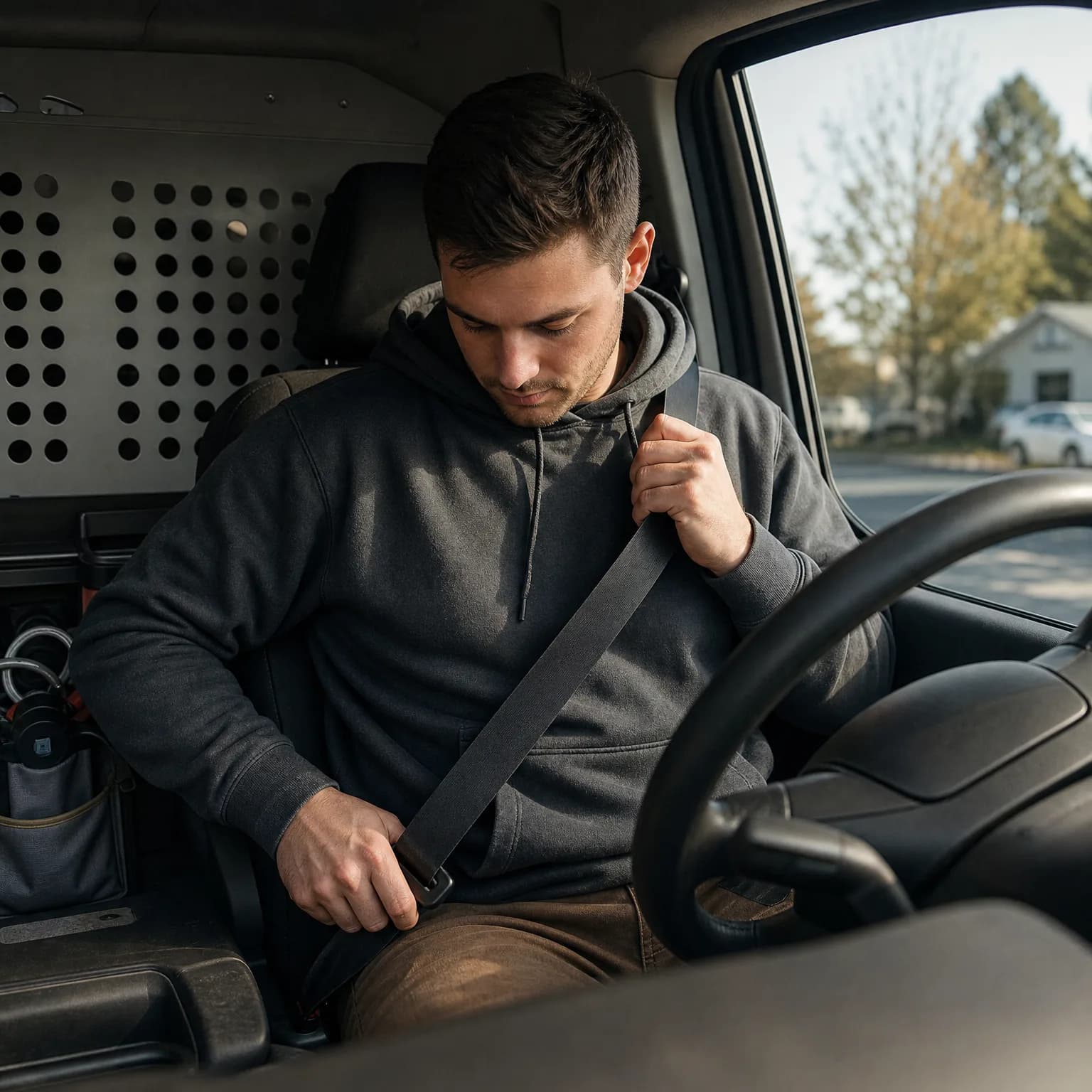
Nevada's restricted license permits driving to and from work, school, medical appointments, and court-ordered programs. Specific route restrictions are defined by the DMV or court order at the time of issuance. The license does not grant unrestricted driving—recreational trips, errands unrelated to approved purposes, and non-emergency travel are prohibited.
Time restrictions vary by case. Most orders limit driving to hours necessary for approved purposes: work shifts, class schedules, appointment windows. No universal statewide time window applies. If your employer requires proof-of-license documentation for HR compliance, request a copy of your restricted license order and IID installation certificate from the DMV.
Violating restriction terms—driving outside approved hours, routes, or purposes—triggers automatic revocation of the restricted license and can result in additional criminal charges under Nevada law. The IID records every ignition event, trip duration, and failed breath test. That data is downloadable by the court and DMV at any compliance check.

Drive Legally on Your Restricted License
Get My Hardship-License SR-22 QuoteWhat Happens If You're a Second-Offense or Aggravated DUI Case
Second-offense DUI convictions in Nevada carry longer hard suspension periods before restricted license eligibility opens. The exact waiting period depends on the timeframe between offenses and whether aggravating factors are present. Aggravated DUI cases—typically BAC of 0.18 or higher, DUI with a minor in the vehicle, or DUI causing injury—face extended ineligibility windows that can stretch to one year or more.
Felony DUI convictions, which apply to third offenses within seven years or DUI causing substantial bodily harm or death, often result in outright license revocation with no restricted license pathway. Nevada courts retain discretion to deny restricted license applications entirely for repeat offenders or aggravated cases.
Refusal cases—drivers who declined chemical testing at the time of arrest—face separate administrative penalties under Nevada's implied consent law. Refusal triggers a one-year license revocation for first offenses, and restricted license eligibility may be delayed or denied depending on the administrative hearing outcome.

How Much the Nevada Restricted License Process Costs
The restricted license application fee is set by the Nevada DMV; as of current fee schedules, reinstatement-related fees for DUI cases total $75 beyond the base $35 reinstatement fee. IID installation ranges from $70 to $150 depending on the provider, with monthly monitoring and calibration fees between $60 and $90. Over the typical 140-day restricted driving period, IID costs alone run $350 to $550.
SR-22 filing fees charged by insurers range from $15 to $50, but the real cost is the premium increase. Nevada drivers with a DUI conviction pay approximately $140 to $190 per month for liability-only coverage with SR-22, compared to $85 to $110 for clean-record drivers. Over the three-year SR-22 filing period, total premium costs can exceed $6,000.
DUI education program fees vary by provider and program length. An 8-hour course typically costs $100 to $150; a 24-hour course runs $200 to $350. Add court fines, attorney fees if you retained counsel, and the total cost of navigating a first-offense DUI with restricted license in Nevada often reaches $4,000 to $7,000 before full reinstatement.

What Insurance You'll Need and Where to Find It After a Nevada DUI
Nevada requires SR-22 certificates for all DUI-related suspensions. The SR-22 is not a separate insurance policy—it's a filing your insurer submits to the Nevada DMV certifying you carry at least Nevada's minimum liability limits: $25,000 per person for bodily injury, $50,000 per accident, and $20,000 for property damage.
If you don't own a vehicle or your vehicle was impounded and sold, you need non-owner SR-22 insurance. Non-owner policies provide liability coverage when you drive a vehicle you don't own—critical for restricted license holders who borrow cars or rely on rideshare for work commutes. Carriers writing non-owner SR-22 in Nevada include Geico, Progressive, The General, and Dairyland.
Standard carriers often non-renew policies after a DUI conviction. Non-standard insurers like Bristol West, Dairyland, Infinity, and National General specialize in high-risk drivers and accept SR-22 filings as part of their core business. Rates are higher, but availability is broader. Compare quotes from at least three carriers before committing—monthly premiums for the same coverage can vary by $40 to $60 between insurers.
Frequently Asked Questions
Can I apply for a Nevada restricted license immediately after my DUI arrest?
No. Nevada requires a 45-day hard suspension period before you become eligible to apply for a restricted license after a first-offense DUI. That 45-day clock starts when the DMV revokes your license at the administrative hearing or when you fail to request a hearing within seven days of arrest.
Does Nevada allow restricted licenses for second DUI offenses?
Eligibility for second-offense DUI restricted licenses in Nevada depends on the time between offenses and whether aggravating factors are present. The hard suspension period is longer—often 90 days or more—and the DMV retains discretion to deny the application entirely. Felony DUI convictions typically result in outright revocation with no restricted license pathway.
What happens if I drive outside the approved hours on my Nevada restricted license?
Violating the terms of your Nevada restricted license—driving outside approved hours, routes, or purposes—triggers automatic revocation and can result in additional criminal charges. The ignition interlock device records every trip, and that data is available to the court and DMV at compliance checks.
Can I use an out-of-state insurance company to file my Nevada SR-22?
No. Nevada requires SR-22 certificates from insurers authorized to write policies in Nevada, even if you hold an out-of-state driver's license. The insurer must file the SR-22 electronically with the Nevada DMV. Using an out-of-state carrier will delay or block your restricted license application.
How long does the ignition interlock device stay on my car in Nevada after a DUI?
First-time DUI offenders in Nevada must keep the IID installed for the remainder of the suspension period after the 45-day hard suspension ends—typically 140 days. If you violate IID terms or test positive for alcohol during a rolling retest, the period can extend by months or result in restricted license revocation.
Do I need a lawyer to apply for a Nevada restricted license after a DUI?
You can apply without a lawyer, but many drivers hire an attorney to navigate the administrative hearing, negotiate court-ordered program requirements, and ensure all documentation is filed correctly. If your case involves aggravating factors, refusal charges, or a second offense, legal representation increases approval odds significantly.
Related Articles

Second DUI Restricted License Eligibility in Nevada
5/17/2026
Nevada DUI Restricted License Cost: Fees, IID, SR-22
5/17/2026

Nevada DUI Refusal: Restricted License Wait Period
5/17/2026
Nevada DUI .18 BAC: Restricted License & Penalties
5/17/2026

Why Nevada Requires IID During DUI Suspension Period
5/16/2026

California DUI to Restricted License Timeline
5/16/2026