
Texas DWI Occupational License Costs: Full Breakdown by Fee Type
Get My Hardship-License SR-22 QuoteWhy Texas Occupational License Costs Have No Single Answer
Texas is the only state where the hardship license application goes through county or district court instead of DPS. This means no standardized application fee exists. Dallas County charges one amount, Harris County charges another, and rural counties set their own rates. You cannot budget accurately until you call the clerk's office in the county where your conviction occurred.
The second cost variable is timing. If your DWI triggered mandatory ignition interlock, you pay daily device fees for the entire duration of your ODL—typically one to two years. At $2.50 to $3.50 per day, that compounds to $75-$105 per month, or $1,800-$2,520 over two years. Most applicants calculate the installation fee and forget the recurring charge.
The third variable is SR-22 filing duration. Texas requires SR-22 for the full two years after reinstatement for DWI cases, not just during the ODL period. Premium increases stack on top of the filing fee, and those increases persist for the entire filing window even after your license is fully restored.
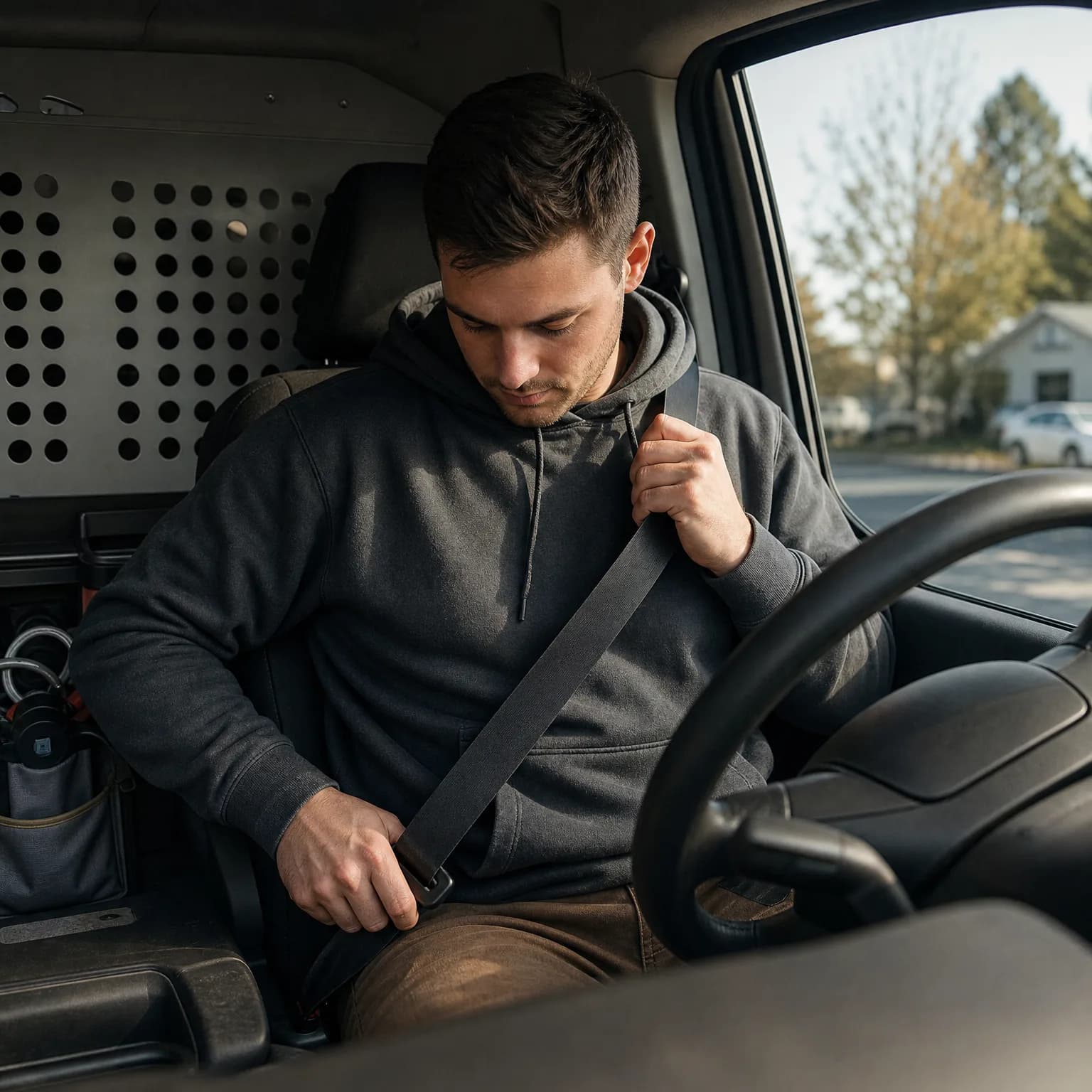
Court Petition Filing Fee: The County-Specific Wild Card
Because ODL petitions are filed with district or county courts under Texas Transportation Code §521.241, each county sets its own civil filing fee. Urban counties with high-volume courts tend to charge $200-$350. Rural counties with fewer filings sometimes charge less, sometimes more.
You file in the county where your DWI conviction occurred, not where you live now. If you were convicted in Travis County but moved to El Paso, you petition Travis County court. Some courts allow remote filing; others require in-person appearance for the hearing. Call the district clerk's office and ask for the "occupational license petition filing fee" and whether the hearing can be conducted remotely.
This fee is separate from any attorney fees if you hire representation. Many applicants petition pro se and succeed, but courts scrutinize your essential-need documentation closely. Employer letters must specify exact shift times, work addresses, and a supervisor's contact information. School enrollment requires class schedules with building addresses. Medical necessity requires physician documentation with appointment frequency and facility addresses.

SR-22 Certificate of Financial Responsibility: $15-$35 Filing Fee
Every ODL holder must maintain SR-22 certificate of financial responsibility for the duration of the ODL and for two years after full reinstatement. The SR-22 itself is a form your insurer files with DPS; the filing fee is typically $15-$35, paid once at issuance and again at each renewal if your policy term is shorter than the filing period.
The larger cost is the premium increase. DWI convictions move you into non-standard or high-risk underwriting tiers. Texas monthly premiums for DWI offenders with SR-22 typically range from $140-$280 per month, compared to $85-$140 for standard-risk drivers. That $55-$140 monthly increase persists for the full two-year filing period, adding $1,320-$3,360 to your total SR-22 cost beyond the filing fee.
If you do not own a vehicle, you need non-owner SR-22 insurance. This covers liability when you drive vehicles you do not own—rental cars, employer vehicles, or borrowed cars. Non-owner policies cost $25-$60 per month and satisfy the SR-22 requirement without insuring a specific vehicle. You cannot drive your own vehicle on a non-owner policy; if you later buy a car, you must switch to a standard policy and refile SR-22.
Ignition Interlock Device: $2.50-$3.50 Per Day Plus Installation
Texas courts mandate ignition interlock for all DWI-related ODLs under Transportation Code §521.246. Installation costs $75-$150 depending on the provider and vehicle type. The recurring cost is the daily monitoring fee: $2.50-$3.50 per day, billed monthly.
Over a 12-month ODL period, that daily fee totals $900-$1,260. Over 24 months, it reaches $1,800-$2,520. Most applicants budget for installation and miss the cumulative monthly charges. Providers require monthly calibration appointments; missed appointments trigger a lockout and may result in ODL revocation if the court is notified.
The device remains in your vehicle for the full ODL duration plus any additional period the court orders. Some courts extend interlock past ODL expiration until full license reinstatement. You cannot remove the device without a court order, even if your ODL expires. Unauthorized removal is a Class B misdemeanor and grounds for immediate license revocation.
Drive Legally on Your Restricted License
Get My Hardship-License SR-22 Quote
DPS Reinstatement Fee: $125 When You Restore Full Privileges
After your ODL period ends and you satisfy all court conditions, you pay DPS a $125 reinstatement fee to restore your unrestricted Class C license. This is separate from the court petition fee and is paid directly to DPS, not the court.
Reinstatement requires proof that your SR-22 has been active for the full two-year period. If your policy lapsed at any point, DPS resets the two-year clock from the lapse date. Carriers report lapses to DPS electronically within 24 hours; you will not receive warning before the clock resets.
Some DWI cases involve dual suspensions: one administrative (ALR) and one criminal (court-ordered upon conviction). If both suspensions are active, you must clear both before full reinstatement. The ALR suspension sometimes runs concurrently with the criminal suspension, but if the ALR suspension was shorter and expired before your ODL began, you may still owe reinstatement fees for both tracks. Call DPS Driver License Division at 512-424-2600 to confirm your specific suspension status.
Hidden Costs Most Applicants Miss
DWI education or intervention programs are required before most courts will approve an ODL petition. Texas Education Code §521.374 mandates DWI education for first offenses (12 hours minimum) and DWI intervention for repeat offenses or BAC .15+ cases (32 hours minimum). Program fees range from $90-$150 for education and $150-$300 for intervention.
Court-ordered evaluations add another $75-$200. Some courts require a substance abuse assessment before approving the petition, especially for second offenses or aggravated cases. The evaluator submits findings to the court; if treatment is recommended, you must complete it before the court issues the ODL order.
If you hire an attorney to prepare and argue your petition, fees typically run $750-$1,500. Pro se petitions are allowed, but courts deny petitions when essential-need documentation is incomplete or when the proposed driving schedule conflicts with restrictions. Attorney representation increases approval odds but is not required.
Total Cost Over a Two-Year ODL and Reinstatement Period
For a first-offense DWI with a 12-month ODL, expect to pay: county filing fee $200-$350, SR-22 filing $25, SR-22 premium increase $1,320-$3,360 over two years, ignition interlock installation $100, ignition interlock daily fees $900-$1,260 over 12 months, DWI education $90-$150, court evaluation $75-$200, and DPS reinstatement $125. Total: $2,835-$5,570.
For a second-offense DWI with a 24-month ODL, costs rise: county filing fee $200-$350, SR-22 filing $25, SR-22 premium increase $1,320-$3,360 over two years, ignition interlock installation $100, ignition interlock daily fees $1,800-$2,520 over 24 months, DWI intervention $150-$300, court evaluation $150-$250, and DPS reinstatement $125. Total: $3,870-$7,030.
These estimates assume no policy lapses, no missed interlock calibration appointments, and no additional court-ordered treatment. Lapses and violations reset timelines and add fees.
Frequently Asked Questions
Can I get an ODL immediately after a Texas DWI conviction?
No. Texas imposes a mandatory 90-day hard suspension for first-offense DWI ALR cases before you can petition for an ODL. Second offenses and refusal cases face longer waiting periods, sometimes 180 days or one year depending on the conviction. The waiting period begins from the ALR effective date or conviction date, whichever the court specifies.
Does the SR-22 filing fee cover the entire two-year period?
The SR-22 filing fee is a one-time charge when your insurer submits the certificate to DPS. If your policy term is six months and you renew, some carriers charge the filing fee again at renewal. The larger cost is the premium increase, which persists for the full two-year filing window even after your ODL expires.
What happens if I miss an ignition interlock calibration appointment?
The device enters violation mode and locks you out after a short grace period, typically 48-72 hours. Your IID provider reports the missed appointment to the court. Courts treat missed calibrations as violation of the ODL terms and may revoke your ODL without a hearing. Rescheduling immediately reduces but does not eliminate the risk.
Can I avoid the ignition interlock requirement if my BAC was below .15?
No. Texas courts mandate ignition interlock for all DWI-related ODLs under Transportation Code §521.246 regardless of BAC level. First-offense, second-offense, and aggravated cases all require IID for the full ODL period. The court sets the duration; DPS does not waive it.
Does the $125 DPS reinstatement fee apply if my ODL expires without violations?
Yes. The reinstatement fee is separate from the ODL process. When your ODL period ends, your driving privilege reverts to suspended status. You must pay DPS $125 and prove two years of continuous SR-22 coverage to restore your unrestricted Class C license. Completing the ODL successfully does not automatically reinstate your full license.
Are DWI education program costs included in the court filing fee?
No. DWI education ($90-$150 for 12-hour programs) and DWI intervention ($150-$300 for 32-hour programs) are billed separately by state-licensed providers. You must complete the program and submit your certificate of completion to the court before the judge will issue the ODL order. These fees are in addition to the county filing fee.
Do I need an attorney to file an ODL petition in Texas?
No, but courts deny petitions when documentation is incomplete or the proposed driving schedule violates statutory restrictions. Employer letters must specify exact shift times and work addresses. Pro se petitions succeed if you follow court formatting requirements, but attorney representation ($750-$1,500) increases approval odds when your case involves multiple suspensions or prior violations.
Related Articles
Texas ODL Cost After DWI: Court, SR-22, IID Fees
5/16/2026

Felony vs Misdemeanor DWI ODL Cost in Texas
5/16/2026

Texas DWI ODL and SR-22 Combined Cost
5/29/2026
TX Occupational License vs Full Reinstatement Cost
5/16/2026
Texas Occupational License After DWI: Court Petition Guide
5/16/2026
Texas Occupational License After DWI: Court Petition Guide
5/17/2026