How to Apply for a California IID Restricted License After a DUI
Get My Hardship-License SR-22 QuoteWhat Is California's IID Restricted License Program?
California's IID restricted license program allows first-offense DUI drivers to install an ignition interlock device immediately after arrest and receive a restricted license without serving the traditional 30-day hard suspension. This program, expanded statewide under AB 91 effective January 1, 2019, gives drivers a choice: install the device and drive to work, DUI program, and within employment scope starting day one, or serve 30 days of no driving whatsoever before restricted privileges begin.
The device measures your breath alcohol content before the engine starts. If it detects alcohol above the programmed threshold (typically 0.02% BAC), the vehicle will not start. Random rolling retests occur while driving. The device logs every test, every violation, every startup. That log goes to the DMV monthly.
For second and subsequent DUI offenses, the hard suspension period extends to one year before restricted license eligibility, and IID installation is mandatory for two to three years depending on offense count. First-offense drivers have the opt-in choice. Repeat offenders do not.
Who Qualifies for an IID Restricted License in California?
First-offense DUI drivers qualify immediately after the DMV administrative per se suspension takes effect, typically 30 days after arrest. You do not need to wait for court conviction. The DMV's administrative action under Vehicle Code Section 13353.3 is separate from the criminal case and moves faster.
Drivers suspended for DUI with a BAC at or above 0.08%, or for refusing the chemical test, are eligible. Wet reckless convictions under Vehicle Code Section 23103.5 also qualify. Commercial drivers who received a DUI in a personal vehicle may apply, but the restricted license does not restore CDL privileges.
You cannot obtain an IID restricted license if your suspension stems from failure to appear in court (VC 13365), unpaid fines (VC 13365.2), or negligent operator point accumulation without a DUI trigger. Those suspension types have no hardship pathway in California. You must resolve the underlying issue—pay the fines, appear in court—before the DMV will consider reinstatement.

The Application Process: DMV Administrative Path Step by Step
California's IID restricted license application runs through the DMV, not the court. You do not petition a judge. Start by enrolling in a DMV-licensed DUI program. For first-offense DUI with BAC below 0.15%, that's typically a three-month wet reckless program or nine-month first-offender program. High BAC cases (0.15% or higher) require the 18-month program. The DMV will not issue the restricted license without proof of enrollment.
Next, install a state-certified ignition interlock device at a licensed provider. California maintains a list of certified installers on the DMV website. Installation costs $70 to $150. Monthly monitoring and calibration fees run $60 to $90. You pay these fees for the entire 12-month IID restriction period if you're a first-offense driver opting into early restricted privileges. The provider submits your installation verification to the DMV electronically.
File Form DL 920 (IID Restricted Driver License Application) at any DMV office or by mail to the Mandatory Actions Unit. Include proof of DUI program enrollment and proof of SR-22 insurance filing. Pay the $125 reissue fee. The DMV processes most IID restricted license applications within 5 to 10 business days once all documents are received. Processing delays occur when enrollment verification or SR-22 filing is incomplete.
If you requested an administrative hearing within 10 days of your arrest under Vehicle Code Section 13558 and won, the suspension is set aside and no restricted license is necessary. If you lost the hearing or did not request one, the suspension stands and the restricted license is your only legal driving option during the suspension period.
SR-22 Filing Requirement and Insurance Cost Impact
California requires an SR-22 certificate of financial responsibility for all DUI-related restricted licenses. The SR-22 is not insurance—it's a filing your insurance carrier submits to the DMV proving you carry at least the state minimum liability coverage: $15,000 bodily injury per person, $30,000 per accident, and $5,000 property damage. Carriers charge $15 to $50 to file the SR-22. Most file electronically within 24 hours.
Your premium will increase. First-offense DUI drivers in California typically see rates jump $85 to $140 per month compared to pre-DUI premiums, depending on age, county, and carrier. Younger drivers and those in urban counties (Los Angeles, San Francisco, San Diego) pay higher increases. Carriers that write post-DUI policies in California include Geico, Progressive, The General, Bristol West, and Dairyland. Standard-tier carriers like State Farm and Farmers may non-renew your policy after a DUI conviction, forcing you into the non-standard market.
SR-22 filing must be maintained for three years from the date the DMV receives it. If your carrier cancels your policy or you let coverage lapse, the carrier notifies the DMV within 15 days. The DMV suspends your restricted license immediately. No grace period. You must refile SR-22 with a new carrier and pay another reissue fee to restore restricted privileges.
Drivers who do not own a vehicle can file non-owner SR-22 through carriers like Geico, Progressive, or The General. Non-owner policies provide liability coverage when you drive a borrowed or rented vehicle and satisfy the DMV's SR-22 requirement without insuring a specific car. Monthly premiums for non-owner SR-22 run $40 to $70 in California.

Drive Legally on Your Restricted License
Get My Hardship-License SR-22 Quote
What Driving Is Allowed Under California's IID Restricted License?
California's IID restricted license allows driving to and from work, during the course of employment if your job requires driving, and to and from your court-ordered DUI program. Those are the only approved purposes. No detours for errands. No stops at the grocery store on the way home. Routes are not pre-approved by the court or DMV, but every trip must fit the stated purpose.
Unlike some states, California does not impose time-of-day restrictions on IID restricted driving. You can drive at any hour as long as the trip serves an approved purpose. Night-shift workers and early-morning commuters are not penalized. The restriction is purpose-based, not clock-based.
Violations trigger immediate consequences. If law enforcement stops you driving outside approved purposes—taking your child to school, driving to a family event, running personal errands—you face restricted license revocation, extension of your suspension period, and possible criminal charges for driving on a suspended license under Vehicle Code Section 14601.2. Conviction carries up to six months in jail and fines up to $1,000 for a first offense.
IID Installation, Monthly Costs, and Compliance Requirements
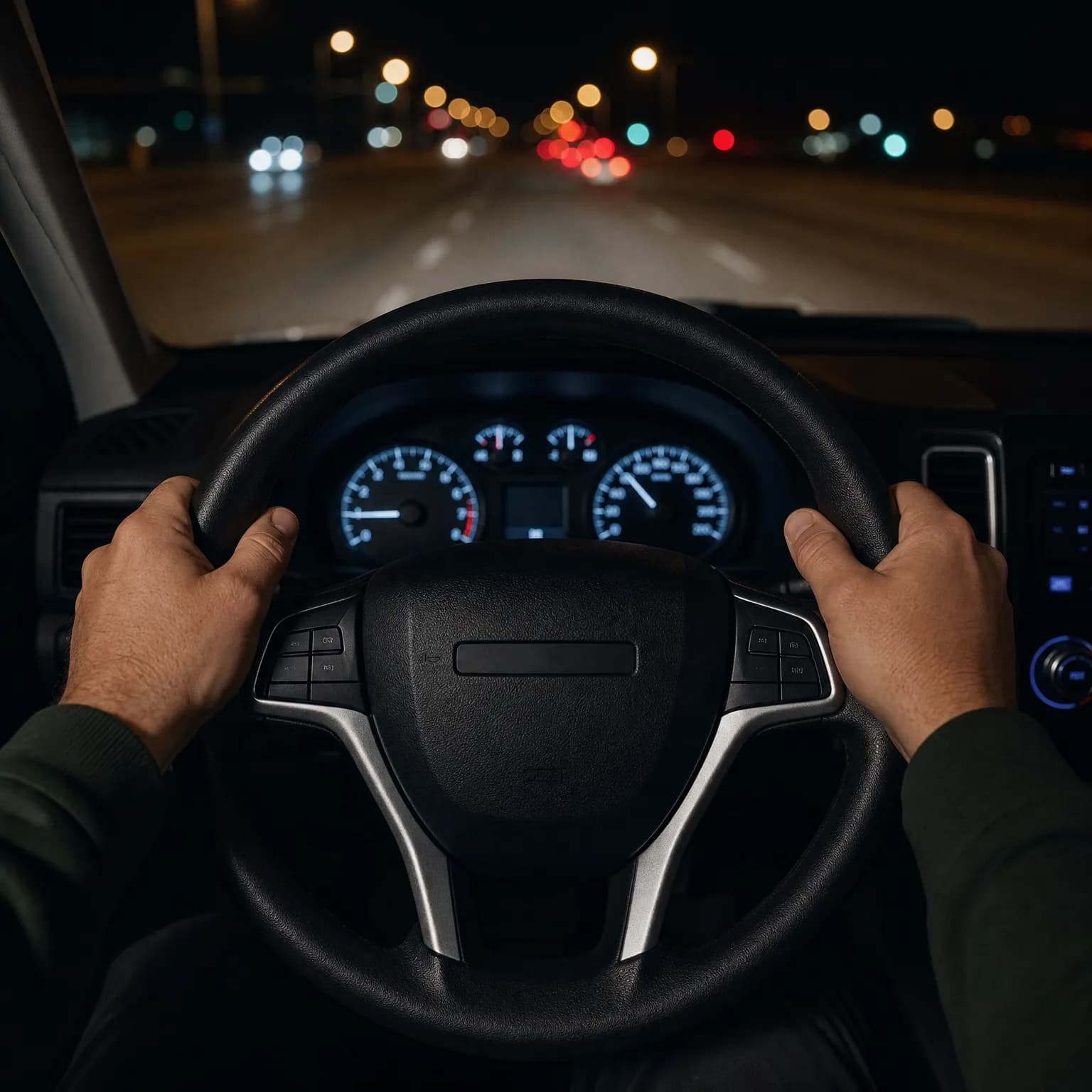
Installation takes one to two hours at a certified provider's shop. The technician mounts the handheld breath unit near the steering column and connects it to the vehicle's ignition system. You cannot start the car without providing a clean breath sample. Random rolling retests occur every 5 to 30 minutes while driving. If you fail a rolling retest, the device logs the violation but does not shut off the engine—it activates the horn and flashes the lights until you turn off the vehicle.
Monthly calibration appointments are mandatory. The device must be recalibrated every 30 to 60 days depending on the manufacturer. Miss an appointment and the device enters lockout mode after a grace period, typically 5 to 7 days. Once locked out, the vehicle will not start until you bring it to the provider for recalibration. The provider downloads the violation log and submits it to the DMV.
California DMV reviews IID compliance reports quarterly. Violations that trigger DMV action include: failed startup tests, failed rolling retests, missed calibration appointments, attempts to bypass or tamper with the device, and driving without the device installed after restriction issuance. Three or more failed tests in a month, or one missed calibration, can result in restricted license revocation and extension of your overall suspension period.
Total cost over the 12-month IID restriction period for first-offense drivers opting into early privileges: $70 to $150 installation, $60 to $90 per month monitoring and calibration ($720 to $1,080 annually), plus removal fee of $50 to $100. Combined with the $125 DMV reissue fee, SR-22 filing fee, and insurance premium increases, total first-year post-DUI cost typically ranges from $3,000 to $5,500.
What Happens If You Opt Out of the IID Program?
First-offense drivers who decline IID installation serve a 30-day hard suspension with no driving whatsoever. After 30 days, you may apply for a non-IID restricted license allowing driving to and from work and DUI program only. This restricted license does not require ignition interlock installation but imposes the same purpose restrictions as the IID version.
The non-IID restricted license is available only to drivers whose suspension does not involve a refusal of the chemical test. If you refused the breath or blood test at the time of arrest, California imposes a one-year hard suspension with no restricted license option unless you install IID. Chemical test refusal cases have no non-IID pathway.
Opting out avoids the 12 months of device fees but costs you 30 days of driving. For drivers who cannot afford the $800 to $1,200 annual IID cost, the 30-day wait may be the better financial choice. For drivers who risk job loss during a 30-day no-drive period, the IID opt-in preserves employment continuity.
Frequently Asked Questions
Can I get a California IID restricted license for a second DUI?
Yes, but the process is more restrictive. Second-offense DUI drivers must serve a one-year hard suspension before restricted license eligibility begins, and IID installation is mandatory for two to three years depending on the specifics of your case. You cannot opt out of IID installation after a second offense.
What happens if I move to another state while on California IID restriction?
California's IID restricted license does not transfer to other states. If you establish residency elsewhere, you must apply for a license in that state and comply with their post-DUI requirements, which may differ significantly. Your California suspension remains on your driving record and most states will not issue a new license until California's requirements are satisfied.
Does California's IID restricted license allow me to drive for work if I'm a rideshare or delivery driver?
Yes, if driving is within the scope of your employment. Rideshare and delivery drivers can use the IID restricted license to drive during work hours for their employer. However, most rideshare platforms (Uber, Lyft) and delivery services have their own background check policies that may disqualify you after a DUI conviction regardless of restricted license status.
How long does California SR-22 filing last after a DUI?
California requires SR-22 filing for three years from the date the DMV receives the filing. If your insurance lapses or you cancel the policy during that period, the DMV suspends your license immediately and the three-year clock resets when you refile.
Can I install an ignition interlock device in a car I don't own?
Yes, but you need written permission from the registered owner. The device provider will require proof of ownership or a notarized consent form from the owner before installation. If you drive multiple vehicles, you must install IID in every vehicle you operate during the restriction period.
What happens if I fail a rolling retest while driving in California?
The device logs the violation and activates the horn and lights until you turn off the vehicle, but it does not shut off the engine while you're driving. The failed test is reported to the DMV. Three or more failed tests in a month can result in restricted license revocation and extension of your suspension period.
Does a wet reckless conviction in California require an IID restricted license?
Wet reckless convictions under Vehicle Code Section 23103.5 qualify for IID restricted licenses under the same rules as DUI convictions. You enroll in a shorter DUI program (typically three months), install IID, file SR-22, and pay the $125 reissue fee. The IID requirement and SR-22 duration are the same as for standard first-offense DUI.
Related Articles
California IID Restricted License After DUI: Full Guide
5/17/2026

CA IID Restricted License After DUI: 12-Month Program
5/16/2026
California Restricted License After DUI: How to Apply
5/17/2026
CA Restricted License vs 6-Month Wait After DUI
5/16/2026
First 30 Days After a CA DUI: Restricted License Steps
5/16/2026

CA DUI Restricted License and IID Insurance
5/29/2026