
How to Apply for a Michigan Restricted License After an OWI
Get My Hardship-License SR-22 QuoteMichigan Uses Two Separate OWI Restricted License Tracks
First-offense OWI in Michigan triggers a 30-day hard suspension followed by eligibility for a restricted license with BAIID (Breath Alcohol Ignition Interlock Device) for 150 days. This is an administrative suspension managed by the Michigan Secretary of State, and the restricted license application is processed through standard SOS channels once the 30-day hard period ends.
Second OWI within seven years triggers a one-year hard revocation, not a suspension. A revocation has no automatic end date and no administrative restricted license path. After the one-year hard period, you must petition the Driver Assessment and Appeal Division (DAAD) for a hearing to request any driving privileges at all, including a restricted license. DAAD hearings require substance abuse evaluation, proof of treatment compliance, and often testimony from treatment providers.
Most drivers assume the hardship application process is identical for both offense levels. It is not. First-offense drivers file paperwork with SOS and wait for administrative approval. Second-offense drivers attend formal hearings before hearing officers who have discretion to deny petitions outright. The procedural difference matters more than the one-year wait period because the second-offense path carries no presumption of approval.
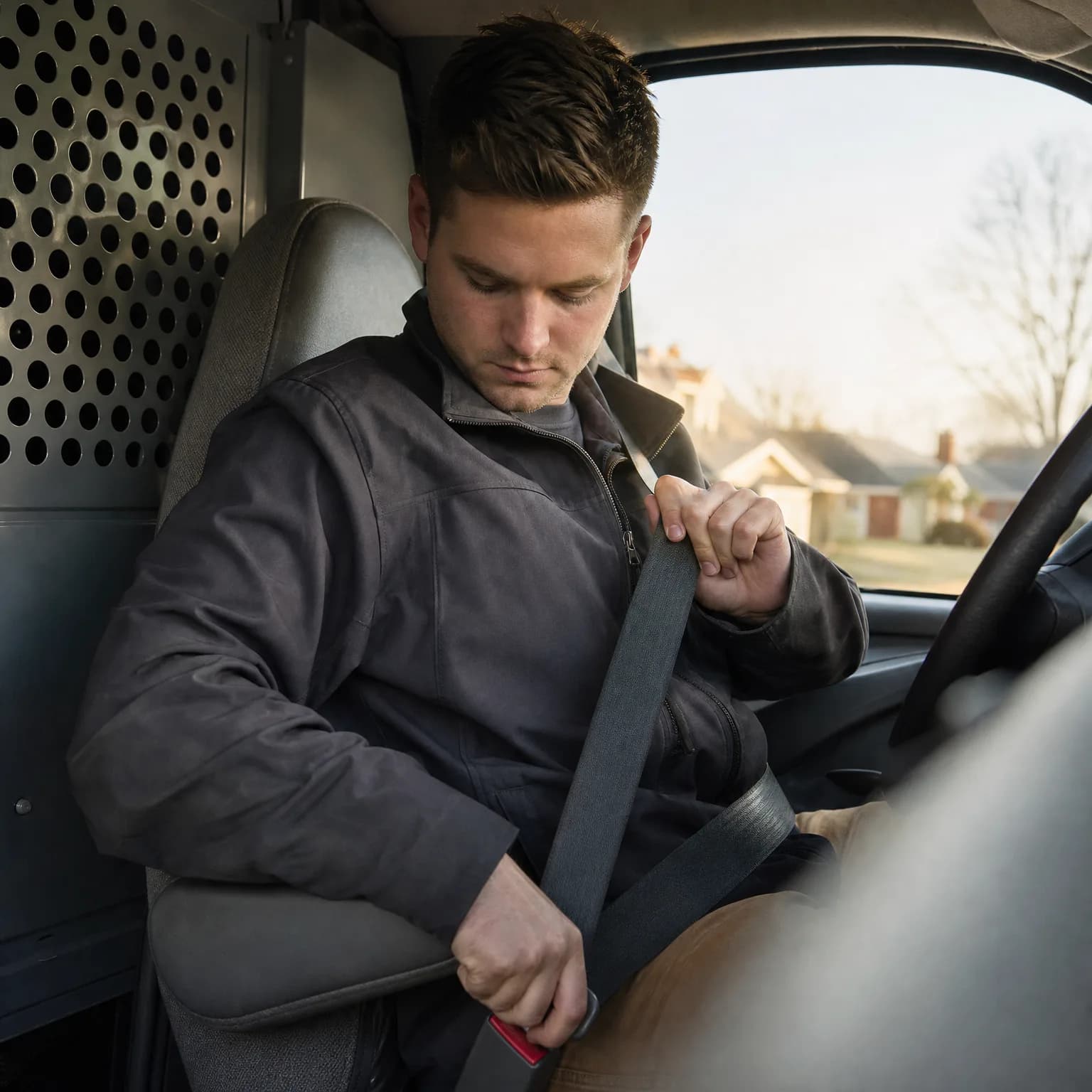
What the First-Offense Restricted License Application Requires
After the 30-day hard suspension ends, you apply for a restricted license through Michigan Secretary of State. The application requires proof of need (employment letter, medical appointment documentation, or school enrollment), proof of Michigan no-fault insurance with SR-22 filing, and payment of the $125 reinstatement fee. BAIID installation must be completed by a state-approved vendor before the restricted license is issued.
Approved purposes for the restricted license are driving to and from work, school, medical treatment, court-ordered programs, alcohol or drug treatment, and other court-approved purposes. Specific routes may be defined by the Secretary of State based on the documentation you submit. If your employer's address changes mid-restriction period, you must file an amendment with SOS or risk operating outside your restriction terms.
Processing time varies but typically runs 10 to 21 days after all documentation is submitted. BAIID violations (failed breath tests, circumvention attempts, missed rolling retests) are reported directly to SOS and trigger automatic restriction revocation in most cases. The 150-day restricted period does not count toward your overall suspension if you violate BAIID conditions and lose the restricted license partway through.

What Second-Offense Revocation Appeals Require at DAAD Hearings
Second OWI within seven years results in revocation, not suspension. After one year, you may petition DAAD for a hearing to request a restricted license. The petition requires a substance abuse evaluation from a state-approved evaluator, documentation of completed treatment or ongoing participation, employer affidavit or other proof of need, proof of Michigan no-fault insurance with SR-22 filing, and often letters of support from treatment providers or sponsors.
DAAD hearings are adversarial. A hearing officer reviews your petition, asks questions about your sobriety, treatment compliance, and lifestyle changes, and decides whether to grant or deny the restricted license. Approval is not guaranteed. Many petitions are denied on first hearing, requiring a second appeal six months later. Denied petitions often cite insufficient proof of sobriety, lack of treatment documentation, or inconsistent testimony about alcohol use.
If the hearing officer grants a restricted license, BAIID installation is mandatory for the entire restricted period, often one year or longer. The restricted license does not automatically convert to full driving privileges at the end of the restriction term. Full reinstatement requires a second DAAD hearing after demonstrating compliance with all restriction conditions.
Michigan SR-22 Filing Duration and Cost Stack for OWI Cases
Michigan requires SR-22 filing for three years from the date of reinstatement for OWI convictions. The filing period begins when your restricted license is issued, not when your conviction date occurred. If you lose the restricted license mid-period due to a BAIID violation, the SR-22 clock does not pause. You must maintain continuous SR-22 coverage for the full three years or face a new suspension for failure to maintain financial responsibility.
SR-22 filing fees range from $25 to $50 depending on the carrier. Monthly premium increases for post-OWI drivers with SR-22 filing typically run $140 to $240 per month in Michigan, approximately double the pre-conviction rate. Drivers without a vehicle need non-owner SR-22 policies, which cost $35 to $75 per month but do not cover a specific car. If you purchase a vehicle during the SR-22 period, you must switch from non-owner to standard SR-22 coverage and notify SOS of the policy change.
Total cost stack for first-offense restricted license: $125 SOS reinstatement fee, $75 to $150 BAIID installation, $70 to $100 per month BAIID lease (150 days = approximately 5 months = $350 to $500), SR-22 filing fee $25 to $50, and premium increases of $140 to $240 per month for three years. Total out-of-pocket over the restriction and filing period often exceeds $6,000.

Drive Legally on Your Restricted License
Get My Hardship-License SR-22 Quote
Sobriety Court Track as an Alternative Restricted License Path
Michigan Sobriety Courts offer a parallel restricted license track for some OWI offenders. Participation is not automatic; you must be accepted into the program by the court handling your OWI case. Sobriety Court participants receive intensive supervision, mandatory treatment attendance, random drug and alcohol testing, and frequent court appearances in exchange for restricted driving privileges that may be granted earlier or with less restrictive conditions than the standard administrative path.
Sobriety Court restricted licenses still require BAIID installation and SR-22 filing, but the approval process is judicial rather than administrative. The judge overseeing your case decides when restricted privileges are granted based on treatment compliance and testing results. Violations of Sobriety Court conditions trigger immediate revocation and potential jail time, making this path higher-stakes than the standard SOS administrative track.
Not all Michigan counties operate Sobriety Courts. Availability depends on local court funding and judicial participation. If your county does not offer a Sobriety Court program, the standard SOS or DAAD track is your only option.

What Happens If You Violate Restricted License Terms
Operating outside your approved purposes, driving outside approved hours, or triggering a BAIID violation results in immediate restricted license revocation in most cases. SOS receives BAIID violation reports electronically from device vendors. Common violations include failed initial breath tests (BAC above .025), missed rolling retests while driving, and circumvention attempts detected by the device's tampering sensors.
Revocation of a restricted license does not simply reset the timeline. You lose credit for the compliant time already served, and you must petition for reinstatement or appeal to DAAD depending on whether your original suspension was first or second offense. For first-offense drivers, this often means waiting another 30 days and re-applying with an explanation of the violation. For second-offense drivers on DAAD-granted restricted licenses, revocation requires a new hearing and proof that the violation has been addressed.
Employers rarely accommodate restricted license violations. If your restricted license is revoked mid-employment, most employers treat it as equivalent to losing your license entirely. The documentation you submitted to justify the restricted license (employer affidavit, work schedule) becomes void, and you cannot legally drive to work until reinstatement.
Finding SR-22 Coverage That Meets Michigan BAIID Restricted License Requirements
Not all carriers write policies for drivers with active BAIID requirements. Carriers that commonly write post-OWI SR-22 policies in Michigan include Geico, Progressive, National General, Bristol West, and Direct Auto. Standard-tier carriers like State Farm and Auto-Owners may non-renew or decline new policies for drivers with OWI convictions, particularly second offenses.
Non-owner SR-22 policies are the correct product if you do not own a vehicle and need to meet Michigan's financial responsibility requirement during your restricted license period. Monthly premiums for non-owner SR-22 range from $35 to $75. If you later purchase a vehicle, you must upgrade to a standard SR-22 policy covering the specific car and notify SOS of the policy change within 30 days.
Michigan's no-fault insurance framework adds complexity. Post-2020 reform allows drivers to select tiered PIP coverage levels, but drivers reinstating after an OWI suspension must show proof of the selected PIP tier or documented opt-out with qualifying health coverage. SR-22 filing alone does not satisfy Michigan's insurance requirement; the underlying policy must meet state no-fault minimums of $50,000 per person, $100,000 per accident bodily injury, and $10,000 property damage, plus PIP coverage unless validly opted out.
Frequently Asked Questions
Can I get a restricted license immediately after a first OWI in Michigan?
No. Michigan imposes a 30-day hard suspension before you are eligible to apply for a restricted license after a first OWI. The restricted license application can be submitted to the Secretary of State once the 30-day hard period ends, but BAIID installation and SR-22 filing must be completed before the restricted license is issued.
What is the difference between suspension and revocation in Michigan OWI cases?
Suspension is a finite penalty with an automatic end date; revocation has no automatic end date and requires a formal DAAD hearing to regain any driving privileges. First OWI triggers suspension. Second OWI within seven years triggers revocation, which is procedurally and substantively more severe.
Do I need SR-22 filing for the entire restricted license period in Michigan?
SR-22 filing is required for three years from the date of reinstatement, not just the restricted license period. If your restricted license period is 150 days, you must maintain SR-22 coverage for the remaining two and a half years after full reinstatement or face a new suspension.
What happens if I fail a BAIID breath test during my Michigan restricted license period?
Failed breath tests are reported electronically to the Secretary of State and typically trigger immediate restricted license revocation. You lose credit for compliant time already served and must petition for reinstatement, often requiring a new 30-day wait period and explanation of the violation.
Can I drive for Uber or Lyft with a Michigan BAIID restricted license?
No. Rideshare driving is not an approved purpose under Michigan restricted licenses, which limit driving to work, school, medical treatment, court-ordered programs, and alcohol/drug treatment. Operating outside approved purposes results in revocation.
How much does BAIID cost in Michigan for the full restricted license period?
BAIID installation costs $75 to $150, and monthly lease fees run $70 to $100. For a 150-day restricted period (approximately five months), total BAIID cost is $425 to $650, not including calibration appointments or violation fees.
What is a DAAD hearing and when is it required in Michigan?
DAAD (Driver Assessment and Appeal Division) hearings are required for license revocations, not suspensions. Second OWI within seven years results in revocation; after one year, you must petition DAAD for a formal hearing to request any driving privileges, including a restricted license. Approval is discretionary and not guaranteed.
Related Articles

Michigan Restricted License After OWI Hearing Guide
5/17/2026

Who Qualifies for Michigan Restricted License After OWI
5/16/2026

2nd OWI Restricted License Michigan: DAAD Process
5/17/2026

Michigan OWI Arrest to Restricted License Timeline
5/16/2026

MI Third OWI: Felony Revocation & Restricted License
5/17/2026

MI OWI Restricted License Costs: Hearing, IID, Fees
5/17/2026