
How to Prepare for an Ohio Limited Driving Privileges Hearing After an OVI
Get My Hardship-License SR-22 QuoteWhat Ohio Judges Actually Evaluate at a Limited Driving Privileges Hearing
Ohio judges evaluate whether you can prove a documented need to drive for work, school, medical appointments, or court-ordered treatment, not whether your OVI conviction was fair or your suspension period is too harsh. The hearing is not an appeal of your conviction. The court has already accepted your guilt or plea. What the judge needs to see is employer verification on company letterhead with specific shift times, medical appointment schedules with provider contact information, school enrollment verification with class schedules, or treatment program documentation with mandatory attendance dates.
Most petitions fail because drivers spend the hearing explaining why they shouldn't have been convicted or why the suspension is creating financial hardship without bringing a single piece of third-party documentation. Ohio Revised Code 4510.021 grants courts discretion to issue Limited Driving Privileges after the hard suspension period expires, but that discretion turns entirely on whether you satisfy the court that restricted driving serves a necessary purpose beyond general convenience. Hardship alone is not enough. The statute requires proof of necessity.
The court will also verify that you have installed an ignition interlock device if your OVI offense requires it under ORC 4510.022, that you carry valid SR-22 insurance coverage, and that you have paid all court fees and reinstatement fees owed to the Ohio BMV. Missing any one of these three conditions will result in immediate denial regardless of how strong your employment documentation is. The judge does not have discretion to waive the ignition interlock requirement or the SR-22 filing requirement for OVI-related suspensions.
Documents You Must Bring to the Hearing and How to Format Them
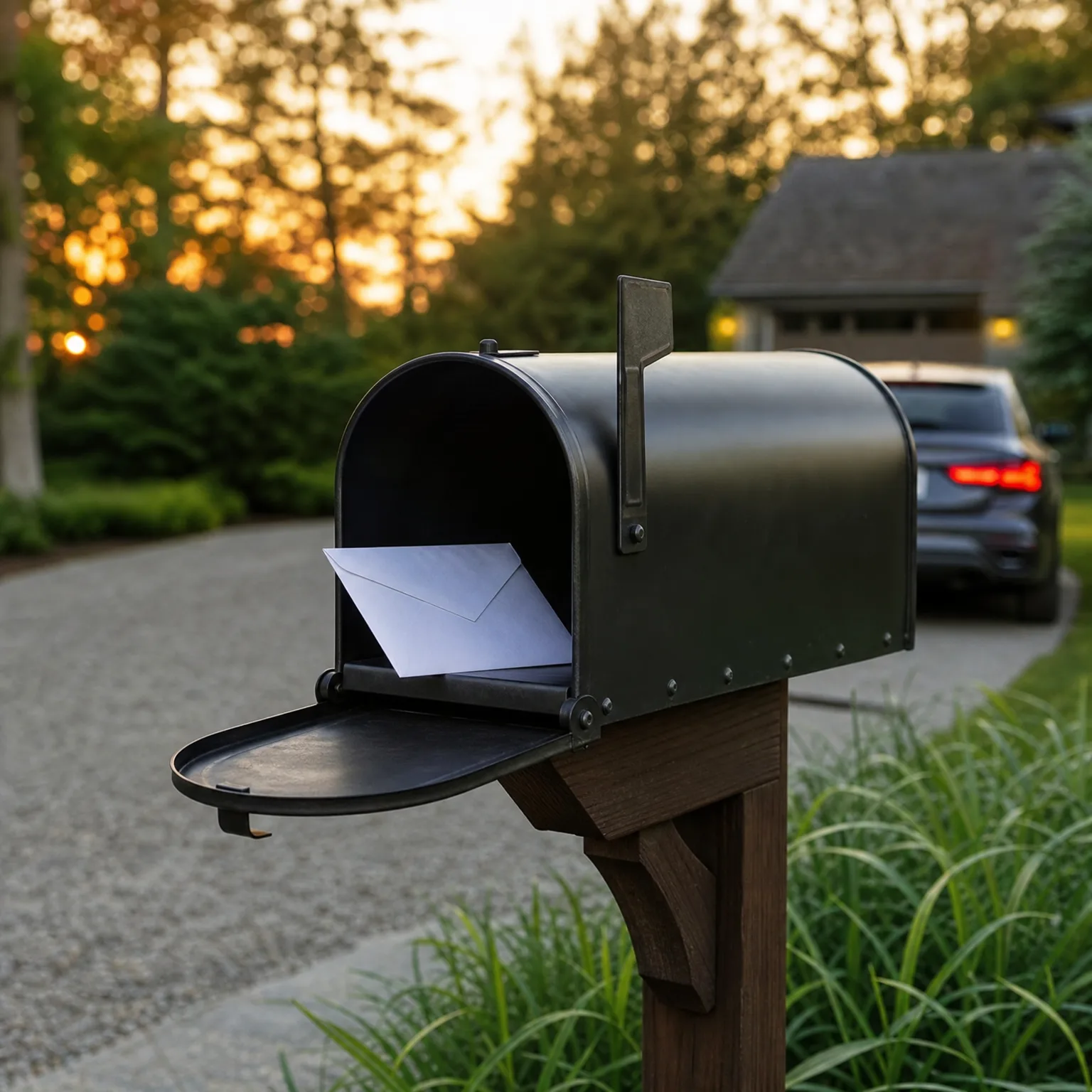
Bring your employer's verification letter on company letterhead, signed by a supervisor or HR representative, listing your job title, work address, shift schedule with specific days and hours, and a statement that driving is required for the position or that no public transit serves the route between your home and workplace. The letter must include the supervisor's direct phone number and email address so the court can verify it independently. Generic letters stating you are employed without shift details or contact information will be rejected.
Bring proof of SR-22 insurance coverage. This is not your regular insurance card. SR-22 is a certificate filed by your insurance carrier directly with the Ohio BMV certifying that you carry at least the state minimum liability coverage of $25,000 per person, $50,000 per accident for bodily injury, and $25,000 for property damage. The certificate itself is filed electronically, but you need to bring a copy of the SR-22 filing confirmation from your carrier showing the filing date and the BMV case number. If you do not own a vehicle, you need non-owner SR-22 coverage, which provides liability coverage when you drive a borrowed or rented vehicle.
Bring the ignition interlock installation receipt and compliance report from an Ohio Department of Public Safety-approved vendor. The receipt must show the device serial number, installation date, and the vehicle VIN. If you do not own a vehicle, bring documentation explaining this fact and a signed affidavit stating you will not operate any vehicle without an interlock-equipped vehicle available to you. Some courts allow family members to install the device on a household vehicle you will be authorized to drive under your Limited Driving Privileges.
Bring proof of payment for all court fines, reinstatement fees owed to the BMV, and the court filing fee for the LDP petition. The Ohio BMV reinstatement fee for OVI-related suspensions is $475, separate from any court fines. The petition filing fee varies by court. Some Ohio courts charge $50 to $150 to file the LDP petition. Bring receipts showing these payments were made, not just confirmation that payment plans were set up. Outstanding balances are grounds for denial.


When You Can File the Petition and Which Court Has Jurisdiction
You can file a Limited Driving Privileges petition after the hard suspension period expires. For a first OVI offense with a BAC failure, Ohio law imposes a 15-day hard suspension before you become eligible to petition for LDP. For a first-offense test refusal, the hard suspension is 30 days. For a second OVI offense within 10 years, the hard suspension is 180 days. For a third offense within 10 years, the hard suspension is one year. Drivers with four or more OVI offenses within 10 years face a three-year hard suspension before LDP eligibility, and some aggravated or felony OVI convictions carry mandatory suspensions with no LDP eligibility at all.
The court with jurisdiction depends on the type of suspension you are serving. If your suspension is the result of an OVI conviction, the sentencing court that handled your criminal case has jurisdiction over your LDP petition. If your suspension is an Administrative License Suspension imposed by the Ohio BMV at the time of arrest, the court of common pleas in your county of residence has jurisdiction. Ohio has two separate OVI-related suspensions: the ALS triggered at arrest by the arresting officer, and the court-imposed suspension following conviction. You may need to petition for LDP on both suspensions separately if both are active.
File the petition in the correct court or it will be dismissed. The petition must include your full name, driver's license number, the case number of your OVI conviction or ALS case, the suspension start and end dates, the specific purposes for which you are requesting driving privileges, the routes you need to drive with street addresses and times, and verification that you have installed an ignition interlock device and obtained SR-22 insurance. Most Ohio courts provide a standard petition form on their website or at the clerk's office. Use the court's form if one is available rather than drafting your own.
What Restrictions the Court Will Impose and How Violations Are Enforced
The court will define permitted purposes, routes, days, and hours in the order granting Limited Driving Privileges. Ohio courts typically authorize driving for work, school, medical appointments, court-ordered treatment, and necessary family care such as transporting a minor child to daycare or school. The court has broad discretion to define what counts as necessary. Some courts authorize grocery shopping and religious services. Some do not. The order will list specific addresses you are permitted to drive to and from, and you must carry a copy of the court order in the vehicle at all times.
The court will specify permitted hours. Most courts limit LDP to the hours you are actually working plus a reasonable commute window, not 24-hour authorization. If your shift is 8 a.m. to 5 p.m. and your commute is 30 minutes, the court may authorize driving from 7:15 a.m. to 5:45 p.m. on work days only. Driving outside those hours or for purposes not listed in the order is a violation that can result in immediate revocation of your LDP and criminal charges for driving under suspension.
Ohio law enforcement can verify your LDP status in real time through the BMV database. If you are stopped while driving under LDP, the officer will check whether the current time, location, and stated purpose fall within the restrictions listed in your court order. If you are driving to a location not listed in the order or outside the permitted hours, you will be arrested for driving under OVI suspension, a first-degree misdemeanor carrying up to six months in jail and a $1,000 fine. The court will revoke your LDP, and you will serve the remainder of your suspension with no driving privileges.
Ignition interlock violations also trigger LDP revocation. The device logs every engine start, every failed breath test, every missed rolling retest, and every attempt to tamper with or bypass the system. The interlock vendor reports violations to the court and the BMV. A single failed breath test may be excused as a calibration error or residual alcohol from mouthwash, but a pattern of failures or any evidence of circumvention will result in immediate revocation. The court does not hold a second hearing. You receive a notice in the mail that your LDP has been revoked and you are prohibited from driving for the remainder of your suspension.

Drive Legally on Your Restricted License
Get My Hardship-License SR-22 Quote
How Long the Hearing Takes and What Happens After Approval
The hearing itself typically lasts 10 to 20 minutes. The judge reviews your petition and supporting documentation, asks whether you have installed the ignition interlock device and obtained SR-22 insurance, confirms the routes and hours you are requesting, and issues a ruling on the record. Some courts issue the written order the same day. Some courts mail the order within 7 to 14 days. You cannot legally drive under Limited Driving Privileges until the written order is signed by the judge and filed with the court clerk, even if the judge verbally approved your petition at the hearing.
Once the order is signed, the court transmits it electronically to the Ohio BMV. The BMV updates your driving record to reflect that you hold Limited Driving Privileges with specific restrictions. This update typically takes 3 to 5 business days. You must carry a certified copy of the court order in your vehicle at all times while driving under LDP. Some courts provide a certified copy at the hearing. Some require you to request and pay for a certified copy from the clerk's office after the order is filed.
Your SR-22 insurance must remain active for the entire duration specified in your OVI case, typically three years from the conviction date. If your insurance carrier cancels your policy or you allow it to lapse, the carrier notifies the BMV electronically within 24 hours, the BMV suspends your license immediately, and the court revokes your LDP. There is no grace period. You cannot drive legally from the moment the lapse is reported. Reinstatement after an SR-22 lapse requires filing a new SR-22, paying a reinstatement fee, and in many cases petitioning the court again for new Limited Driving Privileges because the prior LDP order is void once the underlying insurance lapse triggers a new suspension.

What to Do If the Court Denies Your Petition
If the court denies your petition, the judge will state the reason on the record. Common reasons for denial include failure to complete the hard suspension period, failure to install an ignition interlock device, failure to obtain SR-22 insurance, outstanding court fines or BMV reinstatement fees, insufficient documentation of necessity, or a criminal record showing multiple prior OVI offenses that disqualify you from LDP eligibility under Ohio law. The denial order should specify which deficiency caused the denial.
You can file a second petition once you correct the deficiency. If the denial was based on missing documentation, gather the required documents and file a new petition. If the denial was based on unpaid fees, pay the fees and file again with receipts. If the denial was based on timing, wait until the hard suspension period expires and file on the first eligible date. There is no limit on the number of times you can petition, but each petition requires a new filing fee.
If the denial was based on legal ineligibility, such as a fourth OVI offense within 10 years or a felony OVI conviction, you will not be granted Limited Driving Privileges regardless of how many times you petition. Ohio law prohibits LDP for certain offense categories. In those cases, you must serve the full suspension period with no driving privileges, complete all court-ordered requirements including the Driver Intervention Program, pay all reinstatement fees, and file for full license reinstatement with the BMV once the suspension period ends.
How SR-22 Insurance Costs Layer on Top of LDP Fees
SR-22 insurance after an OVI conviction in Ohio typically costs $85 to $190 per month depending on your age, county, and the carrier you use. The SR-22 filing itself carries a one-time fee of $25 to $50, but the real cost is the premium increase that follows an OVI conviction. Carriers classify OVI offenders as high-risk drivers and raise premiums by 60% to 150% compared to clean-record rates. If you paid $80 per month before the OVI, expect to pay $130 to $200 per month after the conviction.
If you do not own a vehicle, non-owner SR-22 insurance provides the liability coverage required by Ohio law without insuring a specific car. Non-owner policies typically cost $40 to $90 per month for SR-22 filers. This is cheaper than standard SR-22 coverage because the carrier is not insuring a vehicle you drive daily, only providing liability coverage when you borrow or rent a car. Non-owner SR-22 satisfies the Ohio BMV's SR-22 filing requirement and allows you to petition for Limited Driving Privileges even if you sold your car after the OVI arrest.
The total cost stack for Limited Driving Privileges in Ohio includes the LDP court filing fee ($50 to $150 depending on the court), the BMV reinstatement fee ($475 for OVI-related suspensions), the ignition interlock installation fee ($70 to $150), the monthly interlock lease and monitoring fee ($70 to $100 per month), the SR-22 filing fee ($25 to $50), and the increased monthly insurance premium ($85 to $190 per month for three years). Over the three-year SR-22 filing period, expect total costs between $5,000 and $9,000 depending on your carrier, interlock vendor, and how long you hold LDP before full reinstatement.
Frequently Asked Questions
Can I get Limited Driving Privileges in Ohio if I refused the breath test at the time of my OVI arrest?
Yes, but the hard suspension period before you become eligible to petition is 30 days for a first-offense test refusal, compared to 15 days for a first-offense BAC failure. For a second test refusal within 10 years, the hard suspension is 180 days. You must install an ignition interlock device and obtain SR-22 insurance before the court will grant LDP, regardless of whether you refused or failed the test.
What happens if I drive outside the hours or routes listed in my Ohio LDP order?
Driving outside the permitted hours, routes, or purposes is a first-degree misdemeanor in Ohio, punishable by up to six months in jail and a $1,000 fine. The court will revoke your Limited Driving Privileges immediately, and you will serve the remainder of your OVI suspension with no driving privileges. Law enforcement can verify your LDP restrictions in real time through the BMV database.
Do I need a lawyer to petition for Limited Driving Privileges in Ohio?
No, you can file the petition yourself using the standard form provided by the court. However, if your OVI case involved aggravating factors such as a high BAC, a prior OVI conviction, or an accident with injuries, a lawyer can help frame your petition to address judicial concerns about public safety. Most first-offense OVI cases with straightforward employment or school needs do not require legal representation for the LDP hearing.
How long does SR-22 insurance stay on file after an OVI conviction in Ohio?
Ohio requires SR-22 insurance for three years from the date of your OVI conviction, not from the date you obtain Limited Driving Privileges or full reinstatement. The three-year clock starts when the court enters your conviction, and the SR-22 must remain continuously on file with the Ohio BMV for the entire period. If your policy lapses at any point, the BMV suspends your license immediately and the three-year period restarts from the date you file a new SR-22.
Can I petition for Limited Driving Privileges if my Ohio license is suspended for both an OVI conviction and an Administrative License Suspension?
Yes, but you must petition separately for each suspension. Ohio imposes two separate OVI-related suspensions: the Administrative License Suspension triggered at arrest by the arresting officer, and the court-imposed suspension following conviction. The sentencing court has jurisdiction over the conviction-based suspension, and the court of common pleas in your county of residence has jurisdiction over the ALS. You may need to obtain two separate LDP orders, one from each court.
What is the Driver Intervention Program and do I need to complete it before I can get Limited Driving Privileges?
The Driver Intervention Program is a state-approved three-day residential education program required for all OVI offenders in Ohio. You must complete the DIP before full license reinstatement, but most courts do not require DIP completion before granting Limited Driving Privileges. The court may grant LDP while you are still enrolled in or waiting to attend the DIP, as long as you have installed the ignition interlock device and obtained SR-22 insurance.
Can I use my Limited Driving Privileges to drive for work as a rideshare or delivery driver in Ohio?
No. Rideshare companies and delivery platforms require drivers to carry commercial auto insurance or higher liability limits than the state minimum, and they conduct background checks that disqualify drivers with OVI convictions. Even if the court grants you LDP for employment purposes, the platforms will not allow you to drive commercially with an active OVI suspension and ignition interlock requirement on your record.
Related Articles
Second OVI in Ohio Within 6 Years: Limited Driving Privileges
5/16/2026
Ohio Limited Driving Privileges After OVI: Process
5/17/2026

Ohio Limited Driving Privileges After OVI Conviction
5/16/2026
Ohio OVI Limited Driving Privileges Cost Breakdown
5/16/2026
Ohio LDP vs Full Reinstatement After OVI: What You Need
5/17/2026

Ohio OVI Arrest to Limited Driving Privileges Timeline
5/16/2026