
NC DWI With Child in Vehicle: Aggravated Charge & LDP Impact
Get My Hardship-License SR-22 QuoteWhy a Child Passenger Escalates Your DWI to Aggravated Level
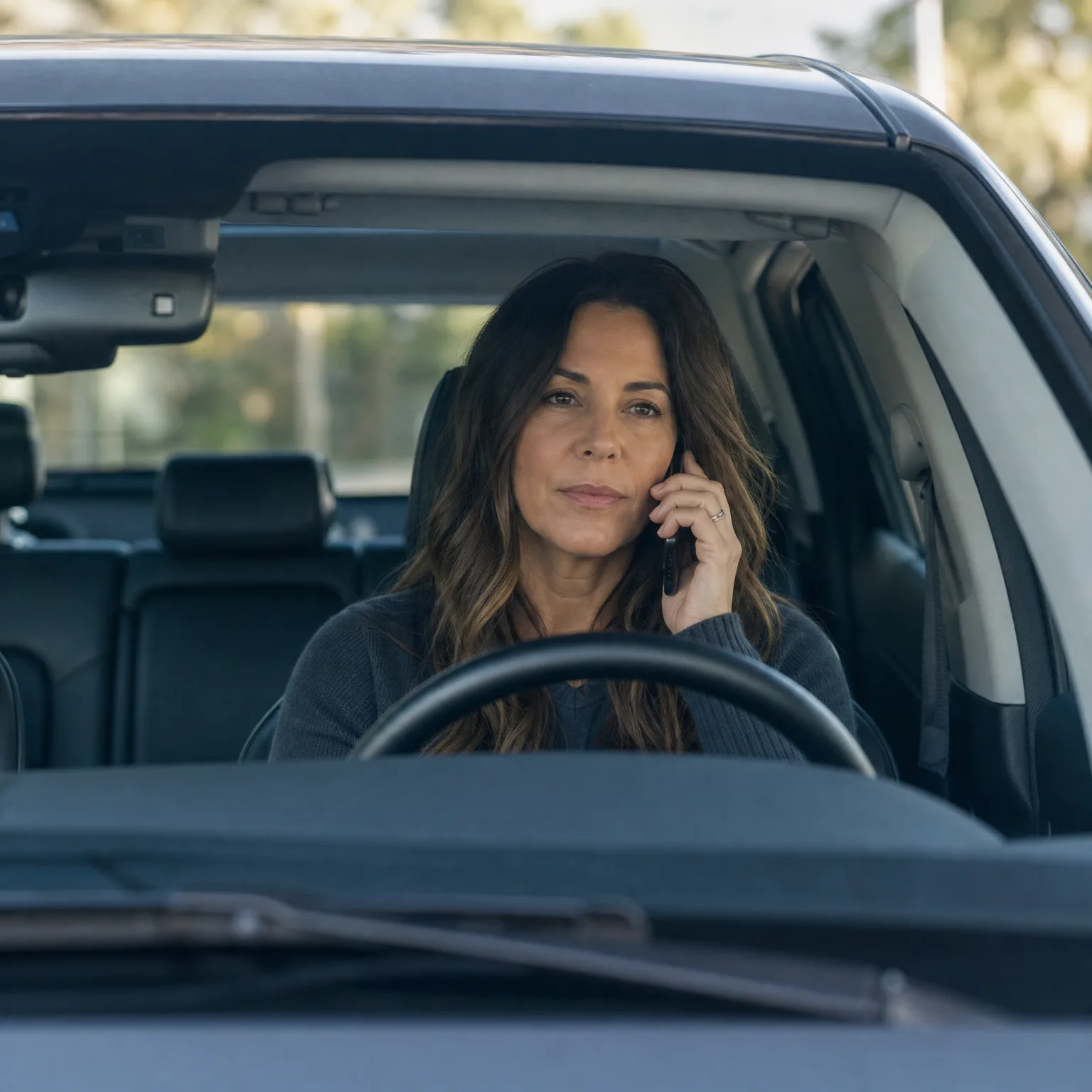
North Carolina classifies DWI with a child under 18 in the vehicle as Grossly Aggravating Factor under N.C.G.S. § 20-179(c). This classification forces the court into Aggravated Level 1 or Level 1 sentencing—minimum 30 days active jail time for Aggravated Level 1, minimum 10 days for Level 1—regardless of BAC or prior record. The child-passenger aggravator cannot be bargained away; it remains on the conviction even if other factors (BAC below 0.15, no prior DWI) would otherwise place you in Level III-V.
Aggravated Level 1 carries a 4-year license revocation. Level 1 carries a 2-year revocation. Both exceed the standard 1-year first-offense revocation North Carolina applies to basic DWI convictions. The revocation period starts the day of conviction—not arrest, not sentencing—and runs consecutively with any jail sentence served.
The child-passenger aggravator triggers mandatory ignition interlock installation as a condition of any future Limited Driving Privilege or full reinstatement. North Carolina requires interlock for the entire revocation period plus 12 months post-reinstatement when a child passenger was present. Monthly interlock costs typically run $70–$90; installation fees range $100–$150.
How Aggravated Sentencing Blocks Limited Driving Privilege Access
North Carolina allows Limited Driving Privilege petitions for most first-offense DWI convictions after a 45-day hard suspension under N.C.G.S. § 20-179.3. Aggravated Level 1 DWI blocks LDP eligibility for 3 years from the conviction date. No petition will be granted during this period, regardless of employer need or treatment completion.
Level 1 DWI blocks LDP for 12 months. This wait period is mandatory and non-negotiable—the court has no discretion to waive it. Drivers convicted at Level 1 must serve the full year without any driving privilege before filing an LDP petition. The distinction matters: a first-offense DWI without the child-passenger aggravator would be sentenced at Level III-V, allowing LDP application after 45 days.
The hard wait period runs from the conviction date, not from the date of arrest or the date you complete substance abuse assessment. If your conviction occurred April 1, your earliest LDP eligibility for Level 1 is April 1 the following year. Missing this timing window by filing early results in automatic denial with no refund of court filing fees, which currently run $100–$200 depending on county.
What Limited Driving Privilege Covers When You Finally Qualify
Once the mandatory wait period expires, you petition superior or district court for an LDP. North Carolina LDPs are court-issued, not DMV-administrative—the judge has discretion over routes, hours, and conditions. The petition must include proof of SR-22 liability insurance, proof of ignition interlock installation, proof of enrollment in state-approved DWI assessment and treatment, and payment of all outstanding court costs and fines.
Approved LDP purposes typically include travel between home, work, school, religious activities, medical appointments, and court-ordered treatment sessions. The judge sets geographic boundaries and time restrictions. Standard grants limit driving to 6am–8pm Monday–Friday for employment purposes only, with Sunday allowance for religious observance. The LDP is not a general driving privilege—deviations from court-specified routes and times trigger immediate revocation and criminal charges for driving while license revoked.
Violating LDP terms carries Class 1 misdemeanor penalties under N.C.G.S. § 20-179.3(e): up to 120 days jail and permanent revocation of the LDP with no opportunity to reapply during the original revocation period. If you hold a Level 1 LDP and violate its terms in year two of your 2-year revocation, you lose all driving privileges for the remainder of the revocation with no hardship option.

Drive Legally on Your Restricted License
Get My Hardship-License SR-22 QuoteSR-22 Filing Duration and Cost Stack for Aggravated DWI
North Carolina requires SR-22 financial responsibility filing for 3 years after DWI conviction. The filing period begins when you first obtain coverage meeting state minimums—$50,000 bodily injury per person, $100,000 per accident, $25,000 property damage—and runs consecutively for 36 months without lapse. Any lapse triggers DMV notification and immediate revocation of your LDP or reinstated license.
SR-22 filing fees range $25–$50 as a one-time charge. The premium increase averages $85–$140 per month for high-risk liability coverage after a DWI conviction with child-passenger aggravation. Drivers who do not own a vehicle need non-owner SR-22 coverage, which costs $40–$75 per month and satisfies the filing requirement without insuring a specific car. Non-owner policies are common after impound, vehicle sale, or situations where the DWI driver never owned the car they were operating.
The total cost stack for an Aggravated Level 1 DWI with child passenger over the 4-year revocation period: $100–$200 LDP court filing fee after the 3-year wait, $100–$150 ignition interlock installation, $70–$90 monthly interlock for 60 months (48 months revocation plus 12 months post-reinstatement), $85–$140 monthly SR-22 premium for 36 months, $100 substance abuse assessment, $400–$800 for state-required DWI education and treatment programs, and a $65 DMV license restoration fee at full reinstatement. Total estimated outlay: $8,500–$12,000.
When Non-Owner SR-22 Coverage Is the Right Path
Approximately 30% of North Carolina DWI convictions involve drivers who do not own the vehicle they were operating at the time of arrest. The child-passenger aggravator often arises in situations where the driver was operating a spouse's car, a borrowed vehicle, or a rental. If you no longer own a car—due to impound seizure, inability to afford payments, or sale to cover legal costs—you still need SR-22 filing to petition for an LDP or reinstate your license at the end of the revocation period.
Non-owner SR-22 insurance provides liability coverage for drivers who operate vehicles they do not own. The policy meets North Carolina's financial responsibility requirement and allows the carrier to file SR-22 on your behalf. Coverage costs $40–$75 per month, significantly less than standard owner SR-22 policies because the carrier assumes lower risk exposure—you drive less frequently and have no vehicle to insure comprehensively.
Non-owner SR-22 does not cover physical damage to vehicles you borrow or rent. It covers your liability for injuries and property damage you cause to others while driving. If you later purchase a vehicle during the SR-22 filing period, you must convert to a standard owner policy and notify the DMV to update your filing. Most carriers who write SR-22 also offer non-owner policies; approval depends on the severity of your conviction and whether you have other active suspensions.
Reinstatement Process After Full Revocation Period Expires
Aggravated Level 1 reinstatement requires completion of the full 4-year revocation period without any LDP violations, active SR-22 filing for the final 3 years of that period, proof of ignition interlock compliance for the full 48 months, completion of all court-ordered substance abuse treatment, and payment of all outstanding fines and court costs. The $65 DMV restoration fee applies at reinstatement, separate from LDP court filing fees.
North Carolina does not permit early reinstatement for Aggravated Level 1. The 4-year clock runs from conviction date to the day before the anniversary 4 years later—early applications are rejected. If your conviction was March 15, 2022, your earliest reinstatement eligibility is March 14, 2026. You must maintain ignition interlock for 12 additional months post-reinstatement as a condition of full license restoration.
Drivers who held an LDP during the final year of revocation transition to full reinstatement by filing proof of interlock compliance, updated SR-22 certificate showing continuous coverage, treatment completion certificate from their ADET-approved provider, and payment of the $65 fee at any NCDMV office or via the myNCDMV online portal. Processing typically takes 7–10 business days if all documentation is complete; missing documents restart the review period.
Frequently Asked Questions
Can I get a Limited Driving Privilege immediately after a DWI with a child passenger in North Carolina?
No. Aggravated Level 1 DWI blocks LDP eligibility for 3 years; Level 1 blocks it for 12 months. The mandatory wait period starts from your conviction date, not arrest. Standard first-offense DWI without child-passenger aggravation allows LDP petitions after 45 days.
Does the child's age matter for the aggravated DWI charge in North Carolina?
What happens if I drive outside my Limited Driving Privilege restrictions in North Carolina?
Violating LDP terms is a Class 1 misdemeanor under N.C.G.S. § 20-179.3(e). Penalties include up to 120 days jail and permanent revocation of your LDP with no chance to reapply during the original revocation period. Your SR-22 carrier will also cancel your policy, triggering DMV suspension.
How long do I need ignition interlock after a DWI with a child passenger in NC?
Can I use non-owner SR-22 insurance to meet the Limited Driving Privilege filing requirement?
Yes. Non-owner SR-22 satisfies North Carolina's financial responsibility requirement for LDP petitions and full reinstatement. It costs $40–$75 per month and covers liability when you operate vehicles you do not own. You must maintain it continuously for 3 years without lapse.
Does SR-22 filing start automatically after my DWI conviction in North Carolina?
No. SR-22 filing begins only when you purchase high-risk liability coverage and the carrier files the certificate with NCDMV on your behalf. The 3-year filing period runs from the date your first SR-22 certificate is filed, not from your conviction date.
What is the total cost of Limited Driving Privilege and reinstatement after Aggravated Level 1 DWI?
Total estimated cost over 4 years: $8,500–$12,000. This includes $100–$200 LDP court filing, $100–$150 interlock installation, $70–$90 monthly interlock for 60 months, $85–$140 monthly SR-22 premium for 36 months, $400–$800 treatment programs, and $65 DMV restoration fee.
Related Articles
NC Level 1 vs Level 5 DWI: LDP Eligibility Differences
5/17/2026
NC DWI Limited Driving Privilege: 45-Day Wait Period
5/16/2026
NC DWI BAC .15+: 18-Month IID & LDP Rules Explained
5/16/2026
NC Limited Driving Privilege Cost After DWI
5/17/2026
Limited Driving Privilege After Second DWI in NC
5/16/2026

NC Habitual DWI: 3-Year Hardship License Ban Explained
5/17/2026