PA Highest-Tier DUI (.16+ BAC): OLL Restrictions and IID Rules
Get My Hardship-License SR-22 QuoteWhat Highest-Tier DUI (.16+ BAC) Triggers in Pennsylvania
A BAC of .16 or higher places you in Pennsylvania's highest DUI tier under 75 Pa.C.S. § 3804, triggering a minimum 1-year license suspension for first offense and up to 18 months maximum depending on judicial discretion and prior record. The administrative suspension runs concurrently with any court-imposed suspension, but PennDOT's Bureau of Driver Licensing controls the restoration timeline independently of court proceedings.
This tier also mandates ignition interlock device installation as a condition of any restricted driving privilege, whether through the court-issued Occupational Limited License or the more common PennDOT-issued Ignition Interlock Limited License. You cannot drive legally during suspension without one of these instruments, and both require IID compliance before approval.
The hard suspension period must be fully served before you can petition for an OLL. For highest-tier first offense, that means 12 months minimum with no driving whatsoever unless you qualify for the IILL pathway, which becomes available after completion of alcohol highway safety school and IID installation approval.
Pennsylvania's Two Parallel Restricted License Programs
Pennsylvania operates two distinct restricted-driving programs that confuse most DUI offenders: the Occupational Limited License (OLL) under 75 Pa.C.S. § 1553 and the Ignition Interlock Limited License (IILL) under 75 Pa.C.S. § 3805. These are not the same instrument.
The OLL is issued by the court of common pleas in your county of residence after a petition hearing. It requires completion of the hard suspension period, proof of SR-22 insurance, documentation of employment or occupational necessity, and payment of county-specific court costs. The judge sets route and time restrictions tailored to your documented needs.
The IILL is issued by PennDOT directly after you complete Alcohol Highway Safety School, install an approved IID, and file SR-22 proof of financial responsibility. It does not require a court hearing, but it only allows IID-equipped driving with no geographic or time restrictions beyond the IID's physical limitation to one vehicle. For highest-tier DUI offenders, the IILL is the faster and more commonly used path because it becomes available immediately after AHSS completion rather than after the full hard suspension.

Hard Suspension Period and When OLL Becomes Available
Pennsylvania's highest-tier DUI suspension begins on the conviction date or the date you enter ARD (Accelerated Rehabilitative Disposition), not the arrest date. The hard suspension period is the window during which no restricted driving privilege of any kind is available unless you pursue the IILL pathway.
For first-offense highest-tier DUI, the hard suspension is 12 months. During this period, you cannot petition for an OLL. You can, however, enroll in Alcohol Highway Safety School and apply for an IILL, which bypasses the OLL waiting period entirely by requiring IID use instead of court-approved route restrictions.
If you choose to wait out the full hard suspension and then petition for an OLL, you must document why the OLL is necessary. Employment letters, school enrollment verification, medical appointment schedules, and proof of dependent care responsibilities are standard supporting documents. The court is not required to grant the petition even if all requirements are met.
Occupational Limited License Application Process and County Variations
You file your OLL petition with the court of common pleas in the county where you reside, not where the DUI occurred. There is no statewide uniform fee or processing timeline because each county court sets its own procedures and costs.
The petition must include proof of SR-22 insurance filed with PennDOT, documentation of the suspension reason and length, a detailed statement of occupational or vocational necessity, and proposed route and time restrictions. Many counties require an employer affidavit on company letterhead specifying work hours and address.
Court costs typically range from $100 to $300 depending on county, paid at filing. Processing time varies from 2 weeks to 8 weeks depending on court calendar congestion. If the judge denies your petition, you must wait at least 60 days before filing a second petition in most counties.
Drive Legally on Your Restricted License
Get My Hardship-License SR-22 Quote
Ignition Interlock Device Requirement for OLL and IILL
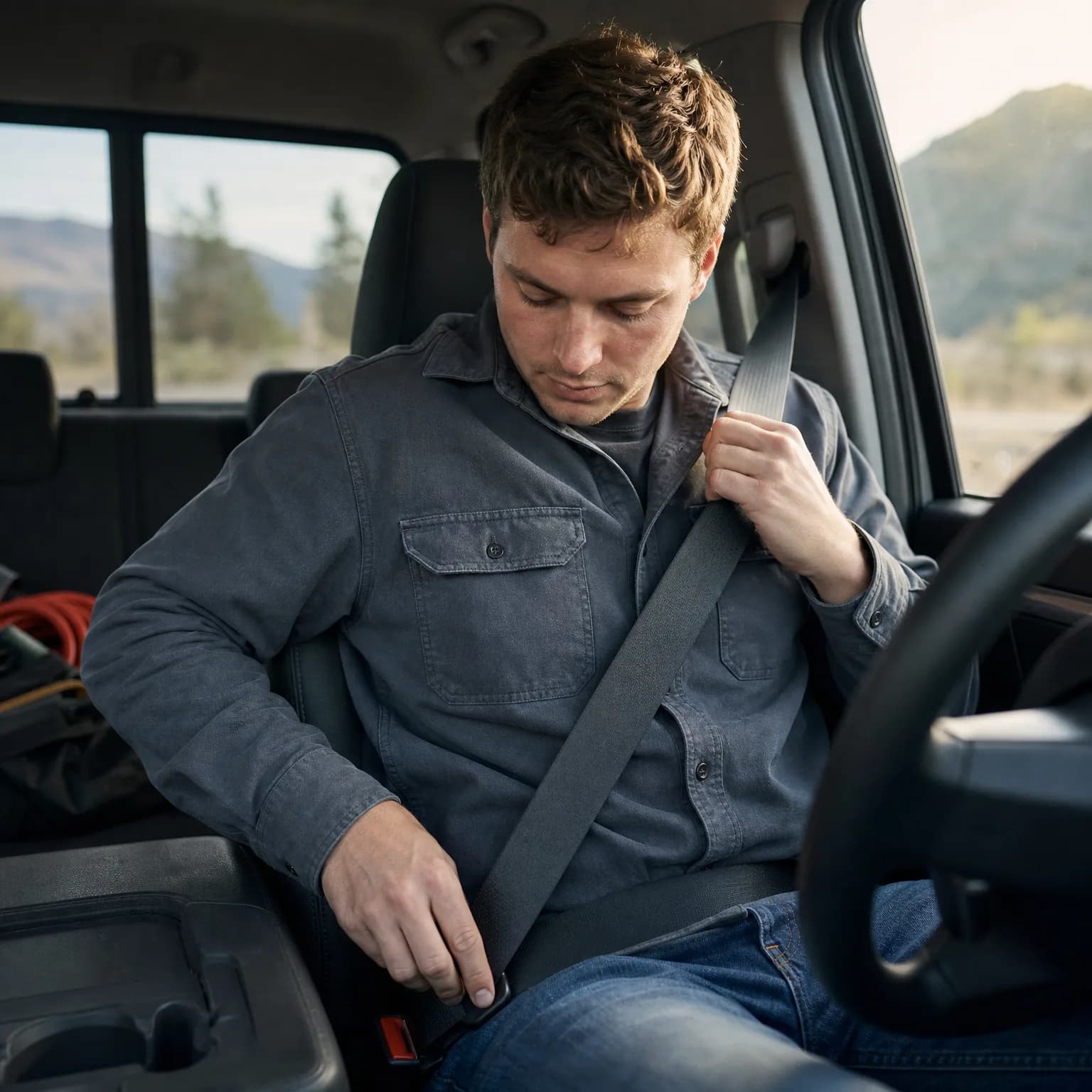
Both the OLL and IILL require ignition interlock device installation for highest-tier DUI offenders. This is not optional. The IID must be installed by a PennDOT-approved vendor and calibrated to prevent vehicle operation if your breath sample registers any measurable BAC.
Installation costs approximately $75 to $150. Monthly calibration and monitoring fees run $70 to $100. You pay these costs for the entire OLL or IILL validity period, which is typically 12 months minimum for highest-tier first offense.
If you violate IID requirements by attempting to start the vehicle after a failed breath test, tampering with the device, or missing a required calibration appointment, PennDOT will revoke your OLL or IILL immediately. Most vendors report violations to PennDOT within 48 hours electronically, triggering automatic suspension reinstatement.
SR-22 Filing Requirement and Duration After Highest-Tier DUI
Pennsylvania requires SR-22 proof of financial responsibility for 3 years following highest-tier DUI conviction. The SR-22 filing period begins on your reinstatement date, not your conviction date or suspension start date.
You must maintain continuous SR-22 coverage for the entire 3-year period. If your insurer cancels your policy or you allow it to lapse, the carrier notifies PennDOT electronically within 24 hours and your license is automatically re-suspended under 75 Pa.C.S. § 1786.
SR-22 filing adds approximately $25 to $50 to your policy as a one-time fee, but the premium increase from the DUI conviction itself is the larger cost factor. Expect your premium to increase 60% to 120% for the first policy period after a highest-tier DUI, with the increase tapering over 3 to 5 years as the conviction ages.
OLL Route and Time Restrictions
The court defines your OLL route and time restrictions in the order granting the petition. Typical approved purposes include driving to and from work, medical appointments, court-ordered programs such as AHSS or DUI treatment, school or vocational training, and dependents' school or daycare.
You must carry the OLL order and proof of SR-22 insurance whenever driving. If stopped outside approved routes or times, law enforcement will arrest you for driving under suspension, which is a separate criminal charge with additional suspension time and potential jail.
Most counties restrict OLL hours to documented work shifts plus 1 hour buffer on each end and limit weekend driving to emergency medical needs only unless you work weekends and document it in the petition.

Cost Breakdown for Highest-Tier DUI Restricted Driving
Total cost to obtain and maintain an OLL or IILL for 12 months after highest-tier DUI in Pennsylvania includes court costs ($100–$300 for OLL petition, waived for IILL), Alcohol Highway Safety School tuition ($150–$300), IID installation ($75–$150), IID monthly monitoring ($70–$100 × 12 months = $840–$1,200), SR-22 filing fee ($25–$50), and premium increase (varies widely by carrier and driving history but typically $1,500–$3,000 additional annual cost).
Estimated total over the first 12 months: $2,700 to $5,000 not including legal fees if you hired an attorney to file the OLL petition. This does not include the PennDOT $50 restoration fee due when your full license is reinstated after the suspension period ends.
The IILL pathway avoids court costs but still requires AHSS, IID, and SR-22 compliance at the same price points as the OLL pathway.
Frequently Asked Questions
Can I get an OLL immediately after a .16+ BAC DUI conviction in Pennsylvania?
No. Pennsylvania requires you to serve the full hard suspension period before you can petition for an OLL after highest-tier DUI. For first offense at .16+ BAC, that means 12 months with no driving. The IILL pathway becomes available sooner, after AHSS completion and IID installation, but still requires ignition interlock use for all driving.
What happens if I drive outside my OLL route or time restrictions?
You will be charged with driving under suspension under 75 Pa.C.S. § 1543(b), a separate criminal offense. Conviction adds 6 months to 2 years additional suspension on top of your existing DUI suspension, possible jail time, and immediate revocation of your OLL. Law enforcement has access to your OLL order details during traffic stops.
Does Pennsylvania accept an out-of-state ignition interlock device for OLL compliance?
No. The IID must be installed by a PennDOT-approved vendor and monitored through PennDOT's reporting system. Devices installed in other states do not satisfy Pennsylvania's compliance requirements even if the same manufacturer operates in both states. You must use a PA-approved installer.
How long does SR-22 filing last after a highest-tier DUI in Pennsylvania?
Three years from your reinstatement date, not your conviction date. If your license is suspended for 12 months and you reinstate on January 1, your SR-22 filing period runs through December 31 three years later. Any lapse in SR-22 coverage during that period triggers automatic re-suspension.
Can I get an OLL if I don't own a vehicle after a DUI?
What is the difference between an OLL and an IILL in Pennsylvania?
An OLL is court-issued after a petition hearing and imposes route and time restrictions but allows driving any compliant vehicle. An IILL is PennDOT-issued administratively, requires no court hearing, but mandates IID installation and limits you to driving only the IID-equipped vehicle. For highest-tier DUI, both require IID, making the IILL the faster path for most drivers.
Does completing ARD shorten the hard suspension period for .16+ BAC DUI?
No. Entry into Accelerated Rehabilitative Disposition does not reduce the 12-month hard suspension for highest-tier DUI in Pennsylvania. ARD affects your criminal record and eligibility for future ARD, not the administrative license suspension timeline administered by PennDOT. The suspension begins on your ARD acceptance date.
Related Articles

PA DUI Tier System & Occupational License Eligibility
5/17/2026
PA Occupational Limited License After DUI: Court vs IILL
5/16/2026
Pennsylvania Occupational Limited License After DUI
5/17/2026

PA DUI to Occupational License Timeline | Full Process
5/16/2026

PA Occupational Limited License vs Full Reinstatement
5/16/2026

PA Occupational License After Second DUI: OLL Guide
5/16/2026