Post-DUI Vehicle Impound: Hardship License Application Without a Car
Get My Hardship-License SR-22 QuoteCan You Apply for a Hardship License Without Owning a Vehicle?
Yes. Most states issue hardship licenses to drivers who don't currently own a vehicle, provided you meet all other eligibility requirements for your DUI conviction. The hardship license itself grants you restricted driving privileges—it doesn't require you to prove vehicle ownership at the time of application.
The confusion arises because states require proof of financial responsibility before issuing the hardship license, typically through SR-22 or FR-44 filing. Many drivers assume SR-22 filing requires owning and insuring a specific vehicle. It does not. Non-owner SR-22 policies exist specifically for drivers who don't own a car but need to prove financial responsibility to satisfy state reinstatement or hardship-license requirements.
If your vehicle was impounded after your DUI arrest and remains in impound, if you sold it to pay legal fees, or if you never owned a vehicle in the first place, you can still pursue the hardship-license pathway. The application process, wait periods, IID requirements, and approved driving purposes remain the same whether you own a car or not.
What Non-Owner SR-22 Filing Covers and What It Costs
A non-owner SR-22 policy provides liability coverage when you drive a vehicle you don't own—borrowing a friend's car, renting a vehicle, or using a rideshare occasionally. It does not cover damage to the vehicle you're driving. It covers bodily injury and property damage to others if you cause an accident while driving someone else's car.
The policy itself typically costs $25 to $50 per month for minimum state liability limits, significantly less expensive than standard auto insurance because the carrier isn't insuring a specific vehicle against collision or comprehensive damage. The SR-22 filing fee—charged once at policy initiation—runs $15 to $50 depending on the carrier and state. Florida and Virginia DUI offenders require FR-44 filing instead of SR-22; FR-44 policies mandate higher liability limits and typically cost $40 to $80 per month.
Non-owner policies remain active as long as you continue paying the monthly premium. If you miss a payment and the policy lapses, the carrier notifies your state DMV immediately and your hardship license or reinstatement eligibility is revoked. Most states require continuous SR-22 or FR-44 filing for three years after a first-offense DUI, five years in some states for aggravated or second-offense cases.
How Hardship License Application Works When You Don't Own a Car
The hardship license application process remains procedurally identical whether you own a vehicle or not. You submit the same application form, pay the same processing fee, attend the same court hearing or DMV administrative review, and provide the same documentation proving your need for restricted driving privileges—typically employer verification, proof of enrollment in DUI education classes, proof of IID installation if required, and proof of financial responsibility.
The only difference: when the application asks for vehicle information or registration details, you indicate you don't currently own a vehicle and attach proof of your non-owner SR-22 or FR-44 filing instead. Some states allow you to note "non-owner policy" or "no vehicle currently registered" in the vehicle section of the hardship application. Verify the specific field instructions with your state DMV—some provide a checkbox for non-owner applicants, others require a written explanation.
Wait periods before you can apply for a hardship license vary by state and offense number. First-offense DUI cases in many states allow immediate application after conviction or suspension start date. Second-offense cases, refusal cases, and aggravated DUI convictions typically impose 30-day, 90-day, or longer wait periods before hardship eligibility opens. Non-vehicle ownership does not extend these wait periods—the clock starts from your conviction or suspension effective date regardless of your vehicle status.

Drive Legally on Your Restricted License
Get My Hardship-License SR-22 QuoteIgnition Interlock Requirements Without a Registered Vehicle
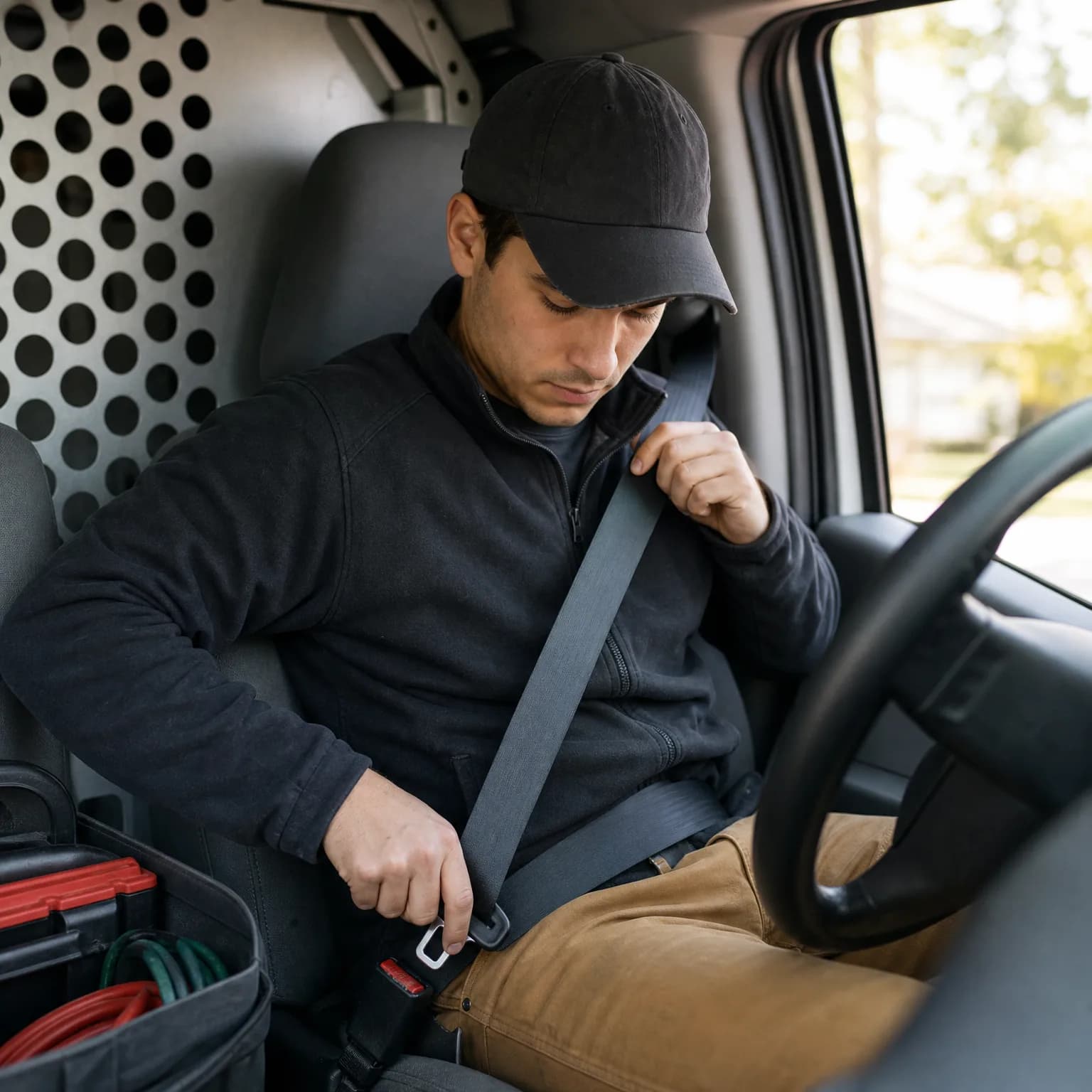
Many states require ignition interlock device installation as a condition of hardship license eligibility after a DUI conviction. If you don't own a vehicle, you face a procedural problem: IID vendors require installation on a specific registered vehicle, and monthly monitoring fees apply whether you drive the vehicle daily or leave it parked.
Some states allow hardship-license holders to install IID on a vehicle registered to someone else—a spouse's car, a parent's car, an employer's vehicle—provided the registered owner signs a consent form acknowledging the IID installation and agrees to the monitoring conditions. The registered owner does not need to be listed on your insurance policy, but they will need to provide the vehicle for monthly IID calibration appointments and accept that you are the only person legally permitted to start that vehicle during your hardship-license period.
Other states do not permit IID installation on a vehicle you don't own. In these states, drivers without a registered vehicle cannot satisfy the IID requirement and therefore cannot obtain a hardship license until they register a vehicle in their own name. This creates a catch-22: you can't afford to retrieve your impounded car or purchase a replacement vehicle, but you can't get a hardship license without installing IID on a vehicle you own. A small number of states exempt non-owner hardship applicants from the IID requirement if they prove financial hardship or demonstrate they have no access to a vehicle—verify whether your state offers this exemption before abandoning the hardship-license pathway entirely.
What Happens When You Buy or Borrow a Vehicle After Getting the Hardship License
If you obtain a hardship license while holding a non-owner SR-22 policy and later purchase a vehicle or begin regularly driving a specific car, you must notify your insurance carrier immediately and convert your non-owner policy to a standard owner SR-22 policy. The carrier will add the vehicle to your policy, charge full collision and comprehensive premiums if you elect those coverages, and refile your SR-22 certificate with the updated vehicle information.
Failure to notify your carrier when you begin driving a vehicle you own creates a coverage gap. If you cause an accident while driving a vehicle you own but your policy only covers non-owner situations, the carrier may deny your claim and cancel your policy for misrepresentation. When the policy cancels, the SR-22 filing cancels with it, the state DMV receives notification, and your hardship license is revoked.
If you regularly borrow the same vehicle from a family member or friend, ask whether you should be added as a listed driver on their policy instead of relying solely on your non-owner coverage. Being listed on their policy as a permitted driver provides clearer coverage and may reduce premium costs compared to stacking your non-owner policy on top of their existing coverage. The SR-22 filing still attaches to your non-owner policy—you maintain both simultaneously.
Cost Breakdown: Hardship License Without a Vehicle
Typical costs for pursuing a hardship license when you don't own a vehicle:
Non-owner SR-22 policy: $25 to $50 per month for three years = $900 to $1,800 total. FR-44 states (Florida, Virginia): $40 to $80 per month = $1,440 to $2,880 total.
SR-22 or FR-44 filing fee: $15 to $50 one-time.
Hardship license application fee: $50 to $150 depending on state.
DUI education program: $300 to $500 in most states, required before hardship eligibility opens.
Court filing fee (if hardship license requires court petition rather than DMV administrative application): $100 to $300.
IID installation and monitoring: $75 to $150 installation, $75 to $125 per month monitoring. If you must install IID on a borrowed vehicle and the registered owner requires you to cover their increased insurance premium or vehicle wear costs, add those expenses.
Total first-year cost without vehicle ownership: approximately $1,500 to $3,500 depending on state, offense number, and IID requirement. This figure excludes attorney fees if you hire representation for the hardship hearing.
Frequently Asked Questions
Do I need to own a car to get a hardship license after a DUI?
No. Most states issue hardship licenses to drivers who don't own a vehicle, provided you meet all other eligibility requirements and obtain non-owner SR-22 or FR-44 insurance to prove financial responsibility. Vehicle ownership is not a prerequisite for hardship-license eligibility.
Can I use someone else's car with a hardship license if I don't own one?
Yes, if your hardship license approves the specific purpose and hours. Your non-owner SR-22 policy covers liability when you drive someone else's vehicle. If your state requires ignition interlock installation, verify whether IID can be installed on a vehicle you don't own—some states allow this with registered-owner consent, others do not.
What happens to my non-owner SR-22 if I buy a car later?
You must notify your insurance carrier immediately and convert your non-owner SR-22 to a standard owner SR-22 policy covering the specific vehicle. The carrier refiles your SR-22 certificate with updated vehicle information. Failure to notify the carrier when you begin driving a vehicle you own can result in claim denial and policy cancellation.
How much does non-owner SR-22 insurance cost after a DUI?
Non-owner SR-22 policies typically cost $25 to $50 per month for minimum state liability limits, significantly less than standard auto insurance because no vehicle is being insured. The one-time SR-22 filing fee ranges from $15 to $50. Florida and Virginia DUI cases require FR-44 filing, which costs $40 to $80 per month due to higher liability limits.
Can I install ignition interlock on a car I don't own?
Some states allow IID installation on a vehicle registered to someone else—such as a spouse's or parent's car—if the registered owner provides written consent. Other states require you to own and register the vehicle yourself before IID installation is permitted. Verify your state's specific IID policy before assuming borrowed-vehicle installation is allowed.
Will my impounded car insurance still cover me if I get a non-owner policy?
No. If your vehicle remains in impound, you should cancel the existing auto insurance policy on that vehicle to stop paying premiums for coverage you're not using. Your non-owner SR-22 policy replaces it and provides liability coverage when you drive other vehicles. If you later retrieve the impounded car, notify your carrier to convert the non-owner policy to a standard policy covering the specific vehicle.
Related Articles

Non-Owner SR-22 After DUI With No Car: How It Works
5/16/2026
Selling Your Car After DUI: Non-Owner SR-22 Path
5/16/2026

Non-Owner SR-22 After DUI With No Car: How It Works
5/16/2026
DUI Hardship License Without Attorney: When It Works
5/17/2026
Hidden Costs of DUI Hardship License: IID + SR-22
5/17/2026
DUI in Employer Vehicle: Hardship License After Job Loss
5/17/2026