
Step-by-Step: Oregon Hardship Permit After a DUII
Get My Hardship-License SR-22 QuoteWhat Oregon calls its restricted license after DUII and why the name matters
Oregon issues a Hardship Permit to eligible drivers during DUII suspension periods. This is not the same as the Occupational License used in Texas or the Business Purpose Only License issued in Florida. The official name appears on all DMV forms, hearing notices, and insurance compliance documents.
The hardship permit restricts driving to essential purposes only: employment, medical appointments, school, and essential household needs. Hours and routes are defined by the DMV based on your stated need, documented through employer letters, class schedules, or medical appointment records. The permit does not allow recreational driving, social errands, or discretionary trips.
Oregon statute ORS 807.240 governs hardship permit issuance. ORS 813.520 adds specific provisions for DUII-related administrative suspensions. These statutes establish DMV authority to issue permits, set eligibility standards, and define violation consequences. Courts do not issue hardship permits in Oregon—all applications are processed through Driver and Motor Vehicle Services, the licensing division of the Oregon Department of Transportation.

Who qualifies for a hardship permit after DUII in Oregon and when
First-time DUII offenders enrolled in Oregon's DUII Diversion Program (ORS 813.200 et seq.) can apply for a hardship permit after serving a 30-day hard suspension for BAC failure cases. Refusal cases carry a longer initial suspension period before hardship eligibility begins. The 30-day period starts from the date of arrest and administrative suspension notice, not from the conviction date.
Diversion enrollment is a formal court program requiring completion of a substance abuse assessment, treatment program attendance, victim impact panel participation, and full compliance for 12 to 18 months. Enrollment in diversion is not automatic—you must petition the court within specific timeframes after arraignment. Once enrolled, diversion status makes you eligible to apply for the hardship permit after the hard suspension ends.
Second DUII offenses, felony DUII cases, and Habitual Traffic Offender (HTO) designations under ORS 809.600 face substantially restricted or eliminated hardship permit access. HTO revocations carry a 10-year period, and hardship eligibility does not begin until years into that revocation. Diversion is not available for second or subsequent DUII offenses.

The ignition interlock device requirement and why it starts before your hearing
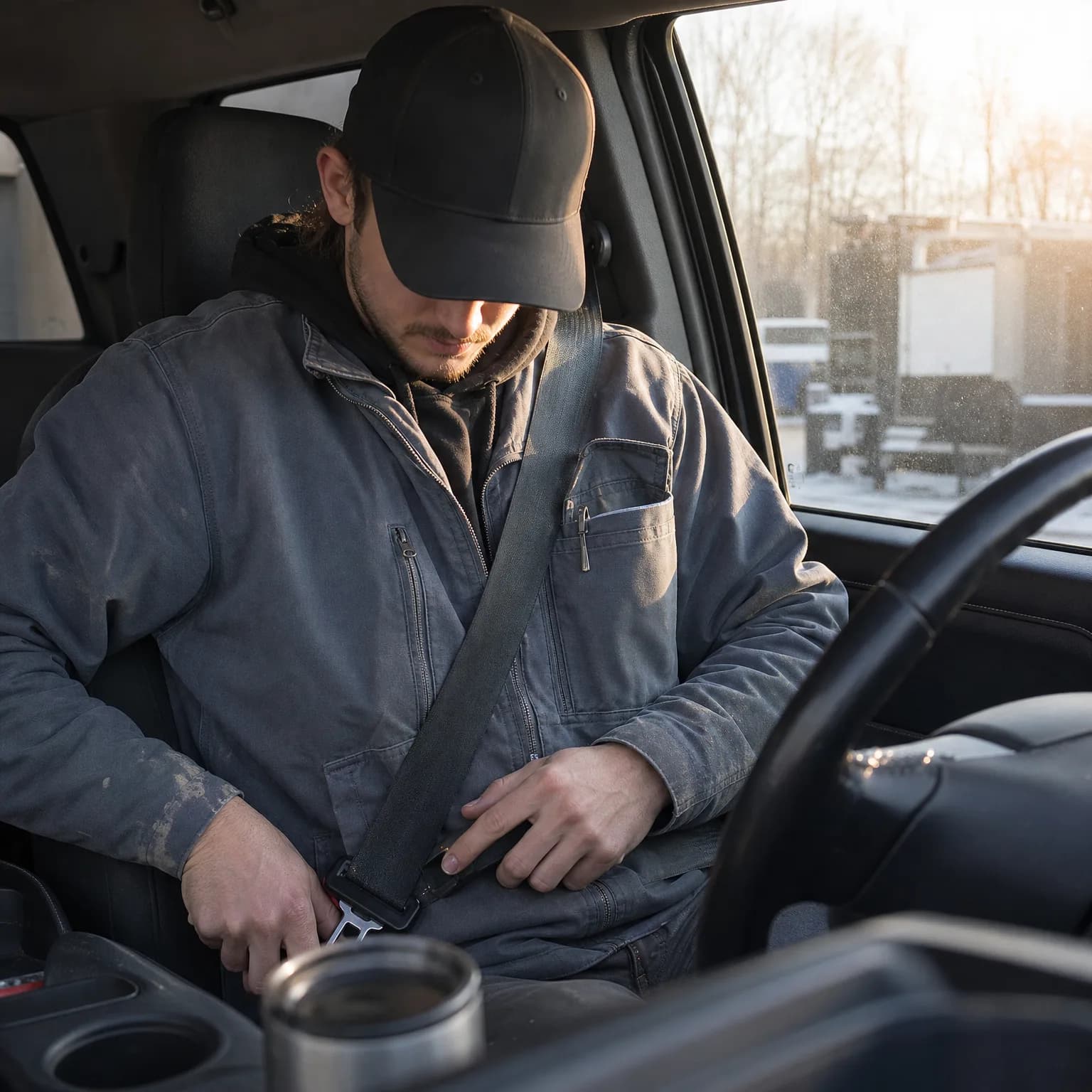
Oregon requires ignition interlock device (IID) installation as a condition of any DUII-related hardship permit under ORS 813.602. The IID requirement is not optional and is not waived for hardship permit holders. Installation must be completed through a state-approved IID vendor before the DMV hardship hearing.
Most applicants assume IID installation happens after the hardship permit is approved. Oregon's process works differently. You must install the IID, obtain the vendor compliance report showing installation and calibration, and bring that report to your DMV hearing as proof of compliance. Arriving at the hearing without IID installation documentation typically results in immediate denial.
IID costs include installation (typically $75 to $150), monthly monitoring fees ($60 to $90 per month), and calibration visits every 30 to 60 days. Over a one-year hardship permit period, total IID costs range from $900 to $1,200. Lease agreements with IID vendors are required, and missed calibration appointments trigger compliance violations reported directly to the DMV.
How to apply for the hardship permit through Oregon DMV
The hardship permit application is filed directly with the Oregon DMV, not through the court. You submit a completed hardship permit application form, proof of enrollment in DUII Diversion, proof of IID installation, and an SR-22 insurance certificate if your suspension type requires it. DUII cases require SR-22 filing for a 3-year period starting from the date of conviction or administrative suspension, whichever results in the longer filing period.
You must document your essential need through employer verification letters on company letterhead showing work address, shift schedule, and supervisor contact information. Medical needs require appointment schedules or physician letters. School enrollment requires class schedules with building addresses and session times. The DMV uses these documents to define your approved routes and hours on the hardship permit.
Processing time varies by county DMV office workload but typically requires scheduling a hearing 2 to 4 weeks after application submission. Some counties process applications administratively without requiring an in-person hearing for straightforward employment-only cases, but most DUII diversion hardship applications require a hearing. Bring original documentation to the hearing—copies alone are often insufficient.

Drive Legally on Your Restricted License
Get My Hardship-License SR-22 Quote
What the hardship permit allows and what violations trigger revocation
The Oregon hardship permit restricts you to the specific purposes, routes, and hours documented in your application and approved by the DMV. Driving outside approved hours, using the vehicle for non-approved purposes, or deviating from approved routes violates the permit terms. Law enforcement has access to hardship permit restrictions during traffic stops and can verify compliance in real time.
Violating hardship permit terms triggers immediate revocation without additional hearings in most cases. Common violations include driving on weekends when your employment schedule showed weekday-only shifts, driving to social events, allowing another person to drive your vehicle, and missed IID calibration appointments. IID vendors report tampering, failed breath tests, and missed calibrations directly to the DMV.
You cannot use the hardship permit to drive for rideshare companies, delivery services, or any employment requiring a commercial driver's license. The hardship permit is a Class C noncommercial license restriction. If your employment requires driving as the primary job function (truck driver, delivery driver, commercial route driver), hardship permit approval is unlikely because the restriction cannot accommodate the job's demands.

SR-22 filing requirements and how long the filing lasts after DUII
Oregon requires SR-22 insurance filing for DUII-related suspensions. The SR-22 is a certificate of financial responsibility filed by your insurance carrier directly with the Oregon DMV. The filing period lasts 3 years from the date of conviction or administrative suspension. You cannot obtain a hardship permit or full license reinstatement without an active SR-22 on file.
SR-22 filing adds $15 to $50 to your policy as a one-time filing fee, but the premium increase is substantially higher. DUII convictions typically increase auto insurance premiums by 80% to 150% in Oregon. Monthly premiums for minimum liability coverage after DUII range from $140 to $250 depending on age, county, and carrier. Over the 3-year SR-22 filing period, total insurance costs often exceed $6,000 to $9,000.
If you do not own a vehicle, you need non-owner SR-22 insurance to meet the filing requirement. Non-owner policies provide liability coverage when you drive a vehicle you do not own. Monthly premiums for non-owner SR-22 in Oregon typically range from $50 to $90. The SR-22 filing period still lasts 3 years regardless of vehicle ownership status. Letting the SR-22 lapse at any point during the 3-year period restarts the clock and triggers a new suspension.
What full reinstatement requires after the hardship period ends
Full license reinstatement after completing the DUII diversion program and hardship permit period requires paying the reinstatement fee, completing all court-ordered treatment and education programs, maintaining the SR-22 filing for the full 3-year period, and passing a knowledge retest in most cases. The base reinstatement fee is $75, but DUII revocations carry additional fees that can bring the total to $100 or higher.
You must provide proof of diversion completion signed by your diversion officer and filed with the court. The DMV will not process reinstatement until the court records show successful diversion completion. Diversion failure results in the original DUII charge being prosecuted, which leads to conviction-based suspension separate from the administrative suspension you've already served.
Retesting requirements vary based on suspension length and whether your case involved refusal or BAC failure. Most DUII reinstatements require passing the Oregon knowledge test but not the behind-the-wheel driving test. If your suspension exceeded 1 year or involved multiple violations, the DMV may require a full driving examination. Schedule the retest before your reinstatement date to avoid gaps in legal driving status.
Frequently Asked Questions
Can I get a hardship permit immediately after a DUII arrest in Oregon?
No. Oregon requires a 30-day hard suspension before hardship permit eligibility begins for first-time DUII offenders enrolled in diversion. Refusal cases carry longer initial suspension periods. You cannot drive legally during this hard suspension window, even with proof of insurance or IID installation.
Does Oregon require ignition interlock for hardship permits after DUII?
Yes. ORS 813.602 requires ignition interlock device installation for all DUII-related hardship permits. Installation must be completed before your DMV hearing, and the IID vendor compliance report must be submitted as part of your application. The IID remains required for the entire hardship permit period.
What happens if I let my SR-22 lapse during the hardship permit period?
Your hardship permit is immediately revoked, and your license suspension is reinstated. The SR-22 filing period restarts from zero, adding 3 years to your total compliance timeline. Carriers report lapses to the Oregon DMV electronically, often within 24 to 48 hours of policy cancellation.
Can I use the Oregon hardship permit to drive for work as a delivery driver?
It depends on the role. If driving is incidental to your job (office worker making occasional deliveries), hardship permit approval is possible. If driving is the primary job function (delivery driver, rideshare driver, route driver), approval is unlikely because the restriction cannot accommodate the job's demands. Commercial driving is prohibited under hardship permits.
How much does the full hardship permit process cost in Oregon?
Total costs typically range from $3,000 to $5,000 over the hardship period. This includes the hardship application fee, IID installation and monthly monitoring ($900 to $1,200 annually), SR-22 filing fee ($15 to $50), and increased insurance premiums ($140 to $250 per month for 36 months). Court diversion fees and treatment program costs add $1,500 to $2,500.
Does completing diversion automatically reinstate my Oregon license?
No. Diversion completion satisfies the court requirement but does not reinstate your license. You must separately apply for reinstatement through the Oregon DMV, pay the reinstatement fee ($75 base plus DUII-specific fees), maintain your SR-22 filing for the full 3-year period, and pass required retests.
Can I get a hardship permit for a second DUII in Oregon?
Second DUII offenses are not eligible for diversion, and hardship permit access is severely restricted. Conviction-based revocations for second DUII typically last 1 year with no hardship eligibility. Habitual Traffic Offender designation after repeat offenses results in 10-year revocation with hardship eligibility delayed for years.
Related Articles

Oregon Hardship Permit After DUII: Application Guide
5/17/2026

Second Oregon DUII Hardship Permit
5/29/2026
Oregon 1-Year IID Requirement Before Hardship Permit
5/17/2026

Oregon DUII Refusal Hardship Permit Wait Period
5/16/2026

Oregon DUII BAC .15+: Hardship Permit & IID Rules
5/17/2026

Oregon DUII Hardship Permit Costs: Fees, IID, SR-22
5/17/2026