Step-by-Step: Washington Ignition Interlock License After a DUI
Get My Hardship-License SR-22 QuoteWhat Is Washington's Ignition Interlock License and Who Can Apply Immediately
The Ignition Interlock License (IIL) replaced Washington's traditional occupational license system for DUI suspensions under RCW 46.20.385. Unlike hardship licenses in other states, the IIL imposes no route restrictions and no time-of-day limits. You can drive anywhere, anytime, for any purpose. The single condition: you must drive only vehicles equipped with a DOL-approved ignition interlock device.
Most first-offense DUI offenders can apply for an IIL immediately after the DOL administrative suspension begins. If your suspension resulted from a BAC test failure (not a refusal), you face a 90-day administrative revocation but can apply for the IIL on day one. Refusal cases trigger a one-year administrative suspension, and IIL eligibility may be delayed depending on prior offense history. Second-offense and felony DUI cases face longer mandatory hard suspension periods before IIL eligibility opens.
You cannot apply if you have any other disqualifying suspensions active at the same time. Unpaid tickets, uninsured driving suspensions, or failure-to-appear holds will block your IIL application until those issues are resolved. Washington does not offer hardship relief for points-based, unpaid-fine, or no-insurance suspensions. The IIL pathway exists exclusively for DUI and physical control revocations.
The Four Documents You Must Submit Before DOL Will Issue the IIL
The IIL application requires four pieces of documentation, and all four must be complete before DOL processes your request. First: a completed IIL application form available through the Washington Department of Licensing. Second: proof of ignition interlock device installation from a DOL-approved IID provider. The certificate must show the device serial number, installation date, and provider's DOL approval number. Generic receipts or invoices do not satisfy this requirement.
Third: an SR-22 insurance filing from a licensed Washington carrier. The SR-22 must be active and on file with DOL before your IIL is issued. Most carriers file electronically within 24 to 48 hours, but some paper filings take up to five business days. Do not assume your SR-22 is on file until you confirm directly with DOL or receive a confirmation notice. Fourth: payment of the $100 IIL application fee. DOL accepts check, money order, or card payment depending on whether you apply in person or by mail.
Missing even one of these four components will delay your IIL issuance indefinitely. DOL does not issue partial approvals or conditional licenses. The application sits in pending status until all documentation clears.

How Washington's IID Requirement Works and What Happens if You Drive Without It
The ignition interlock device must be installed in every vehicle you intend to drive while the IIL is active. If you own two cars, both must have IID units installed. If you borrow a family member's vehicle, that vehicle must be IID-equipped or you cannot legally drive it. The IIL does not grant an exception for employer-owned vehicles, rental cars, or out-of-state vehicles.
Driving any vehicle without an installed IID while your IIL is active constitutes driving on a suspended license under Washington law, even if the IIL itself is valid and current. This is the compliance trap most IIL holders miss. The license is not restricted by route or time, but it is restricted by equipment. A single instance of driving a non-IID vehicle triggers automatic IIL revocation, extends your total IID period, and may result in a new criminal charge.
The IID logs every ignition attempt, every failed breath test, and every engine start. DOL reviews these logs at regular intervals. Repeated failed tests, tampering attempts, or missed calibration appointments will result in IIL revocation and extension of your total IID compliance period beyond the original court-ordered duration.
SR-22 Filing Period and What It Costs Over Three Years
Washington requires SR-22 filing for three years after a DUI conviction. The SR-22 period begins on the date your SR-22 filing is accepted by DOL, not the date of your conviction or the date of your suspension. If your SR-22 lapses at any point during the three-year period, the clock resets to zero and you owe another full three years from the date you reinstate the filing.
Most Washington carriers charge a one-time SR-22 filing fee between $15 and $50, then increase your premium by approximately $25 to $60 per month for the duration of the filing period. Over three years, total SR-22 costs (filing fee plus premium increase) typically range from $900 to $2,200, depending on your carrier, age, county, and driving history. This figure is in addition to your base premium, IID costs, and the IIL application fee.
If you do not own a vehicle, you need a non-owner SR-22 policy. Non-owner policies satisfy Washington's SR-22 requirement and cost approximately $30 to $70 per month. Non-owner SR-22 does not cover a borrowed vehicle for physical damage, but it provides liability coverage when you drive a car you do not own. Many post-DUI drivers who sold their vehicle or had it impounded use non-owner SR-22 to satisfy the filing requirement while the IIL is active.

Drive Legally on Your Restricted License
Get My Hardship-License SR-22 Quote
Total Cost Stack: Application Fee, IID Install, Monthly IID, SR-22, and Premium Increase
The IIL application fee is $100. Ignition interlock device installation costs between $70 and $150 depending on the provider and your vehicle type. Monthly IID lease and calibration fees run $60 to $90 per month for the duration of your IID compliance period, which is typically one year for a first offense but extends to longer periods for repeat offenses or violations during the IIL period.
SR-22 filing adds $15 to $50 upfront, then increases your monthly premium by $25 to $60 for three years. Your base insurance premium after a DUI conviction typically increases by 60% to 120% compared to pre-DUI rates, meaning a driver who previously paid $110 per month may see their post-DUI premium rise to $180 to $240 per month.
Total first-year cost including application fee, IID installation, 12 months of IID calibration, SR-22 filing, and one year of increased premiums typically ranges from $2,800 to $4,500. Over the three-year SR-22 filing period, total additional costs (IID for year one, SR-22 premium increases for three years, all fees) often reach $5,000 to $8,000. Estimates based on available industry data; individual costs vary by county, carrier, vehicle type, and offense history.
Reinstatement After IIL Period Ends: What You Owe DOL to Get Your Full License Back
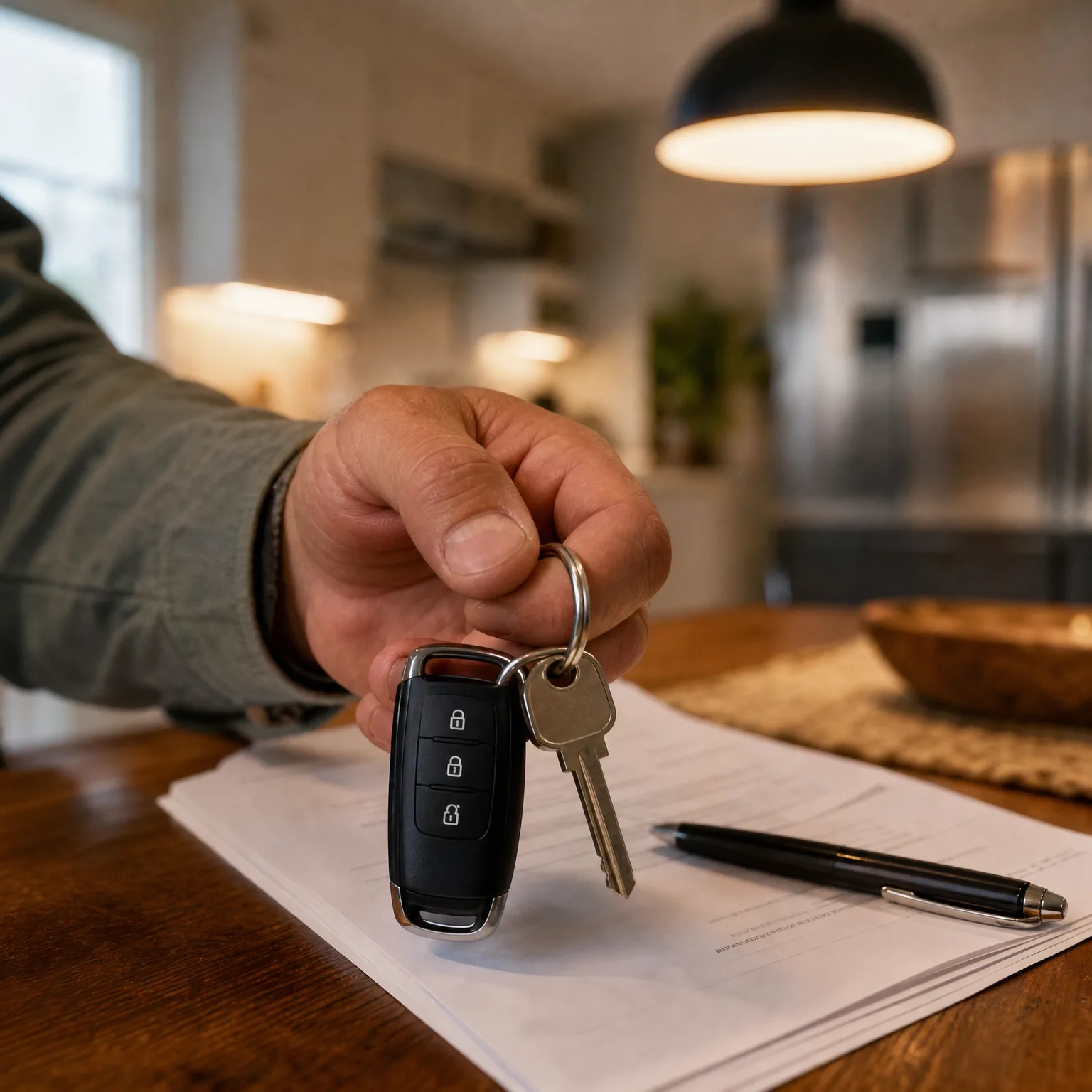
When your court-ordered IID period ends and your three-year SR-22 filing period expires, you must apply for full license reinstatement through DOL. The base reinstatement fee is $75. DUI-specific reinstatement requires proof of completion of a DOL-approved Alcohol/Drug Information School or a state-approved substance abuse treatment program, depending on what the court ordered at sentencing.
You must also provide proof that your SR-22 filing remained continuously active for the full three years without any lapse. A single day of lapse resets the three-year clock, and DOL will not reinstate your full license until the corrected filing period is satisfied. Most carriers send lapse notifications to DOL electronically within 24 hours of policy cancellation or non-payment, so any coverage gap triggers immediate DOL action.
Reinstatement processing typically takes five to ten business days after DOL receives all required documentation and fees. You cannot drive on your IIL after the IID compliance period ends. If your IIL expires before your reinstatement is processed, you are driving on a suspended license during the gap. Plan reinstatement filing at least two weeks before your IIL expiration date to avoid this window.
What Happens if You Miss IID Calibration Appointments or Accumulate Failed Tests
Washington ignition interlock devices require calibration and log download every 60 to 90 days, depending on the provider and your court order. Missing a single calibration appointment by more than five days triggers a lockout: the device will allow you to start the engine once to drive directly to the provider for calibration, then will disable the vehicle if you do not complete calibration within that trip.
Repeated failed breath tests, tampering attempts, or missed calibration appointments extend your total IID compliance period. DOL reviews IID logs at the end of your original compliance period and calculates extensions based on the number and severity of violations recorded during the period. A driver ordered to one year of IID compliance who accumulates three failed tests and one missed calibration may see their IID period extended by an additional 60 to 180 days.
Driving without a valid IIL while your device is in lockout mode constitutes driving on a suspended license. The IIL itself becomes invalid the moment you violate calibration terms or accumulate disqualifying violations. Most drivers do not realize this until they are stopped and cited for DWLS.
Frequently Asked Questions
Can I apply for an IIL in Washington if I refused the breath test after my DUI arrest?
Yes, but refusal cases face a one-year administrative suspension rather than the 90-day suspension for test-failure cases. IIL eligibility timing depends on your prior offense history. First-offense refusal cases may still apply for the IIL immediately, but second-offense or repeat refusal cases face longer mandatory hard suspension periods before IIL eligibility opens.
Does Washington allow me to drive my employer's vehicle without an ignition interlock device if I have an IIL?
No. The IIL allows you to drive anywhere at any time, but only in vehicles equipped with a DOL-approved ignition interlock device. Employer-owned vehicles, rental cars, borrowed vehicles, and out-of-state vehicles all require IID installation if you intend to drive them while your IIL is active. Driving any non-IID vehicle is treated as driving on a suspended license.
What happens if my SR-22 insurance lapses during the three-year filing period in Washington?
Your three-year SR-22 clock resets to zero. DOL requires continuous SR-22 filing for the full three years without any gap. A single day of lapse restarts the entire period from the date you reinstate the filing. Most carriers notify DOL of lapse within 24 hours, triggering immediate suspension action.
How long does Washington require ignition interlock after a first-offense DUI?
Typically one year for a first offense, measured from the date the IID is installed and the IIL is issued. Higher BAC levels (typically .15 or above) or aggravating factors may extend the IID period to 18 months or longer. Violations during the compliance period, such as failed breath tests or missed calibration appointments, extend the total IID duration beyond the original court order.
Can I get an IIL if I have unpaid tickets or an insurance lapse suspension on top of my DUI suspension?
No. Washington will not issue an IIL if you have any other disqualifying suspensions active at the same time. You must resolve unpaid tickets, uninsured driving suspensions, or failure-to-appear holds before your IIL application will be processed. The IIL pathway is available only to drivers whose sole suspension cause is a DUI or physical control revocation.
Do I need a separate ignition interlock device in every vehicle I own while my IIL is active?
Yes. Every vehicle you intend to drive must have a DOL-approved ignition interlock device installed. If you own two cars, both require IID units. The IIL does not grant exceptions for secondary vehicles, family vehicles, or any other scenario. Driving a vehicle without IID while your IIL is active is a criminal violation.
How much does full license reinstatement cost in Washington after my IIL and SR-22 periods end?
The base reinstatement fee is $75. You must also provide proof of DUI education or treatment program completion and proof that your SR-22 filing remained active for the full three years without lapse. Additional fees may apply if you owe other fines or late fees from the original suspension period.
Related Articles

How to Apply for Washington Ignition Interlock License
5/17/2026

WA Ignition Interlock License After DUI: Costs & Path
5/17/2026
How Long After a WA DUI Can You Apply for an IIL?
5/16/2026
WA Ignition Interlock License: Second DUI in 7 Years
5/17/2026

WA IIL vs Deferred Prosecution License After DUI
5/16/2026
WA Vehicular Assault DUI: IIL Eligibility & Timeline
5/16/2026