
Step-by-Step: Wisconsin Occupational License After an OWI
Get My Hardship-License SR-22 QuoteWisconsin's Dual-Track OWI Suspension System: Administrative and Judicial Actions Run in Parallel
Your Wisconsin OWI triggers two separate suspension actions that run on independent timelines. The administrative suspension starts 30 days after your arrest notice under Wis. Stat. § 343.305—this applies whether you refused the breath test or tested over 0.08 BAC. The judicial suspension begins after your criminal conviction under Wis. Stat. § 346.65 and carries a separate duration based on your offense count. Each track requires its own reinstatement fee when complete: $60 for the administrative action, $200 for the OWI-related judicial revocation.
Most drivers assume one suspension replaces the other. Wisconsin doesn't work that way. If you're convicted 90 days after your arrest, you've already served 60 days of administrative suspension when the judicial suspension starts. The timelines overlap but don't merge. This matters because your occupational license petition addresses whichever suspension is currently active, and your final reinstatement requires clearing both tracks separately.
The occupational license process is court-driven, not DMV-driven. You petition the circuit court that handled your OWI case or the circuit court in your county of residence. WisDOT's DMV does not grant occupational licenses administratively—the court issues the order, then you take that order to the DMV to receive the physical license document.

First Offense vs. Second Offense: Hard Suspension Periods Before You Can Apply
Wisconsin imposes mandatory hard suspension periods before occupational license eligibility opens. For a first OWI offense, you must serve 30 days of suspension before the court can grant an occupational license under Wis. Stat. § 343.10(5)(b). For a second or subsequent OWI within 10 years, the hard suspension extends to 90 days. These periods begin from the revocation notice date, not your conviction date or arrest date.
The 30-day and 90-day windows are absolute. Filing your petition early doesn't waive the waiting period—the court cannot legally grant the order until the hard period expires. If your administrative suspension started 30 days after arrest and your conviction came 120 days later, you've already cleared the first-offense hard period by the time the judicial suspension begins. Track both timelines carefully: the hard period applies to whichever suspension is currently controlling.
Refusal cases carry longer administrative suspensions than per se BAC cases, but the occupational license hard periods remain the same: 30 days for first offense, 90 days for repeat. If you refused the breath test, your administrative revocation runs one year for a first refusal. You still become eligible for an occupational license after 30 days of that one-year period.

Court Petition Process: What Wisconsin Courts Require in Your Filing
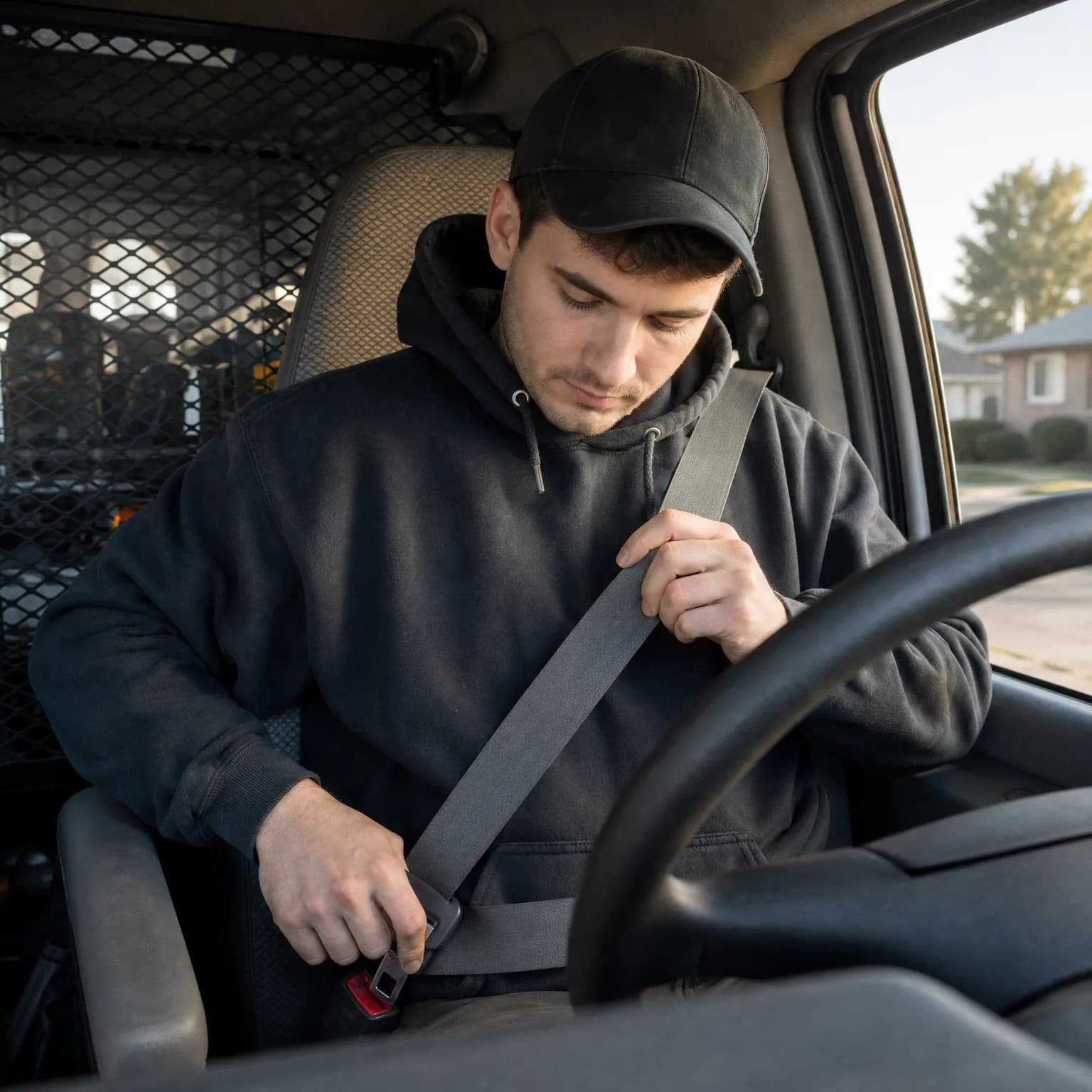
Your occupational license petition must demonstrate essential need. Wisconsin courts grant occupational licenses for work, school, medical appointments, religious activities, and alcohol/drug treatment programs. The petition requires proof of each claimed purpose: employer letter on company letterhead stating your work schedule and address, school enrollment verification with class schedule, medical appointment letters specifying recurring treatment needs, or program enrollment confirmation for court-ordered treatment.
The court defines your driving schedule in the order itself. Wisconsin courts set maximum daily and weekly limits: no more than 12 hours per day and 60 hours per week total. The order specifies exact time windows—7:00 AM to 7:00 PM Monday through Friday, for example—and approved routes between your home, workplace, school, and other approved locations. Generic schedules fail. The court wants specific addresses, specific departure and arrival times, and specific days of the week for each approved activity.
SR-22 proof of insurance filing is mandatory for all Wisconsin occupational license petitions regardless of the suspension trigger. You cannot petition without an active SR-22 certificate on file with WisDOT. The court filing fee varies by county but typically ranges $150 to $200. Ignition interlock device installation is required for all OWI-related occupational licenses under Wis. Stat. § 343.301, even for first offenses in most circumstances. The IID requirement runs concurrent with your occupational license period and continues through full reinstatement for repeat offenders.
Ignition Interlock Device Installation: Timing and Violation Consequences
Wisconsin requires IID installation before your occupational license becomes valid. The court order will specify the IID requirement, and you must provide proof of installation to the DMV when picking up your physical occupational license. Installation costs typically run $75 to $150, with monthly monitoring fees of $60 to $90. The device logs every start attempt, every BAC reading, and every violation event—failed starts, tampering alerts, missed rolling retests.
Violating your IID terms triggers immediate occupational license revocation. A single failed start above 0.02 BAC generates a violation report to WisDOT. Missing two consecutive monthly calibration appointments generates a compliance violation. Attempting to drive a non-IID-equipped vehicle while on occupational license status is a criminal offense under Wisconsin law, classified as operating while revoked. Courts do not grant second chances on IID violations—your occupational license is revoked, and you serve the remainder of your suspension period with no driving privileges.
The IID period extends beyond your occupational license for second and subsequent OWI offenses. Wisconsin imposes IID for 12 to 24 months depending on your offense count, and that clock doesn't start until full reinstatement. If you hold an occupational license for six months then reinstate fully, the IID clock begins at reinstatement for repeat offenders, adding another 12 months minimum with the device installed in your vehicle.

Drive Legally on Your Restricted License
Get My Hardship-License SR-22 Quote
SR-22 Filing Duration After Wisconsin OWI: Three Years from Reinstatement
Wisconsin requires SR-22 filing for three years following OWI-related reinstatement. The three-year period begins on your full reinstatement date, not your occupational license grant date and not your conviction date. If you hold an occupational license for eight months then reinstate fully, the SR-22 clock starts at reinstatement and runs 36 months forward.
SR-22 filing costs vary by carrier but typically add $15 to $25 as a one-time filing fee, then increase your premium by $40 to $90 per month depending on your driving record and offense count. Wisconsin does not require FR-44 filings—SR-22 is the only financial responsibility certificate WisDOT accepts. Your insurer electronically files the SR-22 certificate with WisDOT and notifies the state immediately if your policy cancels or lapses.
A lapse in SR-22 coverage resets your suspension. If your policy cancels 18 months into your three-year SR-22 period, WisDOT suspends your license again. You must refile SR-22, pay a new $60 reinstatement fee, and restart the three-year SR-22 clock from the new reinstatement date. The lapse doesn't void the time already served—it adds new suspension time and extends your total SR-22 duration. Maintain continuous coverage through the full three-year period or you're back to suspended status.
Non-Owner SR-22 Option: Occupational License Without Owning a Vehicle
If you sold your vehicle after the OWI arrest or never owned one, Wisconsin allows occupational licenses with non-owner SR-22 policies. A non-owner policy provides liability coverage when you drive a vehicle you don't own—borrowed cars, rental vehicles, employer vehicles. The SR-22 certificate attached to a non-owner policy satisfies Wisconsin's financial responsibility requirement for occupational license petitions.
Non-owner SR-22 policies cost less than standard SR-22 policies because they exclude collision and comprehensive coverage. Typical monthly premiums for non-owner SR-22 in Wisconsin range $45 to $85 depending on your OWI count and age. The policy covers you as a driver, not a specific vehicle, and follows you across any car you operate with the owner's permission.
You cannot add a non-owner policy to a household where any vehicle is titled in your name or your spouse's name. If your spouse owns a car and you live in the same household, you need a standard SR-22 policy listing you as a driver on that vehicle, not a non-owner policy. The non-owner option works for drivers who genuinely have no vehicle access in their household and will drive only borrowed or employer-owned cars during the occupational license period.
Cost Breakdown: Total Expense for Wisconsin Occupational License After OWI
Court petition filing fee: $150 to $200 depending on county. SR-22 filing fee: $15 to $25 one-time. Ignition interlock installation: $75 to $150. Monthly IID monitoring: $60 to $90 per month. SR-22 premium increase: $40 to $90 per month above standard rates. AODA assessment fee: $150 to $250. Required treatment program costs vary widely by program length but often run $300 to $1,200 for outpatient programs. Administrative reinstatement fee after occupational license period ends: $60. OWI-related judicial reinstatement fee: $200.
For a first-offense driver holding an occupational license for six months, total out-of-pocket costs typically reach $2,200 to $3,800 before full reinstatement. Second-offense drivers face longer IID periods, longer treatment requirements, and higher insurance premiums—total costs often exceed $5,000 over the occupational license and SR-22 filing period. These figures exclude attorney fees if you hire counsel to prepare your petition, which adds $500 to $1,500 in most Wisconsin counties.
Payment plans are not available for court fees or reinstatement fees. The SR-22 insurance premium is paid monthly as part of your policy, but the IID monitoring fee is billed monthly and cannot be deferred. Budget for the upfront filing and installation costs before petitioning—the court will not grant an order if you cannot demonstrate financial ability to maintain IID and SR-22 compliance throughout the occupational license period.
Frequently Asked Questions
Can I get an occupational license immediately after a Wisconsin OWI arrest?
No. Wisconsin requires a 30-day hard suspension for first OWI offenses and 90 days for second or subsequent offenses before you can petition for an occupational license. The hard period begins from your revocation notice date, not your arrest or conviction date.
Does Wisconsin accept online SR-22 filings for occupational license petitions?
Yes. Insurers file SR-22 certificates electronically with WisDOT. You receive a physical SR-22 certificate from your insurer to submit with your court petition, but the official filing is handled electronically between the carrier and the state DMV.
What happens if I drive outside my approved occupational license hours in Wisconsin?
Driving outside your court-ordered hours or routes is classified as operating while revoked, a criminal offense under Wisconsin law. Your occupational license is revoked immediately, you face criminal charges, and you serve the remainder of your suspension with no driving privileges.
Can I get an occupational license for a third OWI in Wisconsin?
Wisconsin does not automatically prohibit occupational licenses for third or subsequent OWI offenses, but courts have full discretion to deny petitions based on your driving record. Third offenses carry longer hard suspension periods and stricter IID requirements, and many counties deny occupational privileges entirely for repeat offenders beyond second offense.
Do I need a lawyer to file an occupational license petition in Wisconsin?
No, but court procedures vary by county and the petition must include specific documentation formats that many drivers miss. Hiring an attorney costs $500 to $1,500 but increases approval likelihood and reduces processing delays caused by incomplete filings.
Does Wisconsin's three-year SR-22 requirement start from my OWI conviction date?
No. The three-year SR-22 clock starts from your full reinstatement date, not your conviction date or occupational license grant date. If you hold an occupational license for eight months then reinstate, the SR-22 period runs 36 months forward from reinstatement.
Can I use a rental car with a Wisconsin occupational license if it has no ignition interlock device?
No. Wisconsin requires IID installation in every vehicle you operate while on occupational license status. You cannot legally drive any non-IID-equipped vehicle, including rentals, borrowed cars, or employer vehicles, during your occupational license period.
Related Articles
Wisconsin Occupational License After OWI: Court Process
5/16/2026
Wisconsin Occupational License Cost After OWI (Full Breakdown)
5/16/2026

WI Occupational License After 2nd OWI in 10 Years
5/16/2026

Wisconsin OWI Refusal Occupational License Wait Period
5/17/2026
Wisconsin OL After DUI
5/29/2026

WI OWI .15+ BAC: Occupational License & Penalties
5/16/2026