Nebraska Employment Driving Permit After Second DUI: Who Qualifies
Get My Hardship-License SR-22 QuoteNebraska Operates Two Parallel Restricted Driving Systems for DUI Cases
Nebraska law divides post-DUI driving privileges into two separate permit types: the Employment Driving Permit (EDP) for general suspensions and the Ignition Interlock Permit (IIP) specifically for alcohol-related revocations. Second-offense DUI drivers must pursue the IIP under Neb. Rev. Stat. § 60-6,211.05, not the EDP governed by § 60-4,118. Filing the wrong application wastes your processing window and delays reinstatement by 30 to 45 days.
The distinction matters because the two permits carry different eligibility windows, different application paths, and different vehicle restrictions. EDPs allow any registered vehicle. IIPs require ignition interlock devices installed on every vehicle you operate during the permit period. Most second-offense applicants assume they follow the same Employment Driving Permit path their attorney used for a first offense. They don't.
Nebraska DMV does not automatically redirect you to the correct form. If you submit an EDP application for a second DUI, the agency returns it unprocessed. You start over from the filing date of the corrected application, not the date you originally submitted.

Second-Offense DUI Triggers Mandatory Hard Suspension Before Any Permit
Second-offense DUI convictions in Nebraska carry a mandatory hard suspension period before any restricted driving permit becomes available. For first offenses, the hard suspension is 60 days. Second offenses typically extend that period to 180 days or longer, depending on the time elapsed between the first and second conviction.
Nebraska counts DUI offenses within a 15-year window measured from arrest date to arrest date, not conviction to conviction. If your second arrest falls 14 years and 11 months after your first, the DMV treats it as a second offense even if your first conviction was reduced to reckless driving or dismissed. The arrest record controls the offense count for administrative purposes.
During the hard suspension, no driving privileges of any kind are available. Ignition Interlock Permits cannot be issued until the mandatory period expires. Employment hardship does not override the statutory minimum. Losing your job during the hard suspension does not accelerate eligibility.
Ignition Interlock Permit Requires Device Installation Before Application Approval
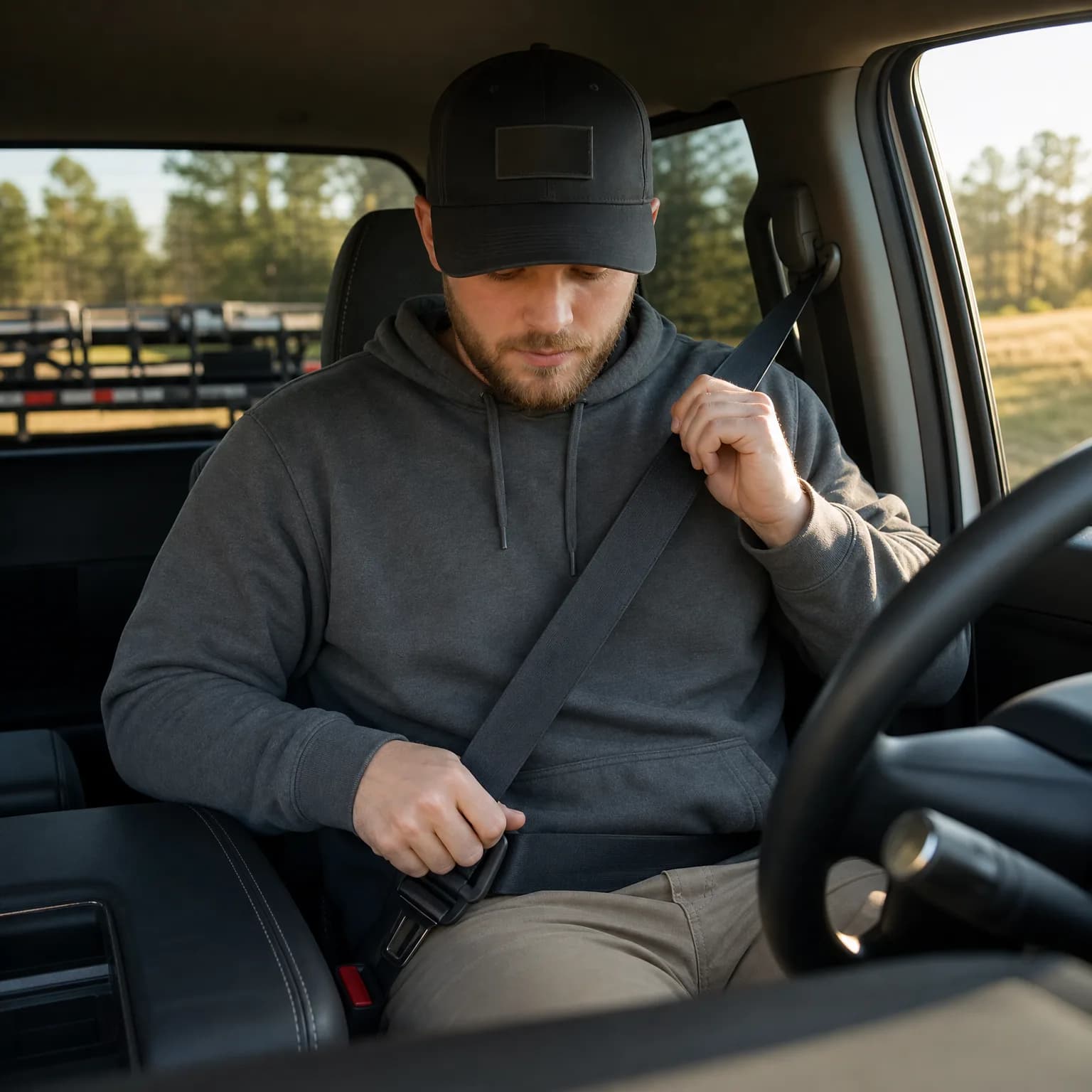
Nebraska law requires ignition interlock device installation on every vehicle you operate before the DMV issues an Ignition Interlock Permit. You cannot drive to the installation appointment. You arrange transport to a state-certified IID vendor, complete installation, and receive a compliance certificate showing the device serial number and calibration date. That certificate becomes part of your IIP application packet.
Installation costs $75 to $150, depending on vendor and vehicle type. Monthly monitoring and calibration fees run $60 to $90. Over a typical 18-month IIP period for second-offense drivers, total ignition interlock costs reach $1,200 to $1,800 before you add the permit application fee or insurance.
The device logs every start attempt, every failed breath test, and every trip. The vendor downloads this data at monthly calibration appointments and reports violations to the DMV. A single failed test, a single missed calibration, or a single attempt to start the vehicle without completing the breath test triggers permit suspension. Most second-offense drivers face at least one violation during the first 90 days as they learn the device's sensitivity to mouthwash, cold medicine, and morning coffee.
SR-22 Filing Must Show Continuous Coverage From Application Through Reinstatement
Nebraska requires SR-22 proof of financial responsibility before issuing an Ignition Interlock Permit for second-offense DUI. The filing period runs 3 years from the date your SR-22 is first filed, not from conviction or suspension. If your SR-22 lapses for any reason during that period, the DMV suspends your IIP immediately and restarts the 3-year clock from the date you refile.
SR-22 filing fees range from $15 to $50 depending on carrier. The filing itself does not increase your premium, but the second DUI conviction raises your insurance cost by 80% to 150% statewide. Monthly premiums for liability coverage after a second DUI typically run $190 to $320 in Nebraska. Full coverage pushes that to $380 to $600 per month.
If you do not own a vehicle, you need non-owner SR-22 coverage. Non-owner policies provide liability protection when you drive a borrowed or employer-owned vehicle and satisfy Nebraska's proof-of-insurance requirement for IIP eligibility. Monthly non-owner SR-22 premiums after a second DUI range from $85 to $140.

Drive Legally on Your Restricted License
Get My Hardship-License SR-22 Quote
Approved Purposes Under Nebraska Ignition Interlock Permits Are Narrower Than First-Offense EDPs
Nebraska Ignition Interlock Permits restrict driving to employment, education, medical treatment, court-ordered programs, and ignition interlock service appointments. The permit does not authorize recreational driving, grocery shopping, childcare errands, or social visits. Each approved purpose must be documented in your application with employer letters, school enrollment verification, or medical appointment records.
Hours of operation are limited to your documented work schedule, class times, or appointment windows. If your employer shifts your hours after the permit is issued, you must notify the DMV and request an amended permit before driving the new schedule. Driving outside your approved hours, even for an employment-related reason, constitutes a permit violation and triggers revocation.
Route restrictions do not appear on the permit itself, but Nebraska courts have upheld revocation for detours that extended more than 5 miles beyond the direct path between approved locations. GPS data from ignition interlock devices has been introduced as evidence in violation hearings. The device logs timestamps and engine runtime, which prosecutors cross-reference against documented work schedules.
Application Requires Court Hearing in Most Nebraska Counties
Second-offense DUI cases in Nebraska typically require a court hearing before the DMV issues an Ignition Interlock Permit. The hearing determines whether you meet statutory eligibility, whether your proposed driving purposes qualify under the permit restrictions, and whether ignition interlock monitoring is sufficient to protect public safety given your violation history.
You file your IIP application with the Nebraska DMV, which forwards it to the convicting court. The court schedules a hearing within 30 to 45 days. You must appear in person with documentation: proof of ignition interlock installation, SR-22 certificate, employer affidavit, and completion certificates from any court-ordered DUI education programs. Judges deny petitions when documentation is incomplete or when applicants cannot demonstrate necessity beyond general employment hardship.
The application fee is $50, paid to the DMV at filing. If the court denies your petition, the fee is not refunded. You may reapply after 90 days, but you pay the $50 filing fee again.
What Happens After Your Ignition Interlock Permit Period Ends
When your Ignition Interlock Permit period expires, you do not automatically regain full driving privileges. You must complete full license reinstatement through the Nebraska DMV, which requires payment of a $125 reinstatement fee, proof of continuous SR-22 coverage for the entire filing period, and in most cases retesting and DUI education program completion certificates.
Your SR-22 filing obligation continues for 3 years from the original filing date, even after your license is fully reinstated. If you cancel your policy or let coverage lapse during that window, the DMV suspends your license again. The 3-year period does not pause during your hard suspension or IIP period. It runs continuously once filed.
Nebraska does not allow early termination of SR-22 filing requirements. Some drivers assume they can request removal after 18 months of clean driving. They cannot. The statute sets a fixed 3-year period with no discretionary reduction.
Frequently Asked Questions
Can I get a Nebraska Employment Driving Permit after my second DUI?
No. Second-offense DUI drivers must apply for an Ignition Interlock Permit under Neb. Rev. Stat. § 60-6,211.05, not an Employment Driving Permit. The IIP requires ignition interlock installation on every vehicle you operate and carries stricter purpose and route restrictions than the EDP.
How long is the hard suspension before I can apply for an Ignition Interlock Permit in Nebraska?
Second-offense DUI convictions typically carry a 180-day hard suspension before Ignition Interlock Permit eligibility begins. First offenses carry a 60-day hard suspension. The length depends on the time between your first and second arrest dates.
Does Nebraska count my out-of-state DUI when determining second-offense status?
Yes. Nebraska counts DUI convictions from any state within the 15-year lookback window when determining offense number. The 15-year period is measured from arrest date to arrest date, not conviction to conviction.
What happens if I miss a calibration appointment for my ignition interlock device?
Missing a required calibration appointment triggers automatic Ignition Interlock Permit suspension. The IID vendor reports the missed appointment to the Nebraska DMV within 48 hours. You must complete calibration and request reinstatement, which adds 30 to 60 days to your permit period.
Can I remove my SR-22 filing requirement early if I complete DUI education?
No. Nebraska's SR-22 filing period for second-offense DUI is fixed at 3 years from the original filing date. Completing DUI education, maintaining a clean driving record, or finishing your Ignition Interlock Permit period does not reduce the filing obligation.
Do I need SR-22 insurance if I don't own a car after my second DUI?
Yes. Nebraska requires SR-22 filing for Ignition Interlock Permit eligibility regardless of vehicle ownership. You need a non-owner SR-22 policy, which provides liability coverage when driving borrowed or employer-owned vehicles and satisfies the state's proof-of-insurance requirement.
What is the total cost of an Ignition Interlock Permit in Nebraska for a second DUI?
Total costs include $50 application fee, $75 to $150 ignition interlock installation, $60 to $90 monthly monitoring for 18 months, $125 reinstatement fee, and SR-22 insurance premium increases of $190 to $320 per month. Over the full permit and filing period, expect $5,000 to $9,000.
Related Articles

Nebraska IID Requirement for Employment Driving Permit
5/17/2026
Cost of Nebraska Employment Driving Permit After DUI
5/16/2026
Nebraska Aggravated DUI (.15+ BAC) and IIP Eligibility
5/17/2026

Nebraska Employment Driving Permit Cost After DUI
5/16/2026

Nebraska EDP Wait Period After DUI Chemical Test Refusal
5/16/2026

Second DUI Temporary Restricted License Eligibility ND
5/17/2026