Who Qualifies for a Nevada Restricted License After a Second DUI
Get My Hardship-License SR-22 QuoteDoes Nevada allow restricted licenses after a second DUI?
Nevada does allow restricted licenses after a second DUI within 7 years, but only after you complete a mandatory 1-year hard suspension period with no driving privileges whatsoever. The restricted license becomes available on day 366, not before. First-offense DUI drivers face a 45-day hard suspension before restricted license eligibility; second-offense drivers face 365 days.
The 7-year lookback period starts from your first DUI arrest date, not your conviction date. If your second arrest falls within 7 years of your first arrest, Nevada classifies it as a second offense even if your first conviction didn't finalize until months later. This arrest-date measurement catches drivers who assumed they cleared the window based on conviction timing.
After the 1-year hard suspension, you can apply for a restricted license through the Nevada DMV. The restricted license requires ignition interlock device installation for the remainder of your suspension period, which typically extends 2 additional years beyond the hard suspension year. You cannot skip the IID requirement on a second-offense restricted license in Nevada.

What disqualifies you from a restricted license after a second DUI in Nevada?
You are disqualified from Nevada restricted license eligibility if you have not yet completed the full 1-year hard suspension. The DMV will deny any application filed before day 366. Court orders cannot override this statutory minimum.
Unpaid DUI court fines, outstanding restitution orders, or incomplete DUI school requirements also block restricted license approval. Nevada DMV cross-checks court compliance records before issuing any restricted driving privilege. If your DUI education program shows incomplete attendance or unpaid program fees, your application will be denied without appeal until you clear the deficiency.
A third DUI arrest within 7 years of your first DUI elevates your case to felony status and eliminates restricted license eligibility entirely. Nevada does not offer hardship driving privileges for felony DUI convictions. If you are arrested a third time while holding a second-offense restricted license, the restricted privilege is revoked immediately and permanently for that suspension cycle.


What does the restricted license application process require after a second DUI?
You must apply in person at a Nevada DMV office after completing your 1-year hard suspension. Online and mail applications are not accepted for DUI-related restricted licenses. Bring proof of SR-22 insurance filing, proof of ignition interlock device installation, your DUI school completion certificate, and court documentation showing all fines and restitution paid in full.
The DMV requires a certified IID installation receipt dated within 30 days of your application. The installer must be Nevada-certified and the device must meet Nevada Department of Public Safety specifications. Generic breath-test devices or out-of-state IID installations are rejected.
Processing typically takes 7 to 14 business days after a complete application is submitted. The DMV may require additional documentation if your court file shows conflicting suspension end dates or if your SR-22 filing lapsed at any point during your hard suspension. Expect a $75 reinstatement fee in addition to the standard $35 base fee. Total application and reinstatement costs run $110 before accounting for IID installation, which averages $150 to $250 for the initial calibration and device.
What routes and hours does a Nevada restricted license allow after a second DUI?
Nevada second-offense restricted licenses limit driving to employment, DUI education classes, court-ordered substance abuse treatment, medical appointments, and religious services. The DMV issues a restriction card listing your approved destinations by street address. You cannot deviate from the listed routes or add new destinations without filing an amendment application.
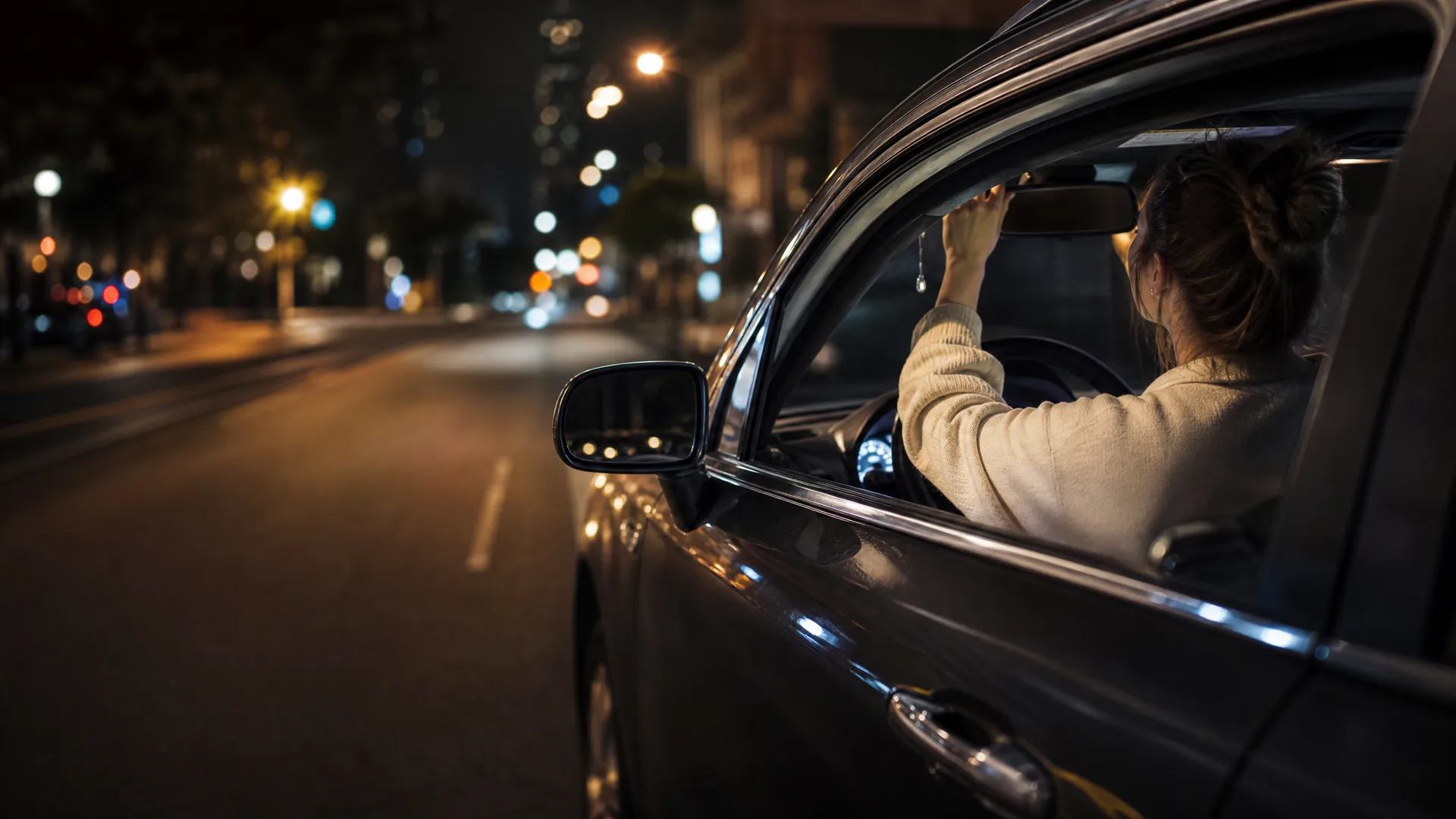
Time restrictions vary by case and are set individually by the DMV or the court that ordered your suspension. Most second-offense restricted licenses prohibit driving between 10 p.m. and 5 a.m. unless your work shift falls entirely within that window and you provide employer shift documentation. Weekend driving is typically limited to medical emergencies and pre-approved religious services.
You must carry your restricted license, your IID calibration log, your SR-22 insurance proof, and your DMV-issued route restriction card at all times while driving. A traffic stop without all four documents results in immediate arrest for driving on a suspended license, even if you are on an approved route during approved hours. Nevada law enforcement does not grant grace periods for forgotten paperwork on restricted license cases.

Drive Legally on Your Restricted License
Get My Hardship-License SR-22 Quote
How long does the ignition interlock requirement last after a second DUI?
Nevada requires ignition interlock for the full duration of your post-hard-suspension driving privilege, typically 2 years after your 1-year hard suspension ends. Your total IID period runs 2 years from the date you receive your restricted license, not from your original conviction date.
The IID must remain installed and functional for the entire 2-year period. A single failed breath test, a missed calibration appointment, or a tampering alert reported by your IID provider triggers an immediate restricted license revocation. You return to full suspension status and must restart your restricted license application from the beginning, including a new 1-year hard suspension if the violation is severe.
After completing 2 years of clean IID use with no violations, you can apply for full license reinstatement. The DMV reviews your IID provider's data log before approving reinstatement. Any period during which your IID was non-functional or showed tampering alerts does not count toward your 2-year requirement. Drivers who disconnect the device to avoid a failed test often add 6 to 12 months to their total restriction period.

What SR-22 filing period applies after a Nevada second DUI?
Nevada requires 3 years of continuous SR-22 insurance filing after a second DUI conviction. The 3-year period starts on the date your insurer files the SR-22 certificate with the Nevada DMV, not on your conviction date or suspension start date.
If your SR-22 filing lapses for any reason during the 3-year period, the clock resets to day zero. A lapse occurs when your insurer cancels your policy, you voluntarily cancel coverage, or you switch carriers without ensuring the new carrier files an SR-22 before the old carrier's cancellation takes effect. Nevada DMV receives electronic lapse notifications within 24 hours of any SR-22 cancellation.
Many second-offense DUI drivers do not own a vehicle after impound or sale. Non-owner SR-22 policies cover you while driving any vehicle you do not own. Non-owner SR-22 satisfies Nevada's filing requirement and costs substantially less than standard SR-22 policies. Monthly premiums for non-owner SR-22 after a second DUI typically range from $85 to $140 per month in Nevada, compared to $190 to $280 per month for standard SR-22 coverage if you own a vehicle.
What happens if you violate your restricted license terms?
Any violation of your restricted license terms results in immediate revocation and a return to full suspension. Violations include driving outside approved hours, driving to unapproved destinations, driving without your IID functional, or accumulating any new moving violation during your restricted period.
A DUI arrest while holding a restricted license elevates your case to felony status if it is your third DUI within 7 years. Felony DUI carries a 1-to-6-year prison sentence and permanent license revocation in Nevada. The restricted license does not protect you from felony charges if you reoffend.
If you are caught driving on a revoked restricted license, Nevada charges you with driving on a suspended license, a misdemeanor carrying up to 6 months in jail and a $1,000 fine. Your eligibility for any future restricted license is eliminated. Most drivers who lose restricted privileges after a second DUI do not regain any driving privilege until their full suspension period expires, often 3 years from the original conviction date.
Frequently Asked Questions
Can I get a restricted license immediately after a second DUI in Nevada?
No. Nevada requires a 1-year hard suspension before restricted license eligibility after a second DUI within 7 years. You cannot apply for a restricted license until day 366 of your suspension.
Does Nevada count my second DUI from the arrest date or conviction date?
Nevada counts from arrest date to arrest date, not conviction to conviction. If your second DUI arrest falls within 7 years of your first DUI arrest, it is classified as a second offense even if your first conviction was delayed.
What happens if I miss an ignition interlock calibration appointment in Nevada?
A missed calibration appointment triggers immediate restricted license revocation. You return to full suspension and must restart the restricted license application process, including potential additional hard suspension time.
Can I drive to the grocery store on a Nevada second-offense restricted license?
No. Nevada second-offense restricted licenses limit driving to employment, DUI classes, court-ordered treatment, medical appointments, and religious services. Grocery trips, errands, and social activities are prohibited.
How much does SR-22 insurance cost after a second DUI in Nevada?
Non-owner SR-22 policies after a second DUI in Nevada typically cost $85 to $140 per month. Standard SR-22 coverage if you own a vehicle runs $190 to $280 per month, sustained over the required 3-year filing period.
What is the total cost to get a restricted license after a second DUI in Nevada?
Expect $110 in DMV fees, $150 to $250 for IID installation, $75 to $100 per month for IID monitoring, and $85 to $280 per month for SR-22 insurance. Total first-year cost typically ranges from $2,500 to $5,000.
Can I get my Nevada restricted license revoked for a speeding ticket?
Yes. Any new moving violation during your restricted license period triggers immediate revocation. You return to full suspension and lose eligibility for future restricted privileges until your original suspension period expires.
Related Articles

How Long After Nevada DUI for Restricted License?
5/16/2026
Second DUI Restricted License Eligibility in Idaho
5/16/2026
CA Second DUI Restricted License: 1-Year Wait Explained
5/17/2026
Restricted License After 2nd DUI in Arizona (7-Year Rule)
5/16/2026
Nevada DUI Restricted License Cost: Fees, IID, SR-22
5/17/2026
Nevada DUI .18 BAC: Restricted License & Penalties
5/17/2026