
Who Qualifies for North Dakota Temporary Restricted License After Second DUI
Get My Hardship-License SR-22 QuoteDoes North Dakota Allow Temporary Restricted Licenses After a Second DUI?
Yes, North Dakota allows drivers with a second DUI conviction to apply for a Temporary Restricted License after serving a mandatory 30-day hard suspension period. The hard suspension begins immediately upon conviction or administrative license suspension under NDCC § 39-20, and no driving is permitted during this window. After the 30 days, you may apply through the ND Department of Transportation Driver License Division if you meet ignition interlock and chemical dependency evaluation requirements.
The second-offense administrative license suspension runs 365 days under NDCC § 39-08-01. The Temporary Restricted License does not shorten this period. It allows essential driving during the remaining 335 days of the suspension, provided you maintain compliance with interlock monitoring, SR-22 insurance, and all court-ordered conditions.
Most applicants assume eligibility begins immediately after conviction. North Dakota's hard suspension window blocks any driving, including emergency or work travel, for the first 30 days. Missing this timing detail causes applicants to file prematurely and face administrative denial.

What Documents Do You Need to Apply After a Second DUI?
The ND Driver License Division requires proof of chemical dependency evaluation completion, ignition interlock installation verification from a state-approved provider, and SR-22 insurance filing before processing your Temporary Restricted License application. The evaluation requirement is mandated under NDCC § 39-20 for all second-offense DUI cases and must include completion of any recommended treatment program identified during the evaluation.
Your SR-22 filing must show continuous coverage for the full 3-year period required by NDCC § 39-16.1. A lapse of even one day during the filing period triggers automatic suspension of the Temporary Restricted License and restarts the SR-22 clock. Reinstatement after a lapse requires a new $50 fee, re-filing SR-22, and administrative review before restricted driving privileges are restored.
Ignition interlock verification comes from your approved provider and includes the device serial number, installation date, and monthly monitoring schedule. North Dakota participates in the 24/7 sobriety program as an alternative or complement to ignition interlock for certain DUI offenders. Participation in 24/7 testing may affect your TRL conditions, but does not eliminate the interlock requirement for second-offense cases.

What Routes and Hours Are Approved for Second DUI Restricted Licenses?
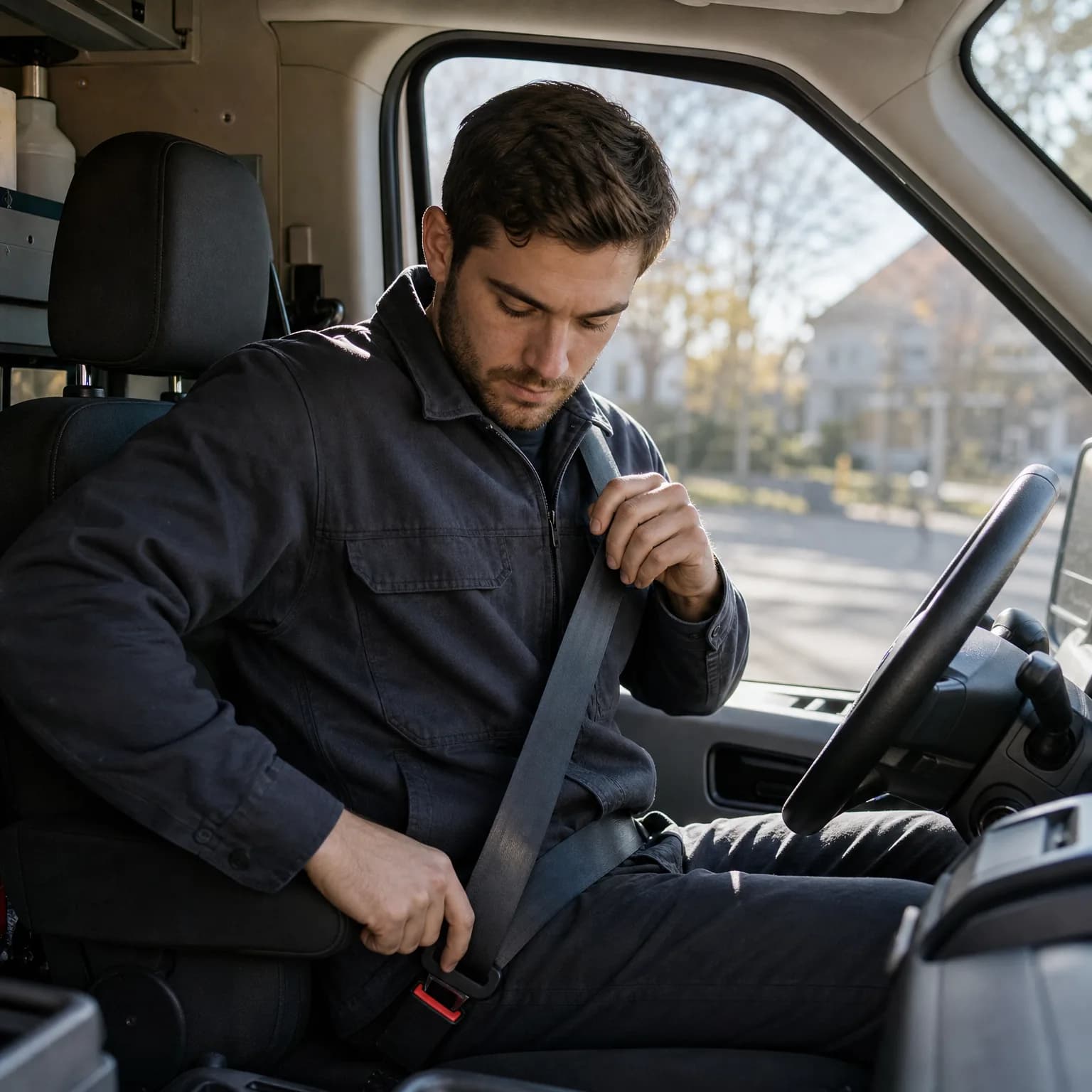
North Dakota restricts Temporary Restricted License holders to essential travel: work, school, medical appointments, and other court-approved essential activities. Route and purpose restrictions are defined at the time of issuance and vary case by case. There is no universally fixed statewide time window. Specific hours are determined by your documented employment schedule, school enrollment, or medical treatment calendar submitted with your application.
You must carry documentation proving the approved purpose for every trip. Employment verification includes a letter from your employer on company letterhead showing your scheduled work hours and job site address. School documentation requires enrollment verification and your class schedule. Medical appointments require documentation from your provider showing the appointment date, time, and address.
Deviating from approved routes or driving outside approved hours triggers immediate TRL revocation in most cases. Law enforcement officers access your restriction details during traffic stops. A single violation during a compliance check results in administrative review, and the Driver License Division can revoke the restricted license without a hearing if the deviation is documented by the arresting officer.

Drive Legally on Your Restricted License
Get My Hardship-License SR-22 QuoteHow Much Does the Temporary Restricted License Cost After a Second DUI?
The Temporary Restricted License application fee is not publicly documented in current NDDOT fee schedules; applicants should verify the current fee at a Driver License Division office before filing. Beyond the application, expect ignition interlock installation costs of $150 to $300, monthly monitoring fees of $75 to $100, and SR-22 filing fees ranging from $25 to $50 depending on your carrier.
Monthly insurance premiums for SR-22 coverage after a second DUI in North Dakota typically run $190 to $280 per month for drivers with standard vehicles and no additional violations. Non-owner SR-22 policies for drivers without a vehicle cost $45 to $85 per month. The SR-22 filing period runs 3 years from the date of reinstatement, not from the date of conviction.
Total cost over the restricted license period and SR-22 filing duration runs $5,000 to $9,000. This includes ignition interlock installation and monitoring, SR-22 premiums, application fees, and the $50 reinstatement fee due when the full suspension period ends. Drivers who violate restricted license terms or allow SR-22 coverage to lapse face additional reinstatement fees and extended filing periods.
What Happens If You Violate the Temporary Restricted License Terms?
North Dakota revokes the Temporary Restricted License immediately upon documented violation of route restrictions, time restrictions, or ignition interlock conditions. Revocation is administrative: the Driver License Division does not hold a hearing before canceling the restricted privilege. You receive written notice of the revocation and the full suspension period resumes from the date of violation.
Ignition interlock violations include missed calibration appointments, failed breath tests, and tampering with the device. Most violations trigger a lockout period where the vehicle will not start until the interlock provider resets the device. The provider reports all violations to the Driver License Division. Three violations within a 6-month monitoring period result in automatic TRL revocation in most cases.
SR-22 insurance lapses are reported electronically to the NDDOT by your carrier. The state's electronic verification system detects lapses the same day they occur. Your Temporary Restricted License is suspended within 10 business days of the lapse notice, and reinstatement requires proof of continuous SR-22 coverage for 30 days beyond the lapse date, a new $50 reinstatement fee, and administrative review. The 3-year SR-22 filing period does not restart, but the lapse extends the total calendar time required to satisfy the filing obligation.

Which Carriers Write SR-22 Coverage for Second DUI Cases in North Dakota?
Progressive, Geico, The General, Bristol West, and National General all write SR-22 policies for drivers with multiple DUI convictions in North Dakota. Progressive and Geico offer online quote tools for SR-22 filings, which speeds the application process when you are filing immediately after ignition interlock installation. Bristol West and The General specialize in non-standard auto coverage and write policies for drivers with recent second-offense DUIs that standard-tier carriers decline.
Non-owner SR-22 policies are available through Progressive, Geico, USAA, and The General. Non-owner coverage meets the SR-22 filing requirement for drivers who do not own a vehicle or whose vehicle was impounded, sold, or totaled after the DUI arrest. Monthly premiums for non-owner SR-22 in North Dakota run $45 to $85, significantly lower than owner-operator premiums.
State Farm writes SR-22 policies in North Dakota but does not typically accept new applications from drivers with second-offense DUIs within 36 months of conviction. Carriers evaluate second-offense cases individually; some decline coverage entirely, others quote premiums 200% to 350% above standard rates. Filing with a non-standard carrier immediately after your ignition interlock installation avoids delays that could push you past the Temporary Restricted License eligibility window.
Frequently Asked Questions
Can I apply for a Temporary Restricted License immediately after a second DUI conviction in North Dakota?
No. North Dakota imposes a mandatory 30-day hard suspension period after a second DUI conviction, during which no driving is permitted. You may apply for a Temporary Restricted License only after completing the 30-day period, submitting proof of chemical dependency evaluation, installing an ignition interlock device, and filing SR-22 insurance.
How long does the SR-22 filing requirement last after a second DUI in North Dakota?
North Dakota requires SR-22 insurance filing for 3 years following a DUI-related suspension. The 3-year period begins on the date your driving privileges are reinstated, not the date of conviction. Any lapse in SR-22 coverage during the filing period triggers suspension and extends the total calendar time required to satisfy the obligation.
What happens if I miss an ignition interlock calibration appointment while on a Temporary Restricted License?
Missing a calibration appointment is reported to the ND Driver License Division by your interlock provider and counts as a violation. Three violations within a 6-month monitoring period typically result in automatic revocation of the Temporary Restricted License. Reinstatement after revocation requires completing the full suspension period and paying a new $50 reinstatement fee.
Does North Dakota accept non-owner SR-22 insurance for Temporary Restricted License eligibility?
Yes. Non-owner SR-22 insurance meets the financial responsibility filing requirement for drivers who do not own a vehicle. Progressive, Geico, USAA, and The General all offer non-owner SR-22 policies in North Dakota, with monthly premiums typically $45 to $85.
Can I drive outside approved hours if I have an emergency while on a Temporary Restricted License?
No. North Dakota enforces route and time restrictions strictly. Driving outside approved hours for any reason, including emergencies, is a violation that triggers immediate administrative revocation of the Temporary Restricted License. Law enforcement officers verify your restriction details during traffic stops, and a single documented deviation results in revocation.
What is the total cost of maintaining a Temporary Restricted License after a second DUI in North Dakota?
Total cost over the restricted license period and SR-22 filing duration typically runs $5,000 to $9,000. This includes ignition interlock installation ($150–$300), monthly monitoring ($75–$100/month), SR-22 premiums ($190–$280/month for standard policies), and the $50 reinstatement fee. Violating license terms or allowing SR-22 coverage to lapse adds additional fees.
Related Articles

Hardship License After First DUI in North Dakota
5/16/2026

ND Hardship License Wait After DUI Refusal | TRL
5/16/2026
SD Second DUI Restricted License Eligibility Guide
5/16/2026

ND Hardship License Cost After DUI: Fees, IID, SR-22
5/16/2026

ND DUI BAC .16+: Aggravated Penalties & TRL Eligibility
5/16/2026

South Dakota DUI Restricted License Wait Period
5/16/2026