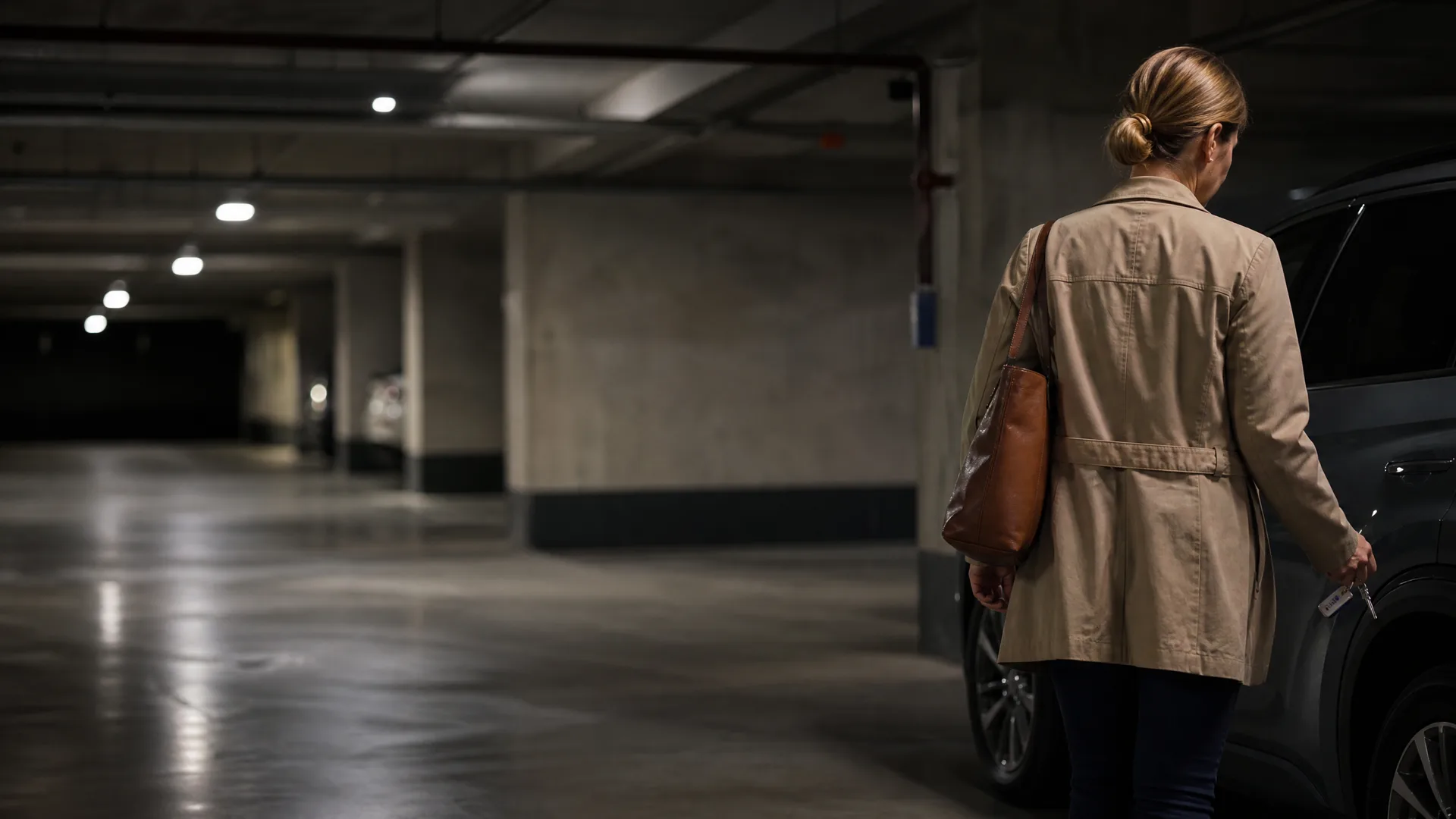
Who Qualifies for an Idaho Restricted License After a Second DUI
Get My Hardship-License SR-22 QuoteDoes Idaho Allow Restricted Licenses After a Second DUI Within 10 Years?
Yes, but only after a mandatory hard suspension period and only with court approval. Idaho Code § 18-8005 authorizes restricted driving privileges for DUI offenders, but the statute does not mandate approval. The issuing district court sets all conditions individually.
Second-offense DUI within 10 years triggers a longer absolute suspension period than first offense before any restricted license becomes available. First-offense DUI imposes a 30-day hard suspension before restricted privileges may be granted. Second-offense suspensions carry a longer initial period during which no driving of any kind is permitted, but the exact number of hard suspension days is not uniformly codified across Idaho's 44 counties. Judges apply Idaho Code § 18-8005 with broad discretion.
This means two applicants with identical second-offense DUI convictions in neighboring counties may face different mandatory wait periods before petitioning for a restricted license. The lack of a statewide hard-day template makes timing unpredictable. Most applicants expect a fixed calendar window. Idaho does not provide one for second offenses.

What the Court Requires Before Granting a Second-Offense Restricted License
The petition must prove genuine hardship that cannot be resolved through alternative transportation. Employment documentation is the most common foundation: employer-signed affidavit on company letterhead confirming work schedule, job address, and a statement that alternative transportation or schedule adjustment is not available. Medical necessity documentation includes physician letters detailing appointment frequency, medical facility addresses, and confirmation that rideshare or family transport cannot meet the need. School enrollment verification and class schedules support education-based petitions.
The court will deny the petition if the applicant does not present documented proof that losing employment, education, or necessary medical care will occur without the restricted license. Idaho courts do not grant restricted licenses for convenience, grocery shopping, or general errands. The restriction is narrowly tailored to the specific hardship proven in the petition.
Ignition interlock device installation is mandatory for all second-offense DUI restricted licenses. The IID must remain installed for the entire duration of the restricted license period. Installation must be completed before the restricted license becomes valid. The court will specify an approved IID provider list. Installation cost typically runs $75–$150, with monthly monitoring fees of $60–$90. Total IID cost over the restricted period often exceeds $1,500.
SR-22 proof of insurance must be filed with the Idaho Transportation Department before the court will issue the restricted license. Idaho requires SR-22 filing for 3 years following a DUI conviction. The SR-22 filing fee is typically $25–$50, but the premium increase for high-risk auto insurance after a second DUI ranges from $140–$280 per month depending on age, county, and carrier.

Approved Purposes and Route Restrictions on an Idaho Second-Offense Restricted License
The court defines allowed routes, destinations, and time windows individually for each restricted license. Typical approved purposes include work commute, medical appointments, DUI education or treatment program attendance, and court-ordered obligations. The restricted license order will list specific addresses for work, school, or medical facilities. Driving outside those approved addresses or outside the approved hours is a violation that triggers immediate revocation.
Idaho restricted licenses do not permit grocery shopping, child transport for non-medical purposes, recreational activities, or social visits unless the court explicitly adds those purposes to the order. Most do not. The restriction is enforceable: if you are stopped by law enforcement outside your approved route or time window, the officer will confiscate the restricted license on the spot and the court will revoke it.
Some courts require a logbook documenting every trip: date, time, origin, destination, odometer reading, and purpose. The logbook must be available for inspection by probation officers or law enforcement during any traffic stop. Failure to maintain the logbook can result in revocation even if the trip itself was within approved parameters.
Weekend and evening restrictions are common. Many second-offense restricted licenses prohibit driving after 8 PM or on Sundays. The court tailors time restrictions to your work schedule and hardship proof. If your petition does not document weekend work shifts, the court will not approve weekend driving.
How to Apply for an Idaho Restricted License After a Second DUI
The application is a court petition filed in the district court that imposed the DUI sentence. Idaho does not process restricted license applications through the Idaho Transportation Department for DUI cases. You must file a petition for restricted driving privileges with the clerk of the district court in the county where you were convicted.
Required documentation includes: the completed petition form (available from the court clerk), proof of hardship (employer affidavit, physician letter, school enrollment verification), proof of SR-22 insurance filing with the Idaho Transportation Department, proof of ignition interlock device installation with an approved provider, and proof of enrollment in or completion of a court-ordered substance abuse evaluation or treatment program if applicable.
The court will schedule a hearing. You must appear. The judge will review the petition, ask questions about your hardship claims, and decide whether to grant the restricted license and under what specific conditions. Approval is not automatic. Judges deny petitions when documentation is incomplete, when alternative transportation appears viable, or when the applicant has not yet completed the mandatory hard suspension period.
Processing time from petition filing to hearing is typically 2–4 weeks depending on court calendar availability. There is no guaranteed timeline. If your employer deadline is immediate, the court cannot expedite the hearing to accommodate it. Plan for at least 30 days from the date you complete the hard suspension period to the date a restricted license might be issued.

Drive Legally on Your Restricted License
Get My Hardship-License SR-22 Quote
What Happens If You Violate the Restricted License Terms
Violation triggers immediate revocation. The court will terminate the restricted license and you will serve the remainder of your suspension period with no driving privileges. Common violations include driving outside approved hours, driving to unapproved destinations, failing to maintain ignition interlock device monitoring payments, tampering with the IID, or receiving any additional traffic citation including non-DUI offenses like speeding or failure to signal.
Missing two consecutive DUI education or treatment program sessions while holding a restricted license is considered a violation even if you were not driving at the time. The restricted license is conditioned on compliance with all court-ordered programs. The court interprets non-attendance as failure to comply with the underlying sentence.
If you are arrested for another DUI while holding a restricted license, the restricted license is revoked immediately and the new DUI resets your suspension timeline. Idaho counts prior DUI convictions within the preceding 10 years. A third DUI within 10 years is a felony and results in a minimum 1-year license revocation with no restricted license eligibility.
Revocation is final. Idaho courts do not reinstate restricted licenses after a violation. You will serve the remaining suspension period without driving privileges and will need to complete full reinstatement procedures when the suspension expires.

Cost Breakdown for an Idaho Second-Offense Restricted License
Petition filing fee: typically $50–$100 depending on the county court. Ignition interlock installation: $75–$150. Ignition interlock monthly monitoring: $60–$90 per month for the restricted license duration. SR-22 filing fee: $25–$50. High-risk auto insurance premium increase: approximately $140–$280 per month over baseline rates. Substance abuse evaluation (if required): $100–$300. DUI education or treatment program (if required): $300–$1,500 depending on program length.
Total out-of-pocket cost over a typical 1-year restricted license period ranges from $3,000 to $6,000. This does not include attorney fees if you hire counsel to prepare the petition, which adds $500–$2,000 depending on complexity and whether the attorney appears at the hearing.
The Idaho Transportation Department reinstatement fee after your full suspension period ends is $25. This fee applies when you convert from the restricted license to full unrestricted driving privileges. SR-22 filing must continue for 3 years from the DUI conviction date, so insurance premium increases will persist beyond the restricted license period.
What to Do About Insurance Before Petitioning for a Restricted License
You must secure SR-22 insurance before the court will consider your petition. The SR-22 is proof that you carry at least Idaho's minimum liability coverage: $25,000 bodily injury per person, $50,000 bodily injury per accident, and $15,000 property damage. The SR-22 filing itself costs $25–$50, but the underlying insurance premium after a second DUI increases substantially.
If you do not currently own a vehicle, you need a non-owner SR-22 policy. Non-owner policies provide liability coverage when you drive a vehicle you do not own. This is common for drivers whose vehicle was impounded, sold, or never owned. Non-owner SR-22 premiums typically range from $50–$100 per month, lower than standard SR-22 policies because the risk exposure is narrower.
Carriers writing SR-22 coverage in Idaho after a second DUI include Progressive, Geico, The General, Dairyland, Bristol West, GAINSCO, and National General. Not all carriers offer non-owner SR-22 policies; confirm availability when requesting quotes. USAA writes SR-22 and non-owner policies but only for military members, veterans, and their families.
The SR-22 filing must remain active for 3 years. If the policy lapses or is cancelled, the carrier notifies the Idaho Transportation Department electronically and your restricted license is suspended immediately. Continuous coverage is mandatory.
Frequently Asked Questions
Can I get a restricted license immediately after a second DUI in Idaho?
No. Idaho requires a mandatory hard suspension period after a second DUI conviction before any restricted license petition can be filed. The exact duration is not uniformly codified and varies by court. First-offense DUI imposes a 30-day hard period; second-offense hard suspension is longer but set at judicial discretion.
Does Idaho require ignition interlock for a second-offense restricted license?
Yes. Idaho courts mandate ignition interlock device installation for all second-offense DUI restricted licenses. The IID must remain installed for the entire restricted license period. Installation and monthly monitoring fees add $1,200–$1,800 to total costs over a typical 1-year period.
What happens if I drive outside my approved hours on an Idaho restricted license?
The restricted license is revoked immediately. Law enforcement will confiscate the license during a stop outside approved hours or routes. The court will not reinstate it. You will serve the remainder of your suspension period with no driving privileges.
Can I use a restricted license to drive to the grocery store in Idaho?
Only if the court explicitly adds grocery shopping to your approved purposes, which is rare. Idaho restricted licenses are narrowly tailored to documented hardship: work, medical appointments, DUI treatment programs, and court obligations. General errands are typically excluded.
How long does SR-22 filing last after a second DUI in Idaho?
Idaho requires SR-22 filing for 3 years following a DUI conviction, measured from the conviction date. The filing must remain active continuously. If the policy lapses, the Idaho Transportation Department suspends your restricted license immediately.
Will a third DUI in Idaho disqualify me from getting a restricted license?
Yes. A third DUI within 10 years is a felony in Idaho and results in a minimum 1-year license revocation with no restricted license eligibility during that period. The court will not consider a restricted license petition until after the revocation period ends.
Do I need a lawyer to petition for an Idaho restricted license after a second DUI?
It is not required, but many applicants hire an attorney to prepare the petition and represent them at the court hearing. Attorney fees typically range from $500–$2,000. Courts grant petitions to unrepresented applicants when documentation is complete and hardship is clearly proven.
Related Articles

Idaho Restricted License After First DUI: Court Steps
5/16/2026

Idaho Excessive DUI (.20+ BAC) Restricted License Rules
5/16/2026

Idaho DUI Refusal Restricted License Wait Period
5/17/2026

Second DUI Restricted License Eligibility in Nevada
5/17/2026
SD Second DUI Restricted License Eligibility Guide
5/16/2026

Idaho Restricted License Cost After DUI | Court, IID, SR-22
5/16/2026