
Why Indiana Requires IID for Probationary License After OWI
Get My Hardship-License SR-22 QuoteIndiana's Specialized Driving Privilege Statute Requires IID for All OWI Cases
Indiana Code 9-30-16 mandates ignition interlock devices for all drivers granted specialized driving privileges after an OWI conviction. The statute does not distinguish between first-offense and repeat cases. It does not exclude low-BAC offenders. If you are seeking a probationary license after OWI, the court will condition that privilege on IID installation before you drive.
This differs sharply from states like Texas or California, where first-offense DUI drivers with BAC below aggravated thresholds can often obtain occupational or restricted licenses without IID. Indiana's framework treats IID as a baseline condition for any OWI-triggered probationary license, not a penalty reserved for aggravated cases.
The requirement stems from Indiana's 2015 legislative overhaul under HEA 1225. That law introduced specialized driving privileges as the primary vehicle for court-granted limited licenses and locked IID into the eligibility structure for OWI cases. You cannot petition the court to waive the device. The BMV will not issue the probationary license without proof of installation from a certified IID vendor.

How Indiana's Probationary License IID Requirement Works During Your Suspension
Once the court grants you specialized driving privileges, you have 10 business days to install an approved ignition interlock device with a certified vendor. Indiana uses a state-certified provider network. Your vendor submits installation confirmation directly to the BMV. Until that confirmation arrives, your probationary license remains inactive.
The device stays installed for the duration of your probationary license period. For a first OWI conviction with a 180-day administrative suspension, that typically means 6 months of IID use. For repeat offenses or longer suspensions, the IID period extends accordingly. The court order specifying your specialized driving privilege will state the exact duration.
You pay installation fees, monthly monitoring fees, and removal fees out of pocket. Installation typically costs $75 to $150. Monthly monitoring runs $60 to $100. Removal adds another $50 to $75. Over a 6-month probationary period, total IID expenses range from $500 to $750. These costs are separate from your probationary license application fee, SR-22 filing fee, and insurance premium increases.

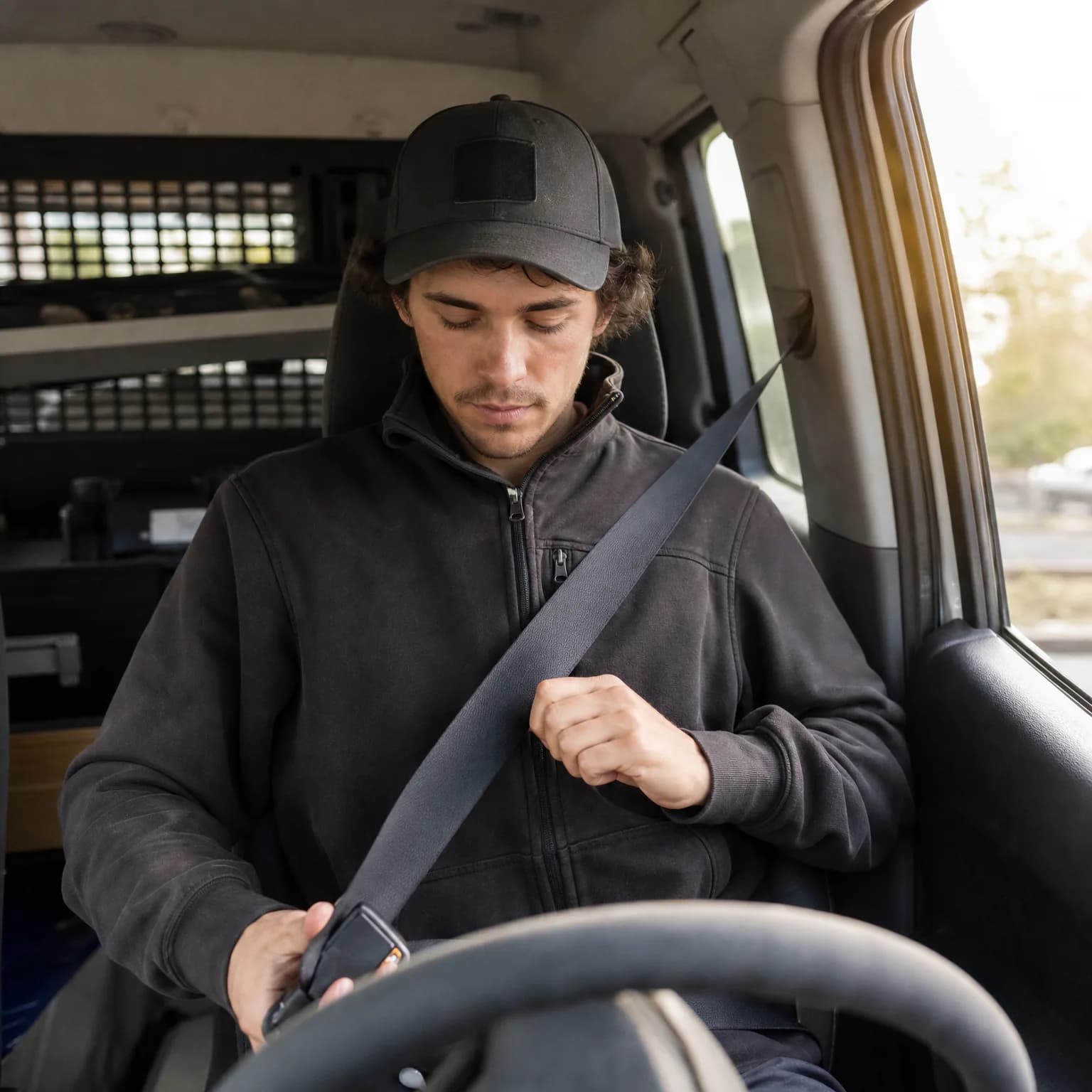
Why Indiana Applies IID to First-Offense OWI Probationary Licenses
Indiana's IID mandate for all OWI probationary licenses reflects a legislative choice to prioritize prevention over offense severity. The state's analysis concluded that IID reduces recidivism across all BAC levels and offense counts, not just high-BAC or repeat offenders.
Most states reserve IID for aggravated cases: BAC at or above 0.15, refusal cases, or second and subsequent offenses. Indiana applies it universally to OWI probationary licenses. This means a first-offense driver with a BAC of 0.10 who qualifies for specialized driving privileges faces the same IID requirement as a driver with a BAC of 0.20 or a second-offense conviction.
The practical result: if you are seeking probationary driving privileges in Indiana after any OWI conviction, budget for IID costs from the outset. There is no low-severity exemption. The statute does not grant judges discretion to waive the device for hardship cases.

Drive Legally on Your Restricted License
Get My Hardship-License SR-22 QuoteWhat Happens if You Violate IID Requirements on Your Probationary License
Indiana's IID monitoring system reports violations to the BMV and the court in real time. Violations include failed breath tests, tampering with the device, circumventing the interlock, or missing calibration appointments. A single violation can trigger probationary license revocation.
When your IID vendor detects a violation, they notify the BMV within 24 to 48 hours. The BMV flags your probationary license for review. The court that granted your specialized driving privilege receives a violation report. Most courts schedule a compliance hearing within 10 to 15 days. At that hearing, the judge reviews the violation record and determines whether to revoke your probationary license, extend the IID period, or impose additional conditions.
Revocation is common for alcohol-related violations. If the device records a failed breath test indicating BAC above 0.02, most judges treat that as evidence you are driving under the influence while on probationary status. The probationary license is revoked immediately. You serve the remainder of your suspension without driving privileges. There is no second-chance probationary license application for the same suspension period.

How IID Interacts with SR-22 Filing for Indiana OWI Probationary Licenses
Indiana requires SR-22 proof of financial responsibility for all OWI convictions. The SR-22 filing requirement runs parallel to your IID requirement. You need both to maintain your probationary license.
SR-22 is a certification your insurance carrier files with the BMV confirming you carry at least the state's minimum liability coverage: $25,000 per person for bodily injury, $50,000 per accident for bodily injury, and $25,000 for property damage. The filing fee is typically $25 to $50. Your carrier must maintain continuous SR-22 filing for 3 years from the date of your OWI conviction.
If your SR-22 lapses during your probationary license period, the BMV suspends your probationary license immediately. Even if your IID shows perfect compliance, a lapsed SR-22 revokes your driving privilege. You must refile SR-22, pay a reinstatement fee, and reapply for probationary status. Most carriers send SR-22 cancellation notices to the BMV 10 to 15 days after a policy cancels. That gap gives you a narrow window to reinstate coverage before the BMV acts.

Finding Coverage That Meets Indiana's IID and SR-22 Requirements After OWI
Not all carriers write policies for drivers with IID requirements and SR-22 filings. Standard and preferred carriers often decline OWI applicants outright. Non-standard carriers specialize in high-risk coverage and understand the IID-plus-SR-22 framework.
Carriers confirmed to write SR-22 in Indiana include Geico, Progressive, State Farm, Dairyland, Bristol West, The General, National General, GAINSCO, and Acceptance Insurance. Many of these carriers also insure drivers with IID devices. When you request a quote, confirm the carrier will cover you with an active IID installation and SR-22 filing. Some carriers impose surcharges for IID-equipped vehicles. Others build the risk into the base premium.
If you do not currently own a vehicle, consider non-owner SR-22 coverage. Non-owner policies provide liability coverage when you drive a vehicle you do not own. Indiana accepts non-owner SR-22 filings for probationary license eligibility. Monthly premiums for non-owner SR-22 after OWI typically range from $40 to $90 in Indiana, depending on your age, county, and offense details.
Frequently Asked Questions
Can I get a probationary license in Indiana after OWI without an ignition interlock device?
No. Indiana Code 9-30-16 requires ignition interlock devices for all specialized driving privileges granted after OWI conviction, regardless of BAC level or offense count. The court cannot waive the IID requirement even for first-offense cases with low BAC.
How long do I need to keep the ignition interlock device installed on my probationary license in Indiana?
The IID stays installed for the full duration of your probationary license period, which matches the length of your court-granted specialized driving privilege. For a first OWI with a 180-day administrative suspension, that typically means 6 months. Repeat offenses or longer suspensions extend the IID period accordingly.
What happens if my ignition interlock device records a failed breath test while I'm on probationary status in Indiana?
The IID vendor reports the violation to the BMV and the court within 24 to 48 hours. Most courts schedule a compliance hearing within 10 to 15 days. Judges typically revoke probationary licenses immediately for alcohol-related violations, and you serve the remainder of your suspension without driving privileges.
Do I need SR-22 insurance if I already have an ignition interlock device on my Indiana probationary license?
Yes. Indiana requires both IID installation and SR-22 filing for OWI probationary licenses. The SR-22 is a separate requirement proving you carry minimum liability coverage. If your SR-22 lapses during your probationary period, the BMV suspends your probationary license even if your IID compliance is perfect.
How much does the ignition interlock device cost for an Indiana probationary license after OWI?
Installation typically costs $75 to $150, monthly monitoring runs $60 to $100, and removal adds $50 to $75. Over a 6-month probationary period, total IID expenses range from $500 to $750, separate from probationary license application fees, SR-22 filing fees, and insurance premiums.
Can I use a non-owner SR-22 policy to meet Indiana's probationary license insurance requirement if I don't own a car?
Yes. Indiana accepts non-owner SR-22 filings for probationary license eligibility. Non-owner policies provide liability coverage when you drive a vehicle you do not own. Monthly premiums for non-owner SR-22 after OWI typically range from $40 to $90 in Indiana.
Related Articles

Indiana OWI License Suspension: Probationary Path
5/16/2026

Indiana Probationary License After 2nd OWI in 5 Years
5/16/2026

Indiana OWI Probationary License Cost: Fees, IID, SR-22
5/16/2026

Indiana Probationary License After DUI
5/29/2026

Why Wyoming Requires IID During DUI Suspension Period
5/17/2026

Why Idaho Requires 1 Year of IID Before Restricted License
5/16/2026