
Why Kentucky Requires 6 Months of IID Before Hardship Approval
Get My Hardship-License SR-22 QuoteWhen the 180-Day IID Clock Actually Starts in Kentucky
The 180-day ignition interlock requirement begins the day you complete installation with a state-certified provider, not the day of your DUI conviction or the day your license is suspended. Kentucky Transportation Cabinet records the installation date through the provider's electronic filing. If you delay installation by 60 days after conviction, you've extended your hardship eligibility window by 60 days.
Kentucky's DUI framework under KRS 189A.340 requires first-offense DUI drivers to complete a 30-day hard suspension before applying for an Ignition Interlock License. Second-offense drivers face a 12-month suspension with a longer hard period before interlock eligibility. The 180-day requirement applies to drivers pursuing early reinstatement or hardship driving privileges through the Ignition Interlock License program — Kentucky's alternative to the traditional court-petitioned Hardship License.
The Ignition Interlock License bypasses the court petition process for first-offense DUI cases. You install the device, maintain it for 180 days without violations, then apply through the Kentucky Transportation Cabinet for an IIL that allows unrestricted driving with the device active. The traditional Hardship License still requires a District Court petition, proof of hardship, and court-defined route and time restrictions. Most first-offense drivers choose the IIL path because it offers broader driving privileges once the 180-day period concludes.
What Resets the 180-Day Countdown Period
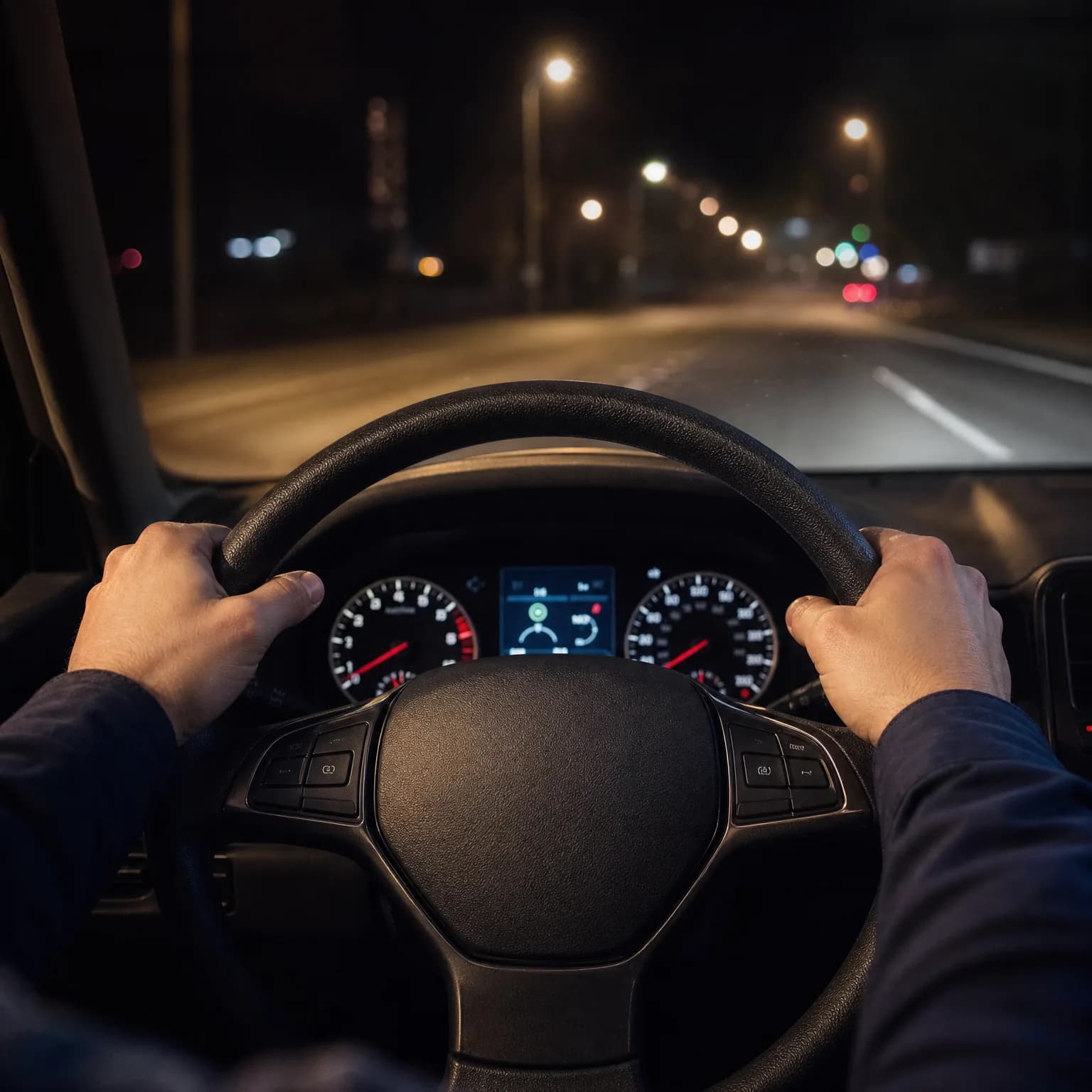
Any ignition interlock violation reported by your device provider resets the 180-day requirement to day zero. Kentucky defines violations as failed startup breath tests (BAC above .02), failed rolling retests, attempts to tamper with or bypass the device, and missed monthly calibration appointments. Your IID provider reports violations electronically to the Kentucky Transportation Cabinet within 48 hours of the event.
Driving on a suspended license during the countdown period triggers an automatic reset. If your license is suspended when the DUI conviction posts and you drive before the IIL is issued, you've committed a Class B misdemeanor under KRS 186.620 and restarted the 180-day clock. This includes driving to the IID installation appointment — arrange a ride or use a taxi.
Missing two consecutive monthly calibration appointments disqualifies you from the IIL program entirely in most Kentucky counties. The device must be recalibrated every 30 days to verify accuracy and download violation data. Providers notify the Transportation Cabinet when you miss an appointment. One missed appointment extends your countdown; two consecutive appointments end your IIL eligibility and force you back to the traditional court-petitioned Hardship License process.

How Kentucky's IIL Differs from the Court-Petitioned Hardship License
The Ignition Interlock License is an administrative program managed by the Kentucky Transportation Cabinet. You apply after completing the 180-day IID period, pay the $40 reinstatement fee, submit proof of SR-22 insurance, and receive an IIL that allows unrestricted driving as long as the device remains installed. No court hearing required for first-offense cases.
The traditional Hardship License requires a District Court petition under KRS 189A.410, court-approved documentation of hardship (employment records, medical necessity, school enrollment), and a judge's approval. The court defines your allowed routes and hours — typically home to work, work to home, with specific time windows. Violations of those restrictions result in immediate revocation and criminal charges.
Processing times vary by county. Jefferson County (Louisville) and Fayette County (Lexington) District Courts handle higher volumes and may take 30 to 60 days to schedule a hardship petition hearing. Rural counties process faster but have fewer court dates. The IIL application through the Transportation Cabinet processes within 10 to 15 business days once you submit all required documents, including the 180-day compliance certificate from your IID provider.

Drive Legally on Your Restricted License
Get My Hardship-License SR-22 QuoteWhy Kentucky's 180-Day Period Exists and What It Measures
Kentucky adopted the 180-day ignition interlock requirement in 2020 under SB 133 to reduce repeat DUI offenses. The law assumes six months of monitored sobriety demonstrates behavioral change. Violation data supports this: Kentucky Transportation Cabinet records show drivers who complete 180 days without device violations have a 68% lower re-offense rate over the following two years compared to drivers who received hardship licenses without IID requirements.
The device records every startup attempt, every rolling retest result, and every tamper event. Monthly calibration downloads transmit this data to the state. Your 180-day period must show zero failed breath tests above .02 BAC, zero bypass attempts, and 100% calibration compliance. One failed test at day 170 resets the entire countdown.
Kentucky's IID providers — LifeSafer, Intoxalock, and Smart Start are the three state-certified vendors — charge $75 to $100 for installation, $70 to $90 per month for monitoring and calibration, and $50 to $75 for removal. Over 180 days, expect $1,300 to $1,700 in device costs alone. This is separate from the SR-22 filing fee, the reinstatement fee, and the premium increase on your auto insurance policy.

SR-22 Filing Duration and Cost Impact After a Kentucky DUI
Kentucky requires SR-22 financial responsibility filing for three years following a DUI conviction. The SR-22 requirement runs concurrently with your IIL period — you need SR-22 coverage active before the Transportation Cabinet issues your Ignition Interlock License. Your insurer files the SR-22 certificate electronically with the state and notifies you when the filing is complete.
SR-22 filing itself costs $25 to $50 as a one-time carrier processing fee. The premium increase is the larger cost. Kentucky drivers with a DUI conviction pay $140 to $220 per month for minimum liability coverage with SR-22, compared to $85 to $130 per month for the same coverage without a DUI. High-risk carriers like Geico, Progressive, Dairyland, Bristol West, and National General write SR-22 policies for DUI offenders in Kentucky. State Farm writes SR-22 in Kentucky but typically non-renews after a DUI conviction posts.
If you do not own a vehicle, non-owner SR-22 policies meet Kentucky's filing requirement. Non-owner SR-22 provides liability coverage when you drive a borrowed or rented vehicle and satisfies the state's proof of financial responsibility mandate. Monthly cost for non-owner SR-22 in Kentucky ranges from $40 to $75, significantly lower than standard SR-22 because there is no vehicle to insure. You still need the IID installed in any vehicle you operate, even under a non-owner policy.

What Happens If You Move to Kentucky Mid-Suspension from Another State
Kentucky participates in the Driver License Compact and the Non-Resident Violator Compact. If your license is suspended in another state due to a DUI and you move to Kentucky, the suspension transfers. Kentucky will not issue a new license or an Ignition Interlock License until you resolve the out-of-state suspension and provide proof of reinstatement from the original state.
If you had an ignition interlock device installed in your previous state, Kentucky does not automatically credit that time toward the 180-day requirement. You must petition the Kentucky Transportation Cabinet to recognize the out-of-state IID compliance period. Submit your device provider's compliance certificate, proof of installation and removal dates, and violation records. The Transportation Cabinet reviews these documents on a case-by-case basis. Approval is not guaranteed.
Out-of-state DUI convictions trigger Kentucky administrative action independently of the originating state's court order. If you were convicted of DUI in Ohio and move to Kentucky before completing your Ohio suspension, Kentucky suspends your driving privilege under KRS 186.560 and requires you to complete Kentucky's IID and SR-22 requirements before issuing an IIL. You may face overlapping suspension periods and dual filing requirements until both states' obligations are satisfied.
Frequently Asked Questions
Can I apply for a Kentucky Ignition Interlock License immediately after a DUI conviction?
No. Kentucky requires a 30-day hard suspension period before you become eligible for an Ignition Interlock License after a first-offense DUI. Second-offense DUI convictions carry a 12-month suspension with a longer hard period before IIL eligibility. The 180-day ignition interlock requirement begins after the hard suspension ends and you install the device with a state-certified provider.
What happens if I fail a breath test on my ignition interlock device in Kentucky?
Any failed breath test above .02 BAC resets your 180-day IID compliance period to day zero. Your device provider reports the violation to the Kentucky Transportation Cabinet within 48 hours. You must complete another full 180 days without violations before you qualify for an Ignition Interlock License.
Does Kentucky accept ignition interlock time served in another state?
Kentucky reviews out-of-state IID compliance on a case-by-case basis. You must submit your device provider's compliance certificate, installation and removal dates, and violation records to the Kentucky Transportation Cabinet. Approval is not automatic, and many applicants are required to restart the 180-day period with a Kentucky-certified provider.
How much does it cost to maintain an ignition interlock device for 180 days in Kentucky?
Expect $1,300 to $1,700 over 180 days. State-certified providers charge $75 to $100 for installation, $70 to $90 per month for monitoring and calibration, and $50 to $75 for removal. This cost is separate from SR-22 filing fees, reinstatement fees, and auto insurance premium increases.
Can I get a Kentucky Hardship License without an ignition interlock device?
Yes, but only through the traditional court-petitioned Hardship License process under KRS 189A.410, which requires a District Court hearing, proof of hardship, and judge approval. The court defines specific routes and hours you are allowed to drive. Most first-offense DUI drivers choose the Ignition Interlock License path because it offers broader driving privileges after completing the 180-day IID period.
What counts as a violation that resets the 180-day ignition interlock period in Kentucky?
Failed startup breath tests above .02 BAC, failed rolling retests, tamper attempts, bypass attempts, and missed monthly calibration appointments all reset the 180-day countdown. Driving on a suspended license during the IID period also triggers a reset and criminal charges under KRS 186.620.
Related Articles
Kentucky Hardship License Wait After DUI Refusal
5/17/2026
Kentucky Hardship License vs Full Reinstatement After DUI
5/16/2026

Kentucky Second DUI Hardship License Eligibility Rules
5/17/2026

Kentucky DUI Hardship License Costs: Court, IID & SR-22
5/17/2026
Kentucky DUI BAC .15+: Hardship License Eligibility
5/16/2026
Vermont's 18-Month IID Rule for Hardship Licenses
5/16/2026